Introduction
The Thracian Rider is one of the most fascinating religious images to survive from the ancient Balkans.
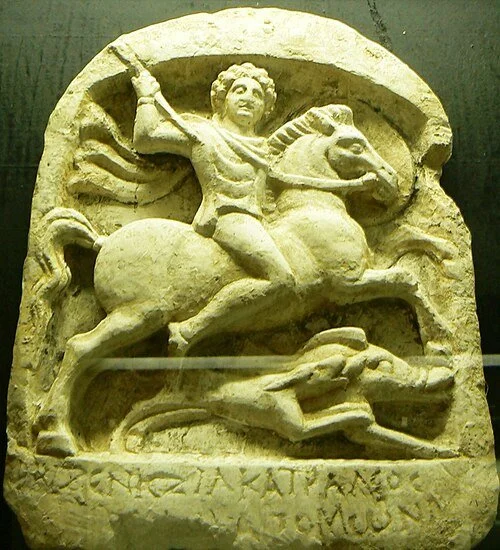
Often depicted as a mounted male figure riding through a landscape or toward a sacred object, the rider appears on numerous reliefs from Thrace and neighboring regions.
The figure is sometimes associated with a divine or heroic rider and is connected with religious traditions that continued through the Hellenistic and Roman periods.
The title Hidden Oracle Visions of the Thracian Rider God combines this archaeological tradition with the idea of secret prophetic visions.
The important distinction is that while Thracian Rider monuments are real archaeological evidence, a specific system of hidden oracle visions attributed to the Rider has not been conclusively established.
The Thracian Rider
The Thracian Rider is usually represented as a mounted horseman.
He may appear with hunting imagery, animals, trees, altars, serpents, or other sacred elements.
The images vary significantly.
This variation suggests that the Rider tradition was not a single standardized religion with one universally fixed mythology.
Instead, local communities adapted the image to their own religious needs.
Thrace and the Ancient Balkans
Ancient Thrace covered a large region extending across parts of modern Bulgaria, Greece, and Türkiye.
The area contained numerous communities with different languages, political organizations, and religious traditions.
Greek and later Roman influences interacted with indigenous Thracian beliefs.
This cultural mixture produced distinctive religious imagery.
The Horseman as Divine Figure
The mounted warrior was a powerful symbol.
Horses represented mobility, prestige, military power, and elite identity.
A divine horseman could therefore embody protection, victory, fertility, hunting, or passage between worlds.
Some scholars have also connected the Rider with heroic or chthonic traditions.
However, interpretation varies from monument to monument.
Oracle Traditions
Prophecy was widespread in the ancient Mediterranean.
People sought divine guidance through dreams, priests, sacred signs, sacrifices, or oracular sanctuaries.
A Rider monument might have been connected to religious practices, but the existence of an oracle cannot be assumed simply because a relief depicts a deity.
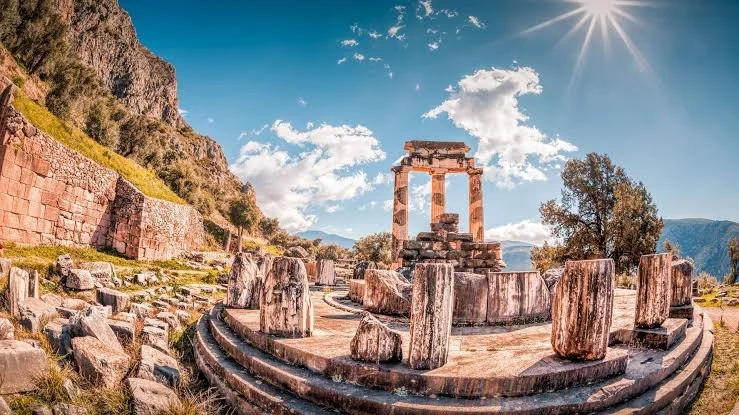
To establish an actual prophetic sanctuary, researchers would ideally need inscriptions, ritual installations, architectural evidence, or textual references.
The Serpent and the Sacred Landscape
Some Thracian Rider reliefs include snakes or other animals.
The serpent had many meanings in ancient religion.
It could represent the earth, fertility, regeneration, ancestors, or the underworld.
Its presence alongside a divine rider may therefore have indicated a connection with chthonic or fertility traditions.
Such imagery could have supported religious interpretations involving life, death, and renewal.
Hidden Visions and Religious Experience
The phrase "hidden visions" can also be interpreted symbolically.
Ancient religious experiences were often personal.
Dreams, visions, ritual performances, and altered states of consciousness could provide worshippers with experiences interpreted as communication with the divine.
We rarely have direct evidence of what an individual worshipper experienced.
Archaeology provides objects and spaces, but not the private emotions of the people who used them.
The Rider Beyond Thrace
The Rider image did not remain confined to a single cultural region.
Related horseman traditions appeared across the Balkans and the wider Roman world.
This diffusion demonstrates the flexibility of religious symbols.
A horseman could be interpreted differently by different communities while retaining recognizable visual features.
Conclusion
The Hidden Oracle Visions of the Thracian Rider God combine a genuine archaeological tradition with a speculative interpretation of its religious function.
The Thracian Rider is historically significant, but there is insufficient evidence to claim a single secret oracle system associated with him.
What makes the Rider truly fascinating is the uncertainty surrounding his precise identity.
His monuments preserve evidence of ancient religious belief while leaving many questions about the private rituals, visions, and expectations of the people who worshipped him.