• Home page/Blog
    • Ancient Greece
    • Archaeology
    • Mythology
    • Architecture
    • Artefact
    • Inventions
    • Tourism
    • News
    • Science
    • General
    • Weird
    • Recipes
    • Blog
  • About
  • Contact
Menu

GHD

  • Home page/Blog
  • History
    • Ancient Greece
    • Archaeology
    • Mythology
  • Art
    • Architecture
    • Artefact
    • Inventions
  • Travel
    • Tourism
  • Other
    • News
    • Science
    • General
    • Weird
    • Recipes
    • Blog
  • About
  • Contact
No results found

Unfinished sculpture inspired by the god Apollo or Hermes dug up in Macedonia

December 23, 2021

In the center of ancient, but also modern Veria, very close to the visitable archaeological site of Agios Patapios, in a rescue excavation of the Ephorate of Antiquities of Imathia, in one of the few unbuilt plots of the city, came to light on Friday, December 17, an important unexpected find: a marble statue almost one meter (about 3/5 of the natural) that dates back to imperial times, when Veria, as the seat of the Macedonian Commonwealth and the youngest of the imperial cult, was the first city of Macedonia, the center of political and cultural developments in the region and at the same time an axis of cohesion and a point of reference of the ancient Macedonian traditions.
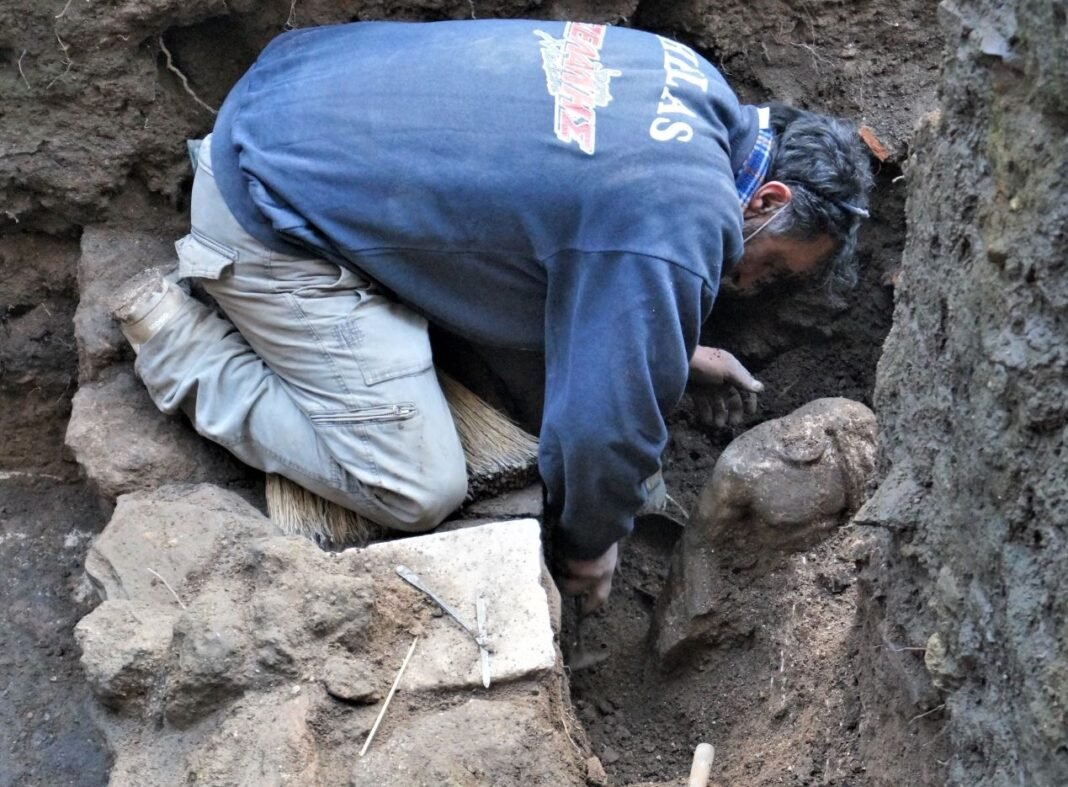
With a chlamydia thrown around his left shoulder and wrapped around his arm, the naked young man with the athletic body emerges from the volume of the marble, recalling classic patterns, images of statues related to Apollo or Hermes. It is the work of a very skilled craftsman who, however, obviously never finished. For some reason, the sculptor, although he had advanced a lot in the elaboration of the main aspects, reaching an almost final stage, decided to abandon the effort unfinished. This fact makes the small statue especially valuable for the study, not only of the style, but mainly of the production techniques of these works, exact copies or even freer repetitions of famous originals, and helps us to approach the Veroia school from a completely different point of view. sculpture, which appears with particularly recognizable features already in the Hellenistic years and reaches its apogee at the time of the great prosperity of the city, when the Antoninians and the "Philalexandrians" Severus reigned (2nd-beginning of the 3rd century AD).


← Guide on How to Write a Greek Mythology EssayPublic Christmas celebrations banned in Greece →
Featured
image_2026-06-06_180056126.png
June 6, 2026
The Naval Battle of Arginusae: Athenian Triumph and Tragedy
June 6, 2026
June 6, 2026
image_2026-06-06_180022743.png
June 6, 2026
How the Greek City-States Defended Their Ports
June 6, 2026
June 6, 2026
image_2026-06-06_175937950.png
June 6, 2026
The Battle of Himera: A Clash of Greeks and Carthaginians
June 6, 2026
June 6, 2026
image_2026-06-06_175844819.png
June 6, 2026
The Use of Hidden Weapons in Ancient Greek Combat
June 6, 2026
June 6, 2026
image_2026-06-06_175803707.png
June 6, 2026
The Role of Oracles in Greek Military Decisions
June 6, 2026
June 6, 2026
image_2026-06-06_175726182.png
June 6, 2026
The Battle of Chaeronea: Philip II’s Greatest Victory
June 6, 2026
June 6, 2026
image_2026-06-06_175639547.png
June 6, 2026
The Role of War Drums and Music in Greek Battles
June 6, 2026
June 6, 2026
image_2026-06-06_175550820.png
June 6, 2026
How Greek Warriors Maintained Their Armor and Weapons
June 6, 2026
June 6, 2026
SEE MORE

Powered by ©GreeceHighDefinition / Privacy Policy