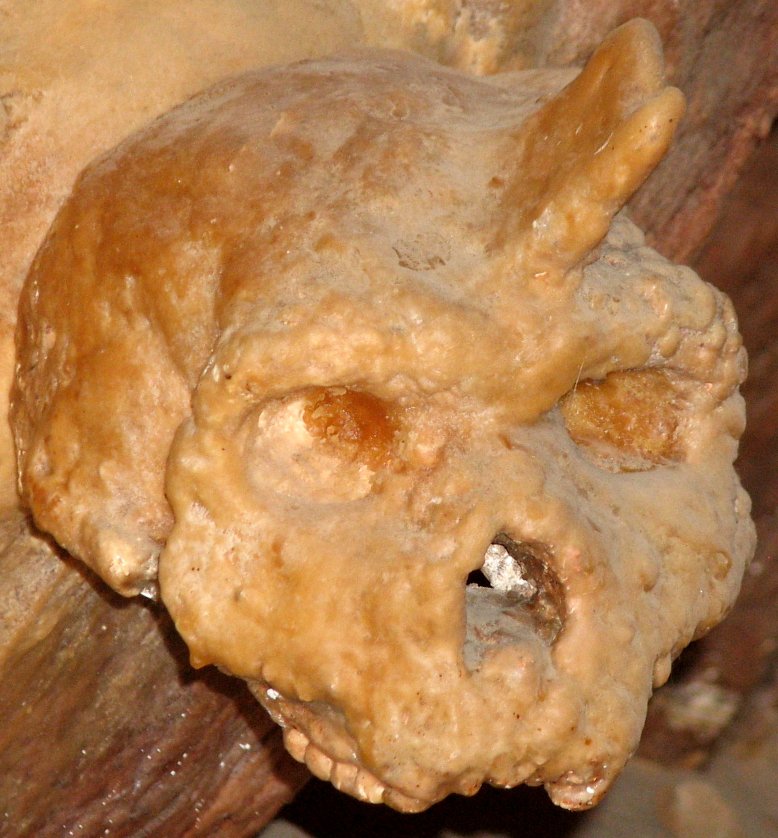
The discovery of the Petralona skull in 1960 in northern Greece has sparked significant debate and fascination among paleoanthropologists. Unearthed in Petralona Cave near Thessaloniki, this fossilized cranium has been at the center of discussions about human evolution in Europe, with researchers debating its age, classification, and significance for decades.
Discovery and Initial Findings
The Petralona skull was found by a local resident who stumbled upon it in the cave. The cranium, embedded in the limestone walls, was removed with great care and initially examined by anthropologist Aris Poulianos. Poulianos proposed that the skull belonged to a distinct European hominid species, which he named Archanthropus europeaus petraloniensis. He estimated its age to be approximately 700,000 years based on the geological context of the cave and its surrounding strata.
Dating the Skull
Despite Poulianos' initial assessment, subsequent studies have provided a range of age estimates for the skull, complicating its interpretation. Electron spin resonance (ESR) dating, a method used to determine the age of fossilized remains by measuring radiation-induced changes in the material, placed the skull between 160,000 and 240,000 years old. However, other morphological and stratigraphic analyses suggest the fossil could be as old as 250,000 to 300,000 years.
Adding to the complexity is the cave itself, which has yielded evidence of human activity dating back as far as 700,000 years. Artifacts, tools, and animal remains found in the cave indicate that early humans inhabited the region for an extended period, raising questions about whether the skull belongs to one of these ancient inhabitants or a later population.
Classification Debates
The classification of the Petralona skull has been a contentious issue. Many researchers identify it as belonging to Homo heidelbergensis, a species that lived between 600,000 and 200,000 years ago and is considered a common ancestor of both Neanderthals and modern humans. This classification is based on the skull's robust features, including its pronounced brow ridges, thick cranial bones, and large braincase.
Others argue that the skull exhibits traits more consistent with Homo erectus, an even older hominid species, or early Homo sapiens. Poulianos, for his part, maintained that the skull represented a unique species endemic to Europe, challenging mainstream evolutionary models.
Significance for Human Evolution
Regardless of its precise classification, the Petralona skull provides invaluable insights into the evolution of early humans in Europe. It represents one of the oldest hominid fossils found on the continent and sheds light on the adaptation and development of human populations in the region. The tools and artifacts found in the cave suggest that these early humans were capable of complex behaviors, including tool-making and possibly symbolic thought.
Controversies and Ongoing Research
The study of the Petralona skull has not been without controversy. Disputes over its age, classification, and even its removal from the cave have led to tensions among scientists and between researchers and the Greek government. Despite these challenges, ongoing research continues to reveal new details about this fascinating fossil and its context.
The Petralona skull remains a cornerstone of European paleoanthropology, offering a glimpse into a time when early humans were forging their path through a changing world. While debates over its age and classification persist, the fossil stands as a testament to the complexity of human evolution and the enduring mysteries of our ancient past.
As research methods advance, scientists hope to unlock more secrets from the Petralona skull and its surroundings, further illuminating the story of humanity's journey through time.