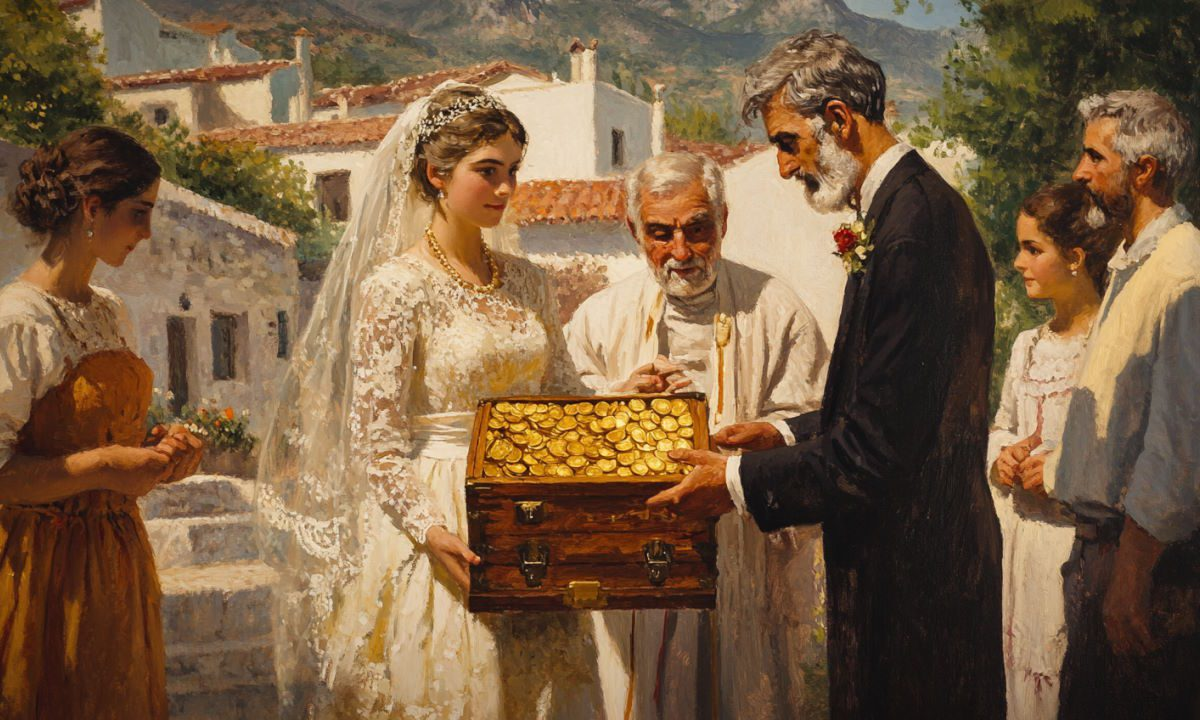
For centuries, the dowry shaped the fate of women in Greece.
For generations, the dowry was an undeniable reality of Greek society—an economic burden that dictated the lives of women, the fortunes of their families, and gender dynamics. It was a deeply ingrained custom that turned marriage into a complex financial arrangement rather than a simple union of two people.
The rule was clear: a woman had to bring a dowry—whether in money, land, or other assets—in order to marry. Fathers, whether they liked it or not, were expected to save up for their daughters, sometimes going as far as selling land or property to secure a "good match." For those unfortunate enough to lack a dowry, the future was bleak. In the "luckiest" cases, their only alternative was to join a convent. In less fortunate circumstances, dowry-less women were seen as a burden to their families, and the dream of marriage remained out of reach.
From the Byzantine era through the 20th century, the dowry system determined the course of women’s lives, reducing them to financial bargaining chips. Mothers spent years weaving household linens—bedsheets, tablecloths, and embroidered fabrics—carefully storing them in wooden dowry chests to be handed over to the groom. Marriage was not seen as a matter of love or personal choice but as an organized negotiation between families.
However, opposition to the dowry system eventually gained momentum. By the early 20th century, social changes, increased education for women, and evolving ideas about equality sparked a shift in attitudes. More and more people began to view the dowry as an outdated tradition that reinforced inequality and kept women financially dependent on their families.
Despite growing criticism, the dowry remained legally recognized until 1983. That year, under the government of Andreas Papandreou, a major reform in family law officially abolished the practice, ending a centuries-old tradition that had long defined women's roles in Greek society.
This marked the beginning of a new era. Women were no longer expected to bring financial assets into marriage, and unions ceased to be economic transactions. The path to equality had begun, and a woman’s worth was no longer measured in gold coins, property, or embroidered linens.