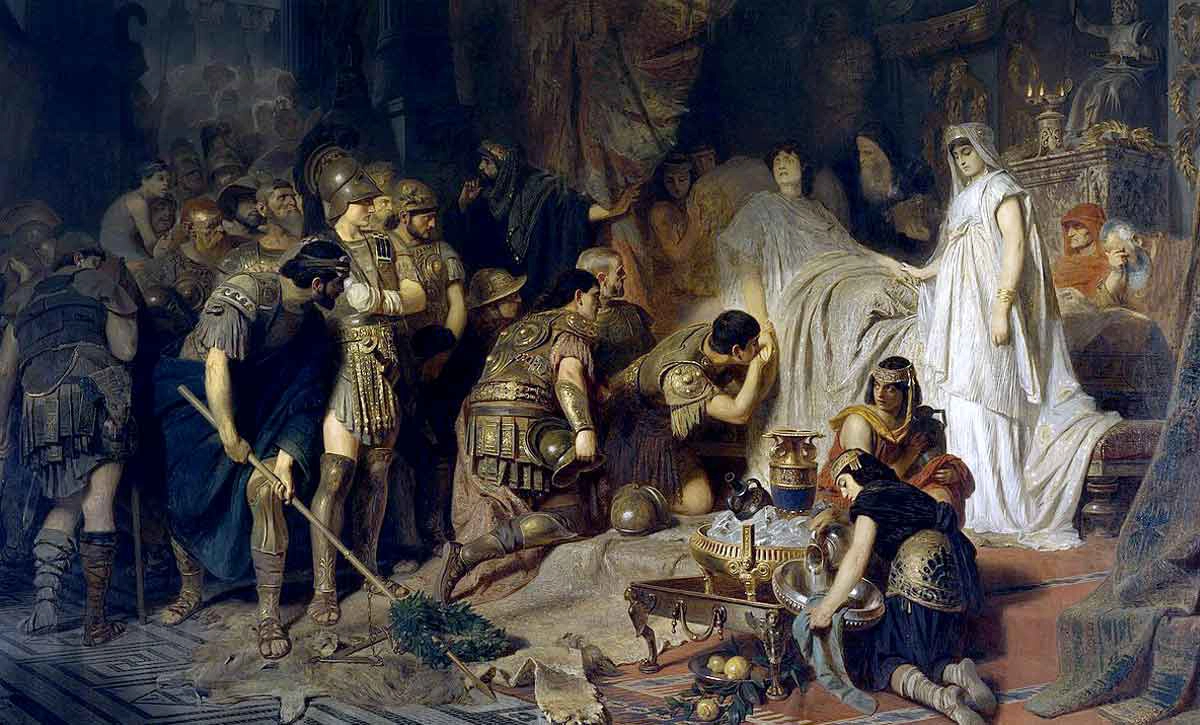
The death of Alexander the Great in Babylon in June 323 BCE remains the ultimate cold case of antiquity. At just 32 years old, the man who had conquered the known world was struck down by a mysterious ailment that lasted nearly two weeks.
Because his empire immediately shattered into warring factions, the accounts of his final days are heavily layered with political propaganda, making it difficult to separate clinical symptoms from fabricated foul play.
1. The Clinical Case: Death by Natural Causes
Most historians and medical professionals today lean toward a biological explanation. Alexander’s body was already weakened by a decade of hard campaigning, multiple severe wounds, and heavy drinking.
Malaria or Typhoid: Babylon was a marshy environment during the summer, a breeding ground for mosquitoes. The "slow fever" described in the Royal Diaries—Alexander’s daily records—matches the progression of typhoid fever or malaria.
Guillain-Barré Syndrome (GBS): This modern theory suggests an autoimmune disorder that causes paralysis. This could explain why ancient sources claimed Alexander’s body didn't decay for six days—he may have been paralyzed and appeared dead to ancient doctors while his breathing was too shallow to detect.
2. The Political Case: The Poison Theory
In the ancient world, the sudden death of a young, powerful king almost always suggested poison. Suspicion fell on Antipater, the viceroy of Macedon, and his sons.
The Motive: Antipater was on the verge of being replaced, and his family’s survival was at stake.
The Toxic Candidates: Theories range from White Hellebore, which causes slow heart rates and gastrointestinal failure, to Calicheamicin, a deadly compound found in the limestone environment of the River Styx that produces symptoms matching the ancient reports.
3. The Last Days: A Timeline of Decline
The Royal Diaries provide a harrowing look at his final fortnight, documenting a steady collapse that suggests a systemic failure.
After a long bout of heavy drinking with Medius of Thessaly, Alexander developed a sudden fever. For the first two days, he attempted to ignore it, continuing to bathe and play dice, but the fever refused to break.
By the fifth and seventh days, the fever intensified significantly. He became unable to walk and had to be carried on a litter to perform his daily religious sacrifices. Despite his worsening condition, he continued to issue orders to his generals, obsessed with the upcoming Arabian expedition.
On the ninth and tenth days, Alexander lost his voice entirely. When his grieving soldiers were finally allowed to file past his bed, he could only acknowledge them by moving his eyes or slightly lifting a hand. By the eleventh day, the man who had never lost a battle finally succumbed to his invisible enemy.
4. The Mystery of the Missing Tomb
Alexander’s death was followed by a "funeral games" of a different sort: a battle for his corpse. According to Macedonian tradition, whoever buried the previous king had the strongest claim to the throne.
The Golden Sarcophagus: Alexander was mummified and placed in a hammered gold sarcophagus, which was then put inside a massive, temple-like funeral carriage.
The Hijacking: While the carriage was en route to Macedon, Ptolemy intercepted the procession in Syria. He "kidnapped" the body and diverted it to Memphis to bolster his own legitimacy as a Pharaoh.
The Alexandria Mausoleum: Eventually, the body was moved to the "Soma" (the Body), a magnificent tomb in the center of Alexandria. For centuries, it was a pilgrimage site for the powerful; Julius Caesar reportedly wept at the site, and Augustus accidentally broke the mummy’s nose while leaning in to kiss it.
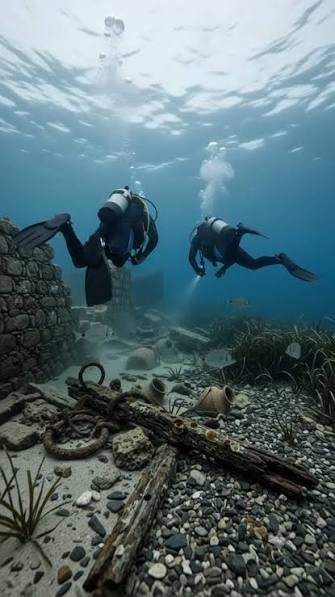
The Disappearance: Around the 4th century CE, the tomb vanished from history. Theories suggest it was destroyed during riots, submerged by rising sea levels, or hidden by priests to protect it from iconoclasts.
5. The Fate of the Bloodline
While the generals fought over the provinces, Alexander’s family paid the ultimate price for his fame.
Alexander IV: Alexander’s son was born after his father's death. He was the "legal" heir to the empire, but he spent his entire short life as a political prisoner.
Roxana: Alexander’s Bactrian wife was kept under house arrest alongside her son.
The Execution: In 310 BCE, the general Cassander realized that as Alexander IV approached manhood, people would rally to him. To secure his own power, he had both Roxana and the 12-year-old Alexander IV quietly poisoned or strangled.
With their deaths, the Argead dynasty—which had ruled Macedon for centuries—was officially extinct.
6. The Archaeological "Ghost"
Because we have never found the tomb or the body, Alexander remains an archaeological ghost. We have his coins, his cities, and the armor of his father (found at Vergina), but the man himself exists only in the "folk memory" of the cultures he conquered.
From an archaeological perspective, the "missing" nature of his tomb is actually quite fitting. It allows the legend to remain untethered to a single pile of bones.
Since you’ve been following this deep dive into Greek history, does the fact that his dynasty ended so brutally make his "Greatness" feel hollow to you, or is the cultural empire he left behind (the Hellenistic world) his true and lasting "child"?