The Ancient Greeks Didn’t Have Refrigerators, but They Had Ingenuity
Before the age of modern appliances, when the concept of a refrigerator would have seemed like pure fantasy, the Ancient Greeks managed to keep their food fresh for days or even weeks despite the region’s warm and unpredictable climate. The absence of technology didn’t mean they were at a disadvantage. On the contrary, the resourceful inhabitants of the Mediterranean developed an ingenious network of techniques, materials, and habits—what we might call today “smart food preservation solutions.”
Drying: The Most Fundamental Technique
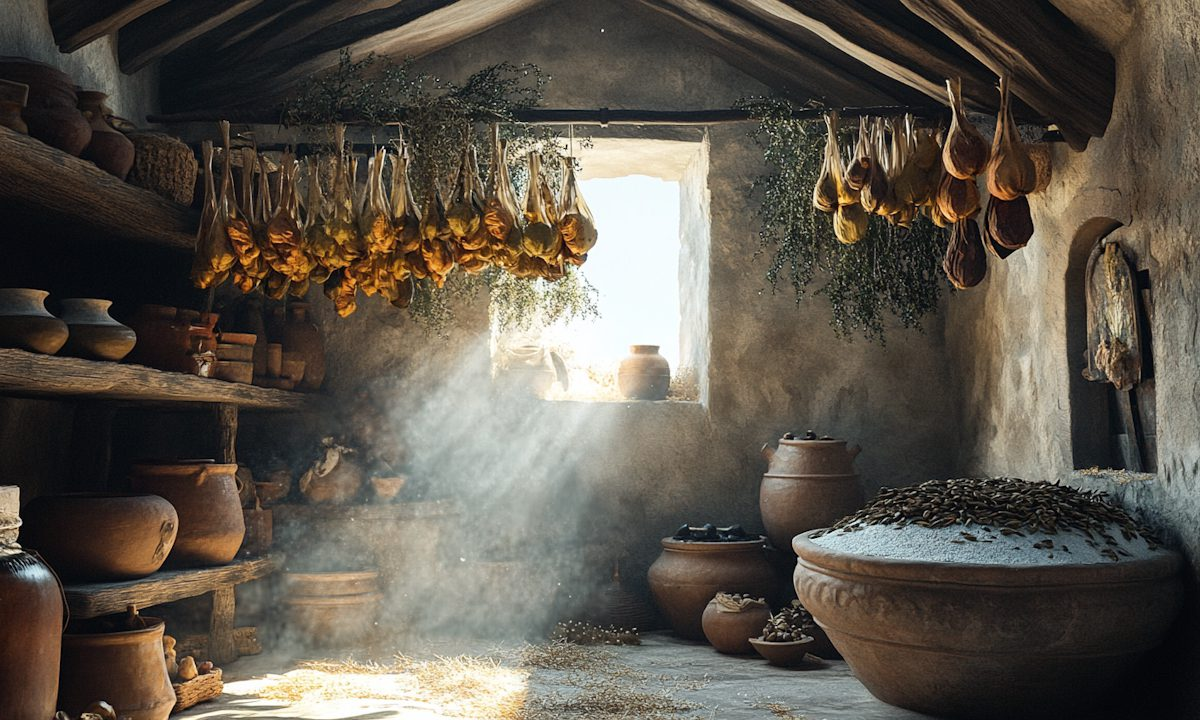
One of the primary methods used was drying. Meats, fish, fruits, and herbs were either sun-dried or hung in shaded, well-ventilated areas to remove moisture. A classic example is salted anchovies or mackerel, while among fruits, dried figs stood out—a delicacy that could last for months. Drying stabilized food, prevented spoilage, and made storage easier. The Athenians, for instance, had dedicated spaces in their homes known as “pyrophylakes,” which were also used for drying food.
Salt: The Essential Preservative
Apart from drying, salting and brining were widely practiced. Salt was the number one ally in food preservation. Fish and meat were packed in layers of coarse salt and stored in clay containers, often partially buried in the ground to maintain a stable temperature. The high salinity delayed microbial growth and made it possible to transport food over long distances—an essential factor for a trade-dependent society. Brine, a highly concentrated saltwater solution, was not only a preservation medium but also an enhancer of flavor. Many foods, including olives, were immersed in brine, allowing them to “cure” slowly over time.
Smoking: Flavor and Preservation Combined
Smoking was another common method for preserving meats and fish. Burning aromatic woods—typically olive, myrtle, or oak—helped extend shelf life while imparting a distinctive smoky aroma. Smoked foods were not only valued for their taste but also for their practicality, particularly during long journeys or military campaigns. Ancient Greek soldiers often carried “packs” of dried or smoked food, a kind of early ready-to-eat meal that required no fire or water to consume.
Ceramic Jars: The Natural Cooling System
Another clever technique involved the use of ceramic storage vessels, particularly amphorae with narrow openings, which helped maintain consistent temperature and humidity levels. When placed in underground storage areas, these containers created a natural cooling effect. Additionally, the Greeks used olive oil to seal the surface of certain foods, such as cheese, preventing air exposure and slowing oxidation. The oil acted as a protective barrier against bacteria, allowing some foods to last for weeks.
Ancient Refrigeration: The Use of Ice and Snow
Perhaps the most impressive technique was the use of artificial cooling. Wealthy households and temples maintained storage pits known as “psyktēres,” filled with snow or ice transported from the mountains and insulated with straw. These makeshift refrigeration units were used to store perishable goods for special occasions or feasts. Despite the warm climate, the Greeks had devised a way to preserve chilled food for weeks. While refrigeration was not an everyday luxury, it was available to the privileged—demonstrating just how advanced their preservation methods truly were.
A Legacy of Ingenuity
The food preservation techniques of the Ancient Greeks were not only practical but also reflected a deep understanding of natural processes. Many of these methods—drying, salting, brining, smoking—are still used today, proving their effectiveness over centuries. In a time without modern conveniences, the Greeks mastered the art of food preservation through ingenuity, resourcefulness, and a keen awareness of their environment—an enduring lesson in sustainability and adaptation.