The House of Atreus is one of the most famous examples of a "generational curse" in Greek mythology. It is a story where the sins of one generation metastasize into the next, creating a relentless cycle of betrayal, cannibalism, and murder.
The Origins of the Curse
While it is often called the "Curse of Atreus," the corruption of the lineage actually stems from two distinct, overlapping sources of divine wrath:
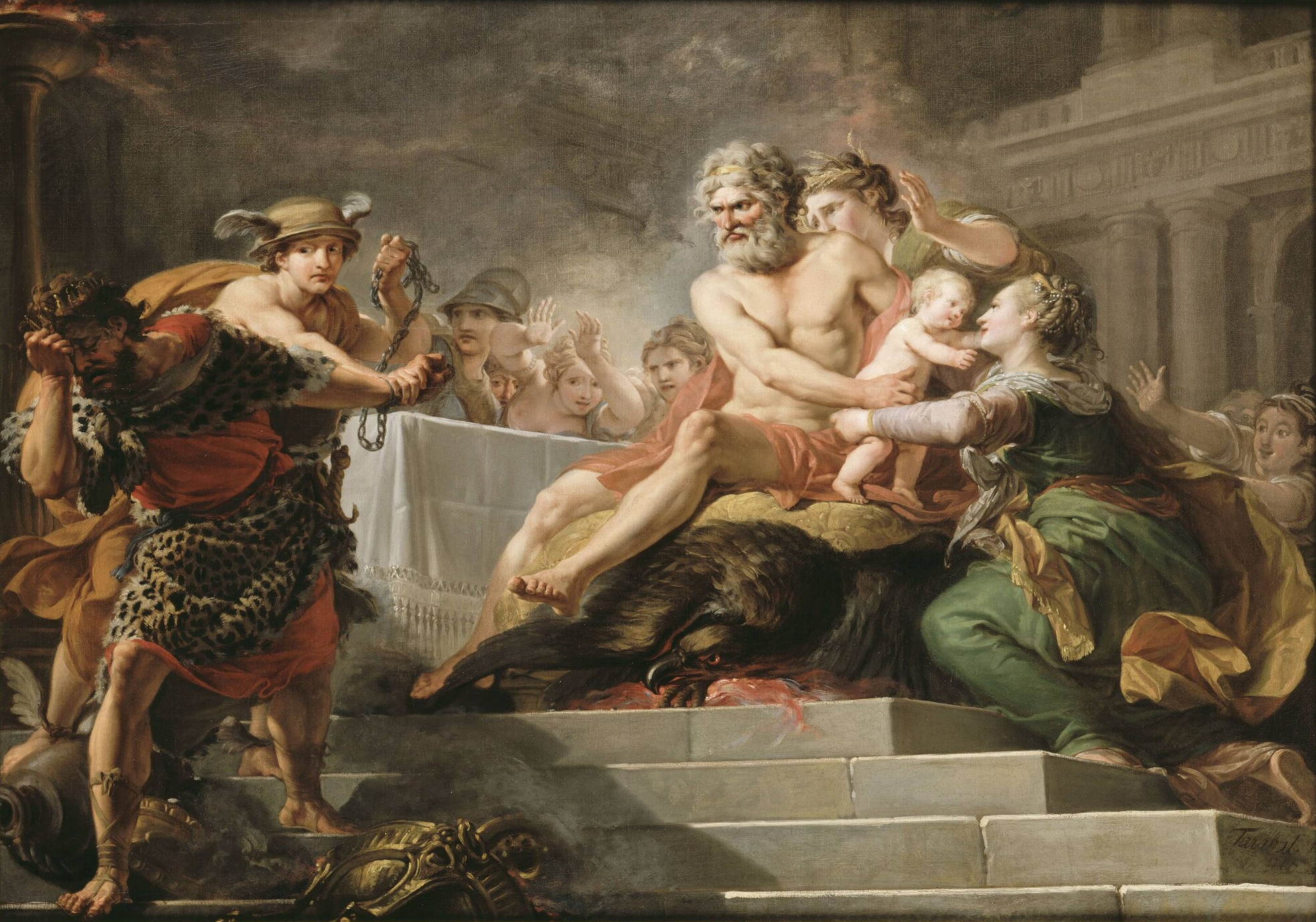
The Crime of Tantalus: The lineage’s foundational sin was committed by Tantalus, the son of Zeus. To test the gods' omniscience, he invited them to a feast and served them his own son, Pelops, stewed in a pot. The gods realized the truth immediately (with the exception of Demeter, who absentmindedly ate part of the boy's shoulder) and punished Tantalus with eternal torment in Tartarus.
The Curse of Myrtilus: After being resurrected, Pelops sought to win the hand of Hippodamia by entering a chariot race against her father, King Oenomaus. Pelops bribed the king's charioteer, Myrtilus, to sabotage the royal chariot. The king died in the resulting crash. When Myrtilus came to collect his promised reward, Pelops betrayed him and threw him off a cliff. As Myrtilus fell to his death, he cursed Pelops and his entire future bloodline.
The Cycle of Atreus and Thyestes
The curse intensified in the next generation with Pelops’ sons, Atreus and Thyestes. The brothers became locked in a bitter struggle for the throne of Mycenae, marked by adultery and treachery:
The Cannibalistic Banquet: After discovering that Thyestes had seduced his wife, Aërope, to steal a golden fleece that would prove his right to the throne, Atreus exacted a horrific revenge. He invited Thyestes to a "reconciliation" banquet and served him the flesh of his own sons.
The Vengeance: Horrified, Thyestes fled into exile. An oracle told him that the only way to avenge his sons was to father a child by his own daughter, Pelopia. He did so unknowingly, and their son, Aegisthus, grew up to eventually kill Atreus, continuing the blood feud.
The Final Generations
The cycle reached its most tragic peak with the children of Atreus: Agamemnon and Menelaus.
Agamemnon: To secure favorable winds for the Greek fleet heading to the Trojan War, Agamemnon sacrificed his own daughter, Iphigenia, to the goddess Artemis.
The Return from Troy: Upon his return, Agamemnon was murdered by his wife, Clytemnestra, and her lover—Aegisthus (the son of Thyestes). This was both an act of revenge for the murder of Iphigenia and a continuation of the brothers' original feud.
The End of the Curse: The final chapter of the curse involves Agamemnon’s son, Orestes. Compelled by the god Apollo to avenge his father, Orestes killed his mother, Clytemnestra. He was then pursued by the Furies (the embodiments of vengeance for matricide). Ultimately, with the intervention of the goddess Athena, Orestes was put on trial in Athens. His acquittal in the first ever human court ended the cycle of blood vengeance, finally lifting the curse from the family.
Why It Matters
The story of the House of Atreus served as a central theme for ancient Greek tragedians like Aeschylus, Sophocles, and Euripides. It explored difficult questions regarding the nature of justice: is it better to enact private revenge, or should society establish a formal court of law to settle grievances? By ending the curse through a legal trial, the myths signaled a transition from the chaotic, violent world of "eye-for-an-eye" tribal vengeance to the order of a civilized, democratic society.
Are you interested in how this particular family cycle influenced later Greek theater, or would you prefer to look at other famous "cursed" lineages in mythology, such as the descendants of Cadmus?