The story of Tantalus is a foundational Greek myth exploring the theme of hubris—the excessive pride or arrogance that leads a mortal to challenge the divine. As the son of Zeus and a nymph, Tantalus was granted the unique privilege of dining at the tables of the gods, a position he ultimately abused with catastrophic consequences.
The Crimes of Tantalus
The myths surrounding Tantalus focus on a series of violations that broke the fundamental laws of Greek hospitality (xenia) and piety:
The Theft of Nectar and Ambrosia: Initially, Tantalus was honored by the gods. However, he grew arrogant and stole the divine food and drink from Olympus to bring back to his mortal friends. This was seen as a grave theft, as it brought forbidden divine substance into the mortal realm.
The Revelation of Divine Secrets: Tantalus allegedly shared the secret prophecies of the gods with mortals, acting as a gossip of the divine order.
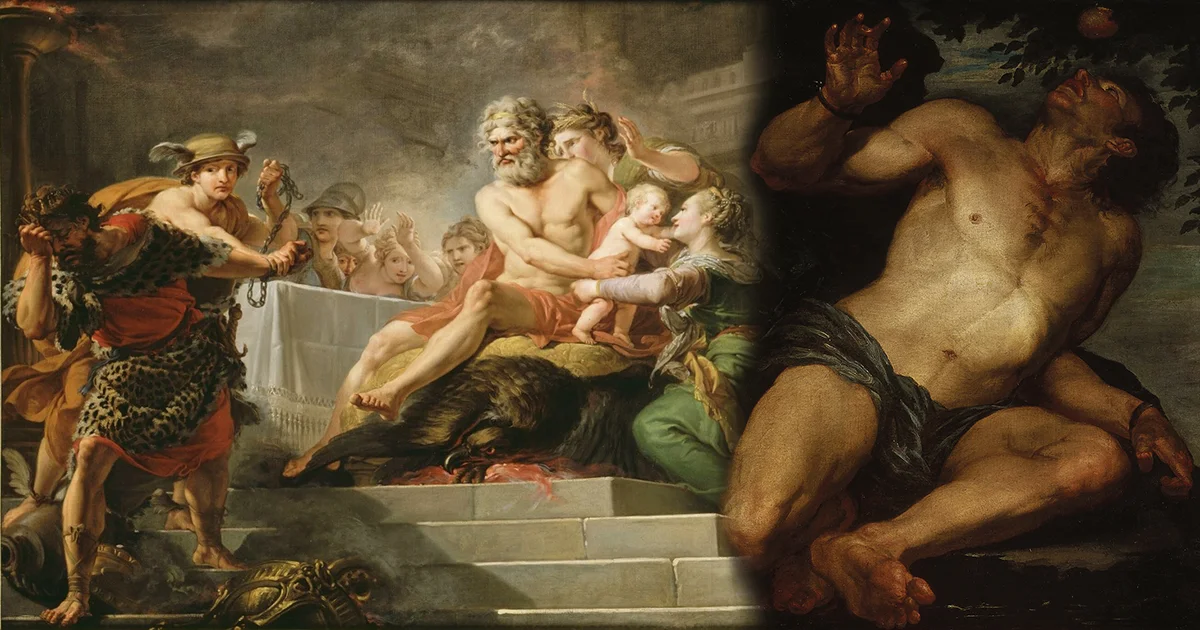
The Banquet of Pelops: His greatest crime, however, was testing the omniscience of the gods. He invited them to a feast at his palace and, in an act of grotesque hubris, slaughtered his own son, Pelops, boiled him, and served his flesh to the gods as a stew. He wanted to see if the gods were truly all-knowing and if they would realize they were consuming human flesh.
The Divine Retribution
The gods were horrified by the cannibalistic feast. They immediately recognized the nature of the meal and refused to eat, with the exception of Demeter, who, grieving for her daughter Persephone, consumed a portion of the boy’s shoulder.
The Resurrection: The gods punished Tantalus and resurrected Pelops, replacing his eaten shoulder with one made of ivory.
The Eternal Punishment: Tantalus was cast into the underworld of Tartarus. His punishment was designed to be perfectly ironic, a psychological torture of perpetual frustration:
He was placed in a pool of water that reached his chin. Whenever he grew thirsty and stooped to drink, the water receded and vanished.
Above him hung branches laden with fruit—apples, figs, pears, and olives. Whenever he reached for the food, the wind blew the branches just out of his grasp.
In many accounts, a massive, jagged rock was suspended precariously over his head, threatening to crush him at any moment, adding a layer of constant, paralyzing dread to his hunger and thirst.
Philosophical and Cultural Significance
The Origin of "Tantalize": The story gave rise to the English verb "tantalize," which describes the act of tormenting someone with the sight of something desired but kept just out of reach.
The Curse of the House of Atreus: The tragedy of Tantalus did not end with his own punishment. His crimes initiated a generational curse on his descendants, including his son Pelops and his grandsons Atreus and Thyestes. The cycle of betrayal, murder, and cannibalism within his family became a staple of Greek tragic drama, famously explored by playwrights like Aeschylus and Euripides.
Divine vs. Mortal Boundaries: Tantalus represents the dangers of crossing the line between the mortal and the divine. By attempting to manipulate the gods and treat them as equals or subjects of his own experiments, he lost his status as a privileged guest and was reduced to an example of the futility of human defiance.
The myth of Tantalus remains one of the most potent images in Western literature, serving as a warning against the dangers of excess and the belief that humanity can operate outside the moral laws established by the gods.