Introduction
Rhodes is widely associated with the military and religious history of the medieval eastern Mediterranean. Its fortified city, strategic harbor, and connections to maritime routes made it an important center during the Crusades and the later history of the Knights Hospitaller.
The island's hinterlands, with their villages, agricultural estates, castles, and rural churches, form a broader historical landscape beyond the famous walls of Rhodes Town.
Stories about Knights Templar activity in these rural areas can be intriguing. However, a fundamental distinction is necessary: the Knights Templar and the Knights Hospitaller were separate military religious orders. Rhodes became particularly important to the Hospitallers, not a recognized headquarters of the Templars.
The Knights Templar
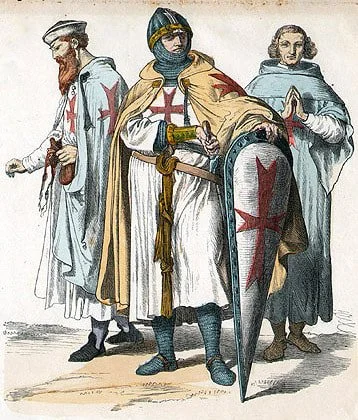
The Knights Templar emerged in the early twelfth century in the context of the Crusader states. The order developed a religious and military identity, with members taking vows and participating in the defense of Christian territories and the protection of pilgrims.
Over time, the Templars accumulated land, privileges, and financial responsibilities across parts of Europe and the eastern Mediterranean. Their properties supported the order's military operations and institutional life.
The order's international network made it a subject of political suspicion. In the early fourteenth century, King Philip IV of France moved against the Templars. Arrests began in 1307, and the order was suppressed by papal action in 1312.
The Knights Hospitaller and Rhodes
The Hospitallers had a different institutional history. Initially associated with care for pilgrims and the sick, they developed a military role during the Crusades.
After losing their position in the Holy Land, the Hospitallers established themselves on Rhodes in the early fourteenth century. The island became the center of a fortified maritime power that controlled important routes in the eastern Mediterranean.
The Hospitallers constructed and maintained fortifications, organized naval operations, administered estates, and interacted with the island's Greek-speaking population. Their presence profoundly shaped Rhodes's political and architectural history.
Because both orders were military and religious, later storytelling sometimes conflates them. This confusion is a likely source of claims about Templar castles, hidden treasuries, or secret ceremonies on Rhodes.
The Hinterlands
The interior of Rhodes was essential to the survival of its fortified towns. Agricultural settlements supplied food and other resources, while roads connected villages with ports and administrative centers.
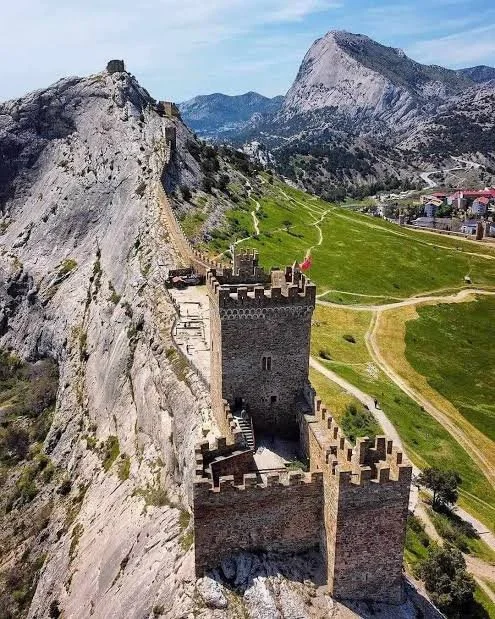
Castles and fortified positions served multiple functions. They could provide refuge during attacks, protect strategic routes, and support local administration. Their presence does not, by itself, demonstrate Templar ownership.
To identify a genuine Templar connection, historians would need evidence such as charters, property records, inscriptions, or contemporary accounts naming the order.
Why Templar Legends Developed
The Templars became surrounded by legends after their suppression. Their rapid destruction, the seizure of their property, and uncertainty about their financial network encouraged stories of hidden wealth and secret knowledge.
Later popular literature added further layers of speculation. The Templars were connected to alleged secret rituals, mysterious relics, and concealed political influence.
These traditions have often been projected onto medieval castles and islands that had connections to other military orders. Rhodes is especially vulnerable to this confusion because the Hospitallers left a substantial architectural legacy.
Architecture as Evidence
Medieval architecture can help identify the function and chronology of a building, but it cannot establish the identity of every organization that used it.
A fortress might have been built under Byzantine authority, modified by the Hospitallers, and later adapted under Ottoman rule. Architectural features may survive from several periods.
A responsible interpretation therefore requires construction analysis, inscriptions, documentary records, and comparison with other securely identified sites.
The Ottoman Conquest
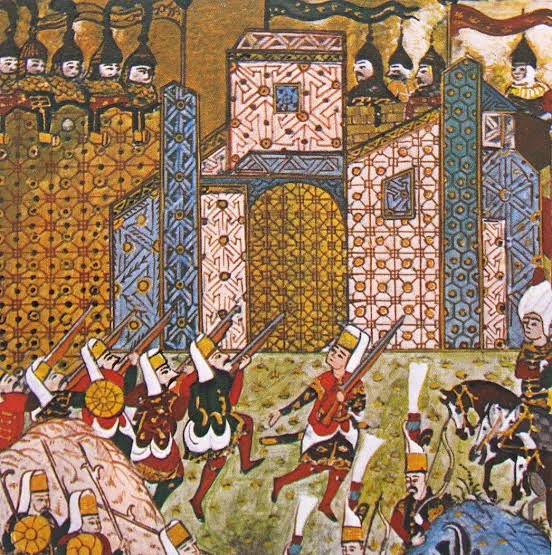
The Hospitallers' rule on Rhodes ended in 1522, when Ottoman forces captured the island after a prolonged siege. The event transformed the island's political and military structure.
The Ottomans retained and adapted many existing fortifications. Religious and administrative buildings could also be reused or altered.
This layered history complicates attempts to attribute every medieval-looking ruin to one organization.
Local Society
The military orders ruled over populations whose lives included agriculture, trade, religious observance, and local administration. The history of Rhodes cannot be reduced to the activities of European knights.
Greek-speaking communities, merchants, artisans, sailors, and rural inhabitants all contributed to the island's social and economic life. Their experiences are essential to understanding the historical landscape.
Separating Rumor from History
Claims about Templar activity in the Rhodes hinterlands should be evaluated according to the quality of their evidence. A modern website repeating a legend is not equivalent to a medieval charter. A local tradition may be worth documenting, but it should be presented as tradition unless independent evidence supports it.
The absence of evidence does not prove that no individual associated with the Templars ever visited Rhodes. It does mean that claims of an organized Templar presence, hidden headquarters, or secret network require stronger support than architectural resemblance or folklore.
Conclusion
Rhodes is an important site for the history of medieval military religious orders, but its documented association is primarily with the Knights Hospitaller. Templar rumors in the island's hinterlands often reflect the later blending of distinct historical traditions.
Investigating these stories can be worthwhile when the distinction between evidence and legend remains clear. The result is a richer history of Rhodes, one that recognizes its actual medieval institutions while examining how mysterious reputations develop around old fortifications and abandoned places.