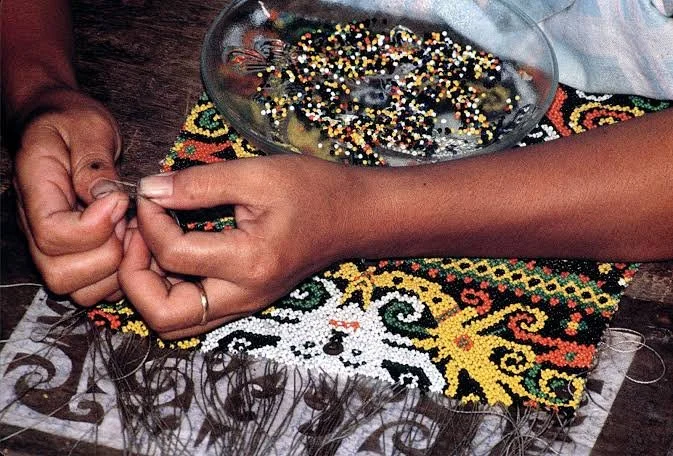
Beadwork has played a significant role in the material culture of many coastal communities, where access to shells, marine resources, trade routes, and specialized craft materials could support the production of ornaments for personal use and exchange. Beads made from shell, bone, stone, glass, and other materials may appear small and simple, but their manufacture can involve considerable skill. Raw materials must be selected, shaped, perforated, polished, and sometimes decorated before they are ready to be worn or traded. Archaeological evidence of bead production can therefore reveal how coastal households organized labor, used local resources, and participated in broader economic networks.
Coastal environments often provide distinctive raw materials for ornament production. Shells may be collected from beaches, tidal flats, or shallow waters, while fish bones, marine mammal remains, and other animal materials may become available through fishing and hunting. Some shells are naturally attractive because of their color, shape, or surface texture, while others require extensive processing to become suitable for beads. The availability of these materials does not guarantee that they were used for ornamentation. Shells may also have served as food remains, tools, containers, or decorative inlays, so manufacturing evidence is essential for distinguishing bead production from other activities.
The production process can leave several recognizable traces. Partially shaped shells, unfinished beads, discarded fragments, and tools used for drilling or polishing may accumulate at workshop locations. Small chips around perforations can indicate how holes were made, while surface wear may reveal the use of abrasive materials during shaping. Repeated concentrations of these remains may suggest that beadwork was carried out regularly in a particular area. However, craft debris can be moved from its original location, and some stages of production may have taken place elsewhere. Researchers must consider whether the evidence represents raw-material preparation, finished-object manufacture, repair, or the disposal of unrelated shell waste.
The social organization of beadwork is a more complicated question. In many societies, craft production has been influenced by household responsibilities, access to resources, social expectations, and opportunities for exchange. Gender can shape who performs particular tasks, who controls raw materials, and who receives the benefits of production. Yet these relationships vary widely across cultures and historical periods. It would be misleading to assume that beadwork was universally a woman's activity or that the presence of bead-making tools reveals the gender of the people who used them.
Archaeologists investigate gendered economies by examining patterns across several types of evidence rather than relying on stereotypes. The location of production within domestic or communal spaces may provide clues about how craftwork fitted into everyday life. Differences in access to raw materials, the scale of production, and the distribution of finished beads may indicate whether the work was primarily household-based or connected to wider exchange. If beadwork appears alongside other activities in domestic areas, researchers might investigate whether it was carried out as part of a broader household economy. However, the use of a domestic space does not establish who performed the work, and specialized production could occur in homes as well as dedicated workshops.
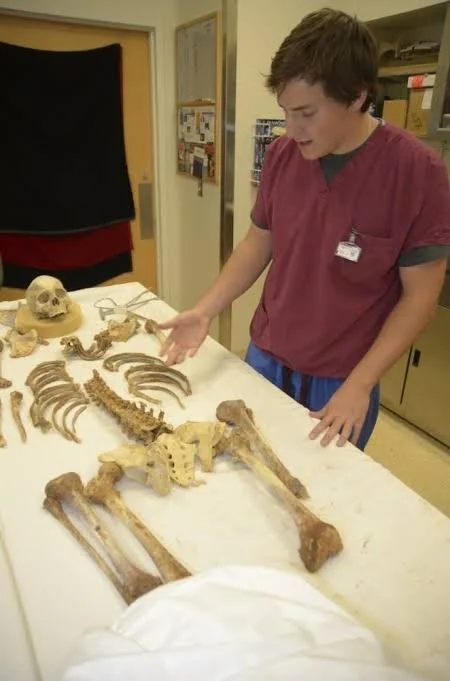
Human burials may provide additional information about the social meaning of beads. Ornaments placed with the dead can reveal differences in the way individuals were commemorated, although the interpretation of these differences is rarely straightforward. Beads may have indicated personal identity, affiliation, age, status, or participation in particular traditions. Their presence in a burial does not automatically mean that they were valuable in economic terms, and their absence does not prove that an individual lacked access to ornamentation. Burial practices reflect cultural choices as well as the possessions and social relationships of the deceased.
The materials used in beadwork can reveal connections between coastal villages and distant regions. Shells may originate from nearby shorelines, while stone, glass, or other materials may have been transported through exchange networks. Scientific analysis can sometimes identify the geological or compositional characteristics of raw materials, helping researchers compare beads from different sites. If similar ornaments appear across several settlements, archaeologists may investigate whether they reflect trade, shared styles, migration, or independent development. Similarity alone does not establish a direct exchange relationship, especially when the designs are relatively simple.
The economic role of beadwork may have ranged from occasional household production to specialized craft activity. Some people may have made beads during periods when fishing or farming required less attention, while others could have developed considerable expertise and produced ornaments regularly. The amount of production waste, the presence of unfinished pieces, and the consistency of manufacturing techniques can help researchers assess the intensity of activity. Even so, the scale of production cannot be measured solely by the number of surviving beads because finished ornaments may have been traded away, worn for many years, or deposited in places that have not been excavated.
Seasonality may have influenced coastal bead production. Fishing, shellfish gathering, and other maritime activities often vary with weather, tides, and the availability of particular species. The collection of suitable shells could have occurred during specific periods, while shaping and polishing might have continued during other parts of the year. Beadwork may therefore have provided a complementary activity within a seasonal economy. However, the presence of shells from a species that is seasonally available does not necessarily establish when the beads were made, because raw materials could have been stored for later use.
The relationship between beadwork and exchange extends beyond the movement of finished ornaments. Beads may have been used in gift-giving, marriage arrangements, ceremonies, or other social relationships in which objects carried meanings beyond their practical value. A bead could function as a sign of belonging or a way to maintain connections between households and communities. Such uses can make it difficult to separate economic exchange from social obligation. Archaeological evidence may show where beads were produced and where they were deposited, but the meanings attached to them often require careful comparison with historical and ethnographic information.
Changes in bead styles can help researchers investigate shifting preferences and external influences. New materials or manufacturing methods may appear as coastal communities develop stronger connections with other regions. Differences in perforation, shape, surface treatment, and raw-material selection can reveal changes in production techniques. However, stylistic change does not always indicate cultural replacement or direct foreign influence. Local artisans may adapt existing designs, experiment with new materials, or produce ornaments for different purposes within the same community.
The study of beadwork production and gendered economies offers a way to explore the relationship between craft, household labor, identity, and exchange. Manufacturing debris can reveal how ornaments were made, while burial evidence and material sourcing help researchers investigate where beads traveled and how they were used. Understanding the gendered organization of production requires particular care because tools and artifacts rarely identify the people who handled them directly. By combining archaeological context with cautious social interpretation, researchers can reconstruct the economic importance of beadwork without assuming that gender roles were identical across coastal societies or remained unchanged over time.