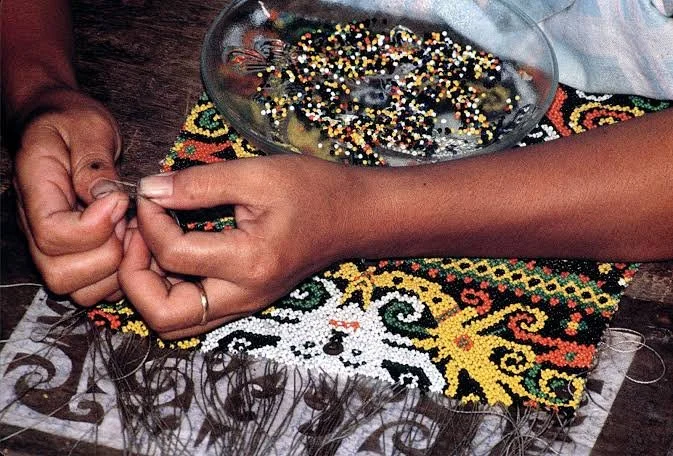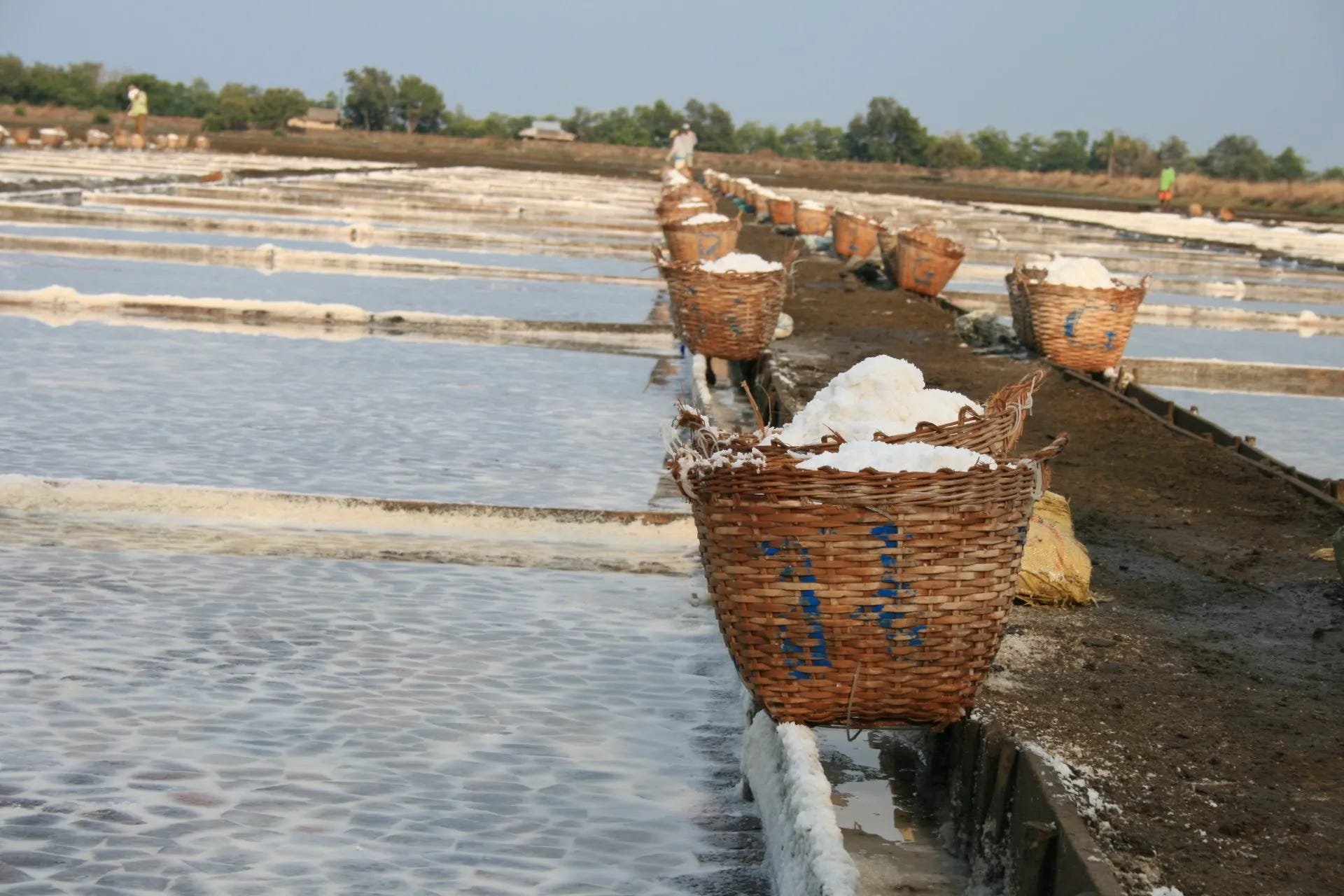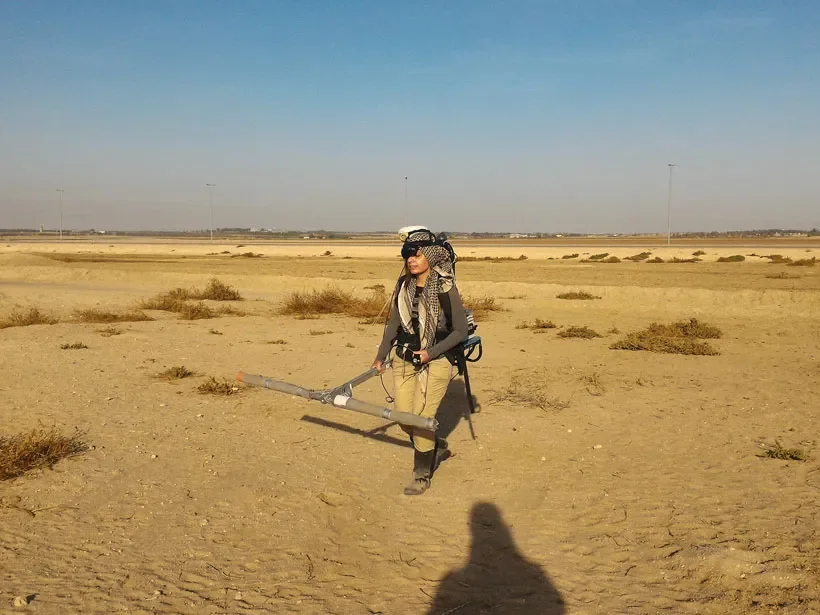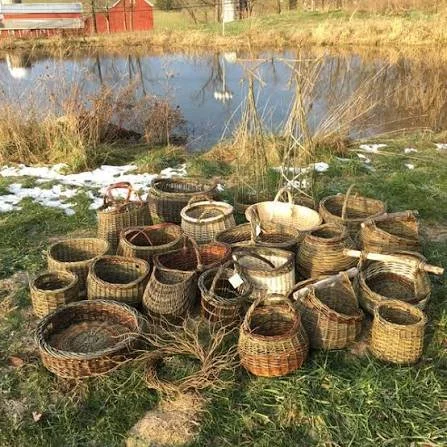
Basketry was an important technology in many societies because it provided lightweight, flexible containers and structures for carrying, storing, processing, and transporting materials. Woven objects could be made from willow branches, reeds, grasses, bark, roots, and other plant fibers available in local environments. Wetlands were particularly valuable places for basketry production because they often supported abundant plant growth and provided access to water for preparing and shaping certain materials. Although baskets rarely survive in ordinary archaeological conditions, the remains of workshops and the traces of plant processing can sometimes reveal how communities organized this specialized craft.
Willow is especially suitable for certain forms of weaving because its long, flexible shoots can be bent and interlaced into strong structures. Depending on the species and the intended product, branches may be harvested, sorted, soaked, stripped, or otherwise prepared before weaving. Freshly cut material can be easier to shape than dry wood, while soaking may help restore flexibility to some dried stems. The exact preparation method varies with the plant, the climate, and the desired characteristics of the finished object. Archaeologists must therefore avoid assuming that all ancient basketry followed one standardized process.
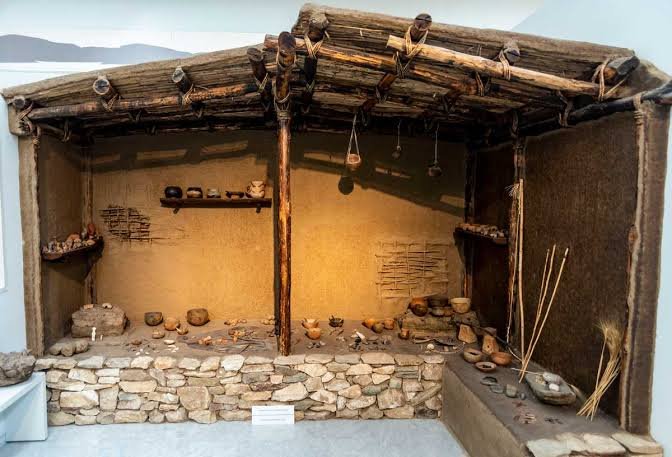
A willow weaving workshop did not necessarily require a large permanent building. Basket makers could have worked in domestic spaces, temporary shelters, open courtyards, or areas near the places where raw materials were collected. A specialized production site might contain concentrations of cut branches, discarded plant fragments, tools used for trimming and shaping, or traces of repeated activity on the ground. However, plant debris can also accumulate naturally in wetlands, and branches may have been brought to a settlement for fuel, fencing, roofing, or other purposes. Identifying a workshop requires evidence that the materials were deliberately selected and processed for weaving.
Wetland environments can preserve plant remains that would normally decay. Waterlogged sediments often contain limited oxygen, slowing some of the biological processes responsible for decomposition. Under favorable conditions, wooden tools, woven plant fibers, and other organic objects may survive for long periods. This makes wetlands especially valuable for the study of basketry, but preservation is uneven. Changes in water levels, drainage, acidity, and microbial activity can damage or destroy plant materials. A site that preserved delicate weaving for centuries may become vulnerable when excavation exposes the remains to air.
The direct discovery of woven objects provides particularly strong evidence of basketry production, but complete baskets are rare. Fragments may preserve the crossing pattern of individual strands, the thickness of the plant material, or the arrangement of the weave. Microscopic examination can sometimes identify the plant group from which the fibers came, although species-level identification may not always be possible. Researchers can also study how strands were bent, twisted, or joined to reconstruct aspects of the manufacturing process. These details may reveal whether different products required different skills or materials.
Tools associated with basketry can be difficult to distinguish from ordinary woodworking or household equipment. Knives, scrapers, awls, and other cutting or piercing implements may have been used to prepare plant materials, but they also served many unrelated purposes. Their significance becomes clearer when they occur alongside plant-processing debris or fragments of woven objects. Wear analysis may reveal repeated contact with soft plant fibers or woody material, although similar marks can develop through other activities. Researchers must therefore compare the tools with experimental examples and examine the context in which they were found.
The organization of raw materials may provide clues about production. If branches were collected in different lengths or sizes, they may have been sorted according to their intended use. Some strands could have formed the structural elements of a basket, while others served as flexible weaving material. Waste from trimming and shaping might accumulate near the working area, creating a pattern distinct from the natural distribution of plant debris. However, sorting and storage areas may leave little permanent evidence, especially when the materials themselves were removed after use.
Seasonality could have influenced the timing of willow harvesting and basketry production. The properties of willow shoots change during the growing cycle, and different stages of growth may affect flexibility, bark removal, and suitability for particular products. Communities may have collected material when it was easiest to work or when other agricultural activities placed fewer demands on their time. Nevertheless, the season of harvesting cannot usually be established from a branch fragment alone. Researchers would need evidence from plant growth patterns, associated environmental records, or other indicators that support a seasonal interpretation.
Basketry production was closely connected to everyday economic activity. Baskets could be used to gather plants, carry fish, store grain, transport pottery, or handle goods in local markets. Some woven objects may have been made for household use, while others could have been exchanged or produced for customers. The presence of many unfinished objects or standardized forms might indicate repeated production, but it would not automatically prove that the workshop supplied a commercial market. The scale and purpose of production must be inferred from the quantity of remains, the diversity of products, and the site's relationship to settlements and transport routes.
Wetlands could supply more than raw materials. They provided water for soaking plant fibers and may have offered sheltered locations where large quantities of material could be prepared. The proximity of a workshop to a waterway might also have facilitated transport, especially if finished baskets were used to carry goods along rivers or coastal routes. Yet the presence of a workshop near water does not necessarily mean that water was used directly in production. The location may simply have provided access to plants or convenient space for working.
The social organization of basketry production remains difficult to reconstruct. In some communities, weaving skills may have been transmitted within households, while other settings could have supported specialists who produced goods for exchange. Differences in technique or material selection may indicate distinct traditions, but they do not directly reveal the identity, age, or gender of the people involved. Such interpretations require independent evidence and should not rely on modern assumptions about who traditionally performs particular crafts.
Experimental archaeology can help researchers test how ancient basketry was produced. By harvesting suitable willow shoots and recreating different weaving techniques, researchers can examine the time required to prepare materials, the tools needed, and the types of waste generated. Experimental products can be compared with archaeological fragments to identify similarities in construction and wear. These studies can also investigate how soaking, drying, and storage affect the flexibility of plant materials, helping researchers evaluate whether a proposed production sequence is plausible.
The archaeology of willow weaving workshops highlights the importance of technologies made from perishable materials. Even when complete baskets have disappeared, plant fragments, tools, impressions, and wetland preservation can reveal aspects of the production process. By combining botanical identification, microscopic analysis, experimental reconstruction, and landscape study, archaeologists can investigate where materials were collected, how they were prepared, and whether basketry was produced for household use or wider exchange. This evidence helps recover an essential part of ancient material culture that is often overlooked because the finished objects rarely survive.