Introduction
The Evros region occupies one of Greece's most strategically important border areas. The Evros River forms much of the land boundary between Greece and Turkey, while the region has become significant in discussions surrounding migration, border management, security, and European Union policy.
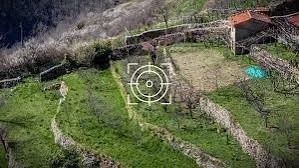
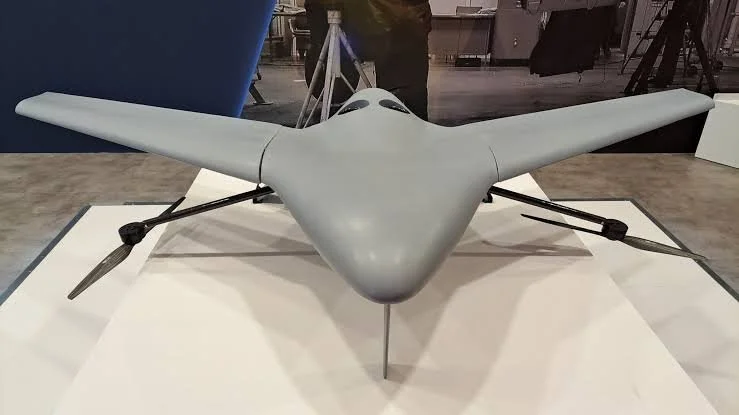
Unmanned aerial systems, commonly known as drones, have increasingly become part of modern border-surveillance strategies. They can provide aerial imagery, thermal observation, mapping, and persistent monitoring capabilities.
The title Greece's Shadowy Drone Surveillance Over the Evros Border uses dramatic language to describe this technology. However, “shadowy” should not be interpreted as proof of an illegal or completely secret surveillance program. Drone use in border management can involve publicly acknowledged systems, procurement contracts, European funding, and regulated security operations.
Why Drones Are Used at Borders
Borders can cover large and difficult landscapes.
The Evros region includes rivers, farmland, forests, roads, settlements, and irregular terrain.
Ground patrols cannot observe every area continuously.
Drones can provide aerial information over difficult terrain and allow operators to investigate areas that may be difficult or dangerous to reach.
Depending on their configuration, drones can carry visible-light cameras, thermal cameras, or other sensors.
Thermal Imaging
Thermal cameras detect infrared radiation associated with temperature differences.
At night, this can allow operators to identify people or vehicles that might be difficult to see with ordinary cameras.
However, thermal imagery is not magical.
Weather, vegetation, distance, humidity, and background temperatures can affect detection.
A thermal image may indicate that something warm is present without necessarily identifying exactly what it is.
Human interpretation and additional sensors are therefore often required.
Border Surveillance and Migration
The Evros border has been a major point of movement for migrants and asylum seekers attempting to enter the European Union.
Border surveillance technology is consequently part of a broader system involving police, border guards, patrols, sensors, cameras, vehicles, and information-sharing networks.
The use of drones can improve situational awareness.
However, technology also raises questions about privacy, accountability, humanitarian protection, and the treatment of people seeking asylum.
Surveillance must operate within applicable legal and human-rights frameworks.
European Union Involvement
The management of Europe's external borders is not exclusively a national matter.
European institutions and agencies can support member states through funding, equipment, training, and operational cooperation.
This means that technology used at the Evros border may form part of a wider European border-management system rather than an isolated Greek program.
Understanding this institutional structure is essential when assessing claims about “secret” surveillance.
What Drones Can and Cannot Do
Drones can detect and track movement, but they do not automatically establish intent.
A drone operator may observe a group moving through terrain, but determining whether the people are migrants, local residents, workers, smugglers, or other individuals requires additional information.
Automated systems can generate alerts based on movement patterns, but false positives remain possible.
This is why human review and operational protocols matter.
Data Collection and Privacy
Drone surveillance can generate significant amounts of information.
Depending on the system, this may include images, video, location data, timestamps, and information about movement patterns.
The collection and retention of such information raises important privacy questions.
Authorities need rules governing who can access the data, how long it can be stored, when it can be shared, and what safeguards prevent misuse.
Security Benefits
From a border-management perspective, drones can provide useful capabilities.
They can monitor large areas, identify potential crossings, support emergency responses, and provide information to patrol teams.
They may also reduce the need for personnel to physically enter dangerous or inaccessible terrain.
Drones can potentially assist in search-and-rescue operations as well as security functions.
This dual-use capability is important because the same aerial technology can support both enforcement and humanitarian missions.
Ethical Concerns
The expansion of surveillance technology at borders has generated international debate.
Critics may question whether extensive monitoring creates excessive surveillance or affects the rights of migrants and local residents.
Supporters may argue that governments have legitimate responsibilities to manage borders and prevent dangerous crossings or criminal activity.
A balanced discussion should recognize both concerns.
The key issue is whether surveillance is conducted under clear legal authority, with appropriate oversight and safeguards.
The Future of Border Technology
Future systems may combine drones with fixed cameras, radar, satellite imagery, artificial intelligence, thermal sensors, and automated data analysis.
Such integration could provide increasingly detailed awareness of border activity.
But technological capability should not be confused with unlimited authority.
As surveillance becomes more powerful, governance becomes increasingly important.
Conclusion
Drone surveillance over the Evros border is part of a broader transformation in how modern states monitor difficult and politically sensitive frontiers.
The technology can provide valuable aerial information, particularly across terrain that is difficult to patrol continuously. At the same time, it raises serious questions about privacy, accountability, humanitarian protection, and the appropriate limits of automated surveillance.
The most important issue is therefore not whether Greece possesses “shadowy” drones, but how advanced surveillance technology is governed and whether its use remains consistent with legal obligations and fundamental rights.