Introduction
Trade between Constantinople, later Istanbul, and Greek territories formed part of a much larger economic network connecting the Ottoman Empire with the Mediterranean, Balkans, Black Sea, and Middle East.
Merchants transported textiles, food, agricultural products, metals, ceramics, timber, and many other goods across these networks.
Modern virtual reality provides new ways to reconstruct historical trade environments.
The phrase “hidden VR archives” does not imply that a secret digital archive of Ottoman trade necessarily exists. Instead, it highlights the potential for immersive technology to reconstruct historical commercial landscapes.
Ottoman Trade Networks
Ottoman economic life depended heavily on cities, ports, roads, caravan routes, markets, and maritime connections.
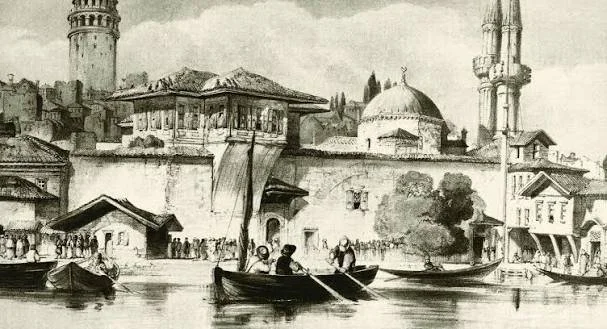
Istanbul served as one of the empire's most important commercial centers.
Greek-speaking communities and merchants participated in regional commerce through ports and cities across the empire.
Trade routes connected the Aegean islands, mainland Greece, Asia Minor, and Istanbul.
What Could a VR Archive Reconstruct?
A virtual archive could recreate historical marketplaces, ports, warehouses, ships, streets, and commercial districts.
Users might explore a reconstructed market and learn how goods moved through it.
Digital models could also represent historical documents such as merchant records, maps, tax documents, or shipping records.
Historical Accuracy
The biggest challenge is evidence.
A VR environment can easily create convincing buildings that have no historical basis.
Researchers therefore need maps, archaeological remains, paintings, written descriptions, architectural studies, and archival records.
Where evidence is missing, the digital environment should identify reconstructions as hypothetical.
Trade and Everyday Life
VR could make economic history more accessible.
Instead of simply reading that grain was transported through a port, users could experience a simulated harbor where ships arrive, cargo is unloaded, merchants negotiate prices, and goods enter warehouses.
This would connect economic history with everyday human activity.
Conclusion
Virtual reality could become a powerful tool for reconstructing Ottoman trade between Istanbul and Greek territories.
The value of such an archive would come from careful integration of historical evidence, archaeology, cartography, and digital modeling.
The goal should not be to create a fantasy version of Ottoman commerce, but to make documented historical processes easier to understand.
Secret Nanotech Research in Delphi's Modern Labs
Introduction
Nanotechnology involves manipulating materials and structures at extremely small scales, often measured in nanometers.
Research at this scale can influence electronics, medicine, materials science, energy storage, sensors, and environmental technology.
The title Secret Nanotech Research in Delphi's Modern Labs combines ancient Delphi with a hypothetical modern scientific environment.
There is no basis for claiming that secret nanotechnology laboratories operate at Delphi without evidence. The topic is nevertheless useful for exploring how modern scientific research can exist alongside ancient heritage landscapes.
What Is Nanotechnology?
A nanometer is one billionth of a meter.
At extremely small scales, materials can exhibit properties different from those observed at larger scales.
Researchers can manipulate structures to alter conductivity, strength, optical behavior, chemical reactivity, or biological interactions.
Nanotechnology therefore spans several scientific disciplines.
Applications
Nanomaterials can be used in batteries, solar cells, sensors, coatings, medical delivery systems, and electronics.
Researchers also investigate nanoscale structures for water purification and environmental remediation.
The field is particularly important because improving material performance at tiny scales can have large effects on industrial systems.
Why Delphi Would Be Sensitive
Delphi is one of Greece's most important archaeological landscapes.
Any modern laboratory development near the archaeological site would need to respect heritage protections and environmental planning.
The contrast between ancient religious architecture and advanced scientific technology creates an interesting cultural image, but the practical constraints would be substantial.
Scientific Research and Heritage
Greece contains many universities and research institutions capable of participating in nanotechnology.
Research does not need to occur directly at archaeological sites.
A modern scientific facility can operate elsewhere while collaborating with institutions located near heritage areas.
This distinction matters because the existence of scientific expertise in Greece does not imply laboratories are physically located at Delphi.
Conclusion
Secret nanotechnology laboratories at Delphi should not be treated as an established fact without reliable evidence.
The more compelling story is the coexistence of Greece's extraordinary archaeological heritage with its growing participation in modern scientific research.
Nanotechnology represents a field where materials science, medicine, energy, and computing increasingly intersect, while Delphi remains a place where ancient philosophy, religion, architecture, and history continue to shape modern cultural identity.