Introduction
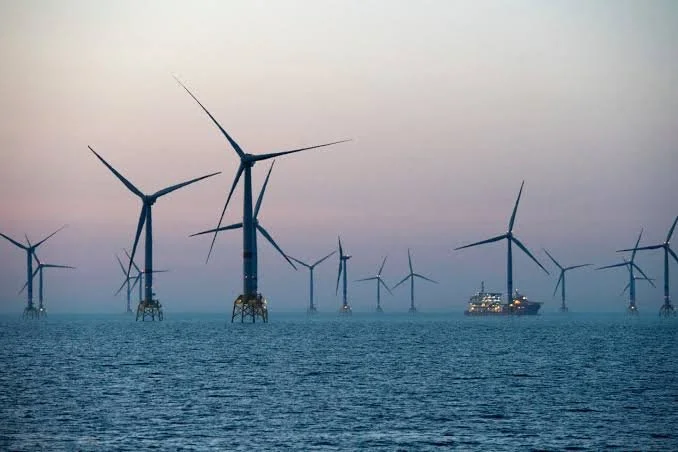
Offshore wind energy has become an important component of Europe's renewable-energy strategy.
The concept involves placing wind turbines in marine environments where stronger and more consistent winds can provide electricity generation.
The Myrtoan Sea, located between the Peloponnese and the Cycladic region, contains extensive maritime space that could theoretically be considered for renewable-energy development.
The phrase “undocumented offshore wind farms” should not be treated as evidence that secret wind farms are already operating in the region.
Why Offshore Wind Is Attractive
Wind speeds over the sea can be relatively strong and consistent.
Large turbines can capture substantial amounts of energy.
Offshore wind farms can therefore contribute significant electricity generation without occupying large areas of agricultural land.
However, marine projects require extensive planning.
Site Selection
Developers must evaluate wind conditions, seabed depth, geological stability, shipping routes, fishing activity, marine ecosystems, military zones, aviation concerns, and visual impacts.
These constraints can make offshore wind development much more complicated than simply identifying a windy area.
Floating Wind Technology
Deep waters present particular challenges.
Traditional offshore turbines are usually mounted on foundations fixed to the seabed.
Floating turbines can operate in deeper water by attaching turbines to floating platforms secured with mooring systems.
Floating wind technology could therefore expand the potential geographic range of offshore wind.
Environmental Questions
Offshore wind farms can affect marine ecosystems during construction and operation.
Underwater noise from construction can disturb marine organisms.
Cables can alter seabed environments.
Turbines can influence bird movement and marine habitats.
Environmental impact assessments are therefore necessary before development.
Fishing and Shipping
Marine space is already used by fishermen, cargo vessels, ferries, and recreational boats.
A wind farm can interfere with existing activities if not properly planned.
Developers must therefore coordinate with maritime authorities and local communities.
Why Secret Farms Would Be Difficult
Large offshore wind farms are physically enormous.
Turbines can rise hundreds of meters above sea level.
Construction vessels, underwater cables, substations, and maintenance operations would be visible to shipping and coastal observers.
A completely secret operational wind farm would therefore be highly difficult to conceal.
Conclusion
There is no reason to treat undocumented offshore wind farms in the Myrtoan Sea as an established network without evidence.
The broader question is nevertheless important.
As Greece explores renewable-energy expansion, offshore wind could become part of the country's future energy portfolio.
Its development will depend on environmental protection, maritime planning, technology, grid connections, and cooperation with communities whose livelihoods depend on the sea.