Introduction
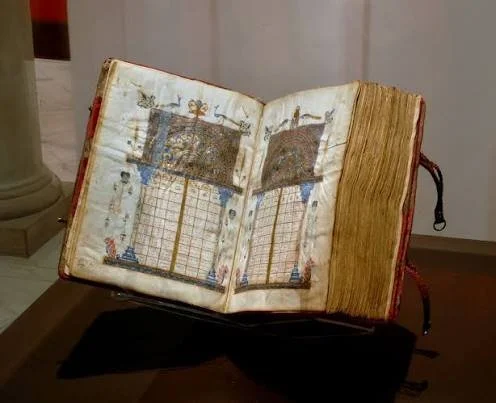
Byzantine manuscripts are among the most important surviving records of medieval Greek and Christian intellectual history. They preserve religious texts, philosophical works, historical writings, scientific knowledge, artistic traditions, and evidence of the languages and institutions of the medieval eastern Mediterranean.
Modern technologies have created new possibilities for preserving, cataloguing, and authenticating digital representations of these manuscripts. Blockchain technology has attracted particular attention because it can create tamper-evident records of transactions and digital certificates.
The phrase The Unseen Blockchain Archives of Byzantine Manuscripts should therefore be understood as a conceptual exploration of how blockchain might support manuscript documentation rather than as evidence that a secret blockchain archive containing Byzantine manuscripts already exists.
What Makes Byzantine Manuscripts Valuable?
A manuscript is more than the text written on its pages. Its value can include the script, ink, parchment or paper, illumination, binding, marginal notes, ownership marks, and evidence of previous use.
Two manuscripts containing the same text may nevertheless provide different historical information.
A scribe's handwriting can help researchers identify periods and regional traditions. Decorative elements can reveal artistic connections. Marginal notes may document how later readers interpreted or used the manuscript.
Manuscripts can also preserve textual variations. A copy made centuries after the original work was written may contain differences that help scholars reconstruct how texts changed through transmission.
Digitization and Preservation
Digital imaging has transformed manuscript studies.
High-resolution photography allows researchers to examine manuscripts without repeatedly handling fragile originals. Multispectral imaging can sometimes reveal faded writing or erased material that is difficult to see under ordinary lighting.
Digital archives also make manuscripts accessible to researchers who cannot travel to the institution holding the original.
However, digital files present their own challenges. Files must be stored securely, backed up, migrated to new formats, and accompanied by reliable metadata.
A digital image is therefore not a permanent solution by itself.
Where Blockchain Could Help
Blockchain systems are designed to maintain records across distributed networks. Once information is recorded according to the system's rules, changing the record can be difficult or detectable.
For manuscript preservation, blockchain could potentially record metadata such as:
when a digital scan was created;
which institution created it;
the file's cryptographic hash;
ownership or licensing information;
subsequent authorized transactions;
provenance records.
A hash can act as a digital fingerprint. If the underlying file changes, its hash will normally change as well.
This can help researchers determine whether a digital file remains identical to the version originally documented.
Blockchain Does Not Prove Authenticity
One of the most important limitations is that blockchain can preserve a record without proving that the original information was truthful.
If someone uploads a fraudulent scan and records it on a blockchain, the blockchain may reliably preserve the record of that upload without proving that the manuscript itself is authentic.
Authenticity still depends on scholarship, provenance research, physical examination, institutional records, and specialist analysis.
Blockchain can therefore support authentication workflows, but it cannot replace experts.
Provenance and Cultural Heritage
Provenance refers to the history of ownership and movement of an object.
For manuscripts, provenance can be complex. A codex may have passed through monasteries, private collections, libraries, dealers, and museums.
A transparent digital record could help institutions document when an object was acquired, examined, digitized, transferred, or exhibited.
This could be especially valuable for manuscripts whose ownership histories are incomplete.
However, public digital records must also respect privacy, legal restrictions, and cultural concerns.
The Problem of Digital Permanence
Blockchain records may be difficult to modify, but the data they reference can still disappear.
A blockchain entry might contain a hash pointing to a digital file stored elsewhere. If the storage system fails, the blockchain can preserve the fingerprint while the actual image becomes inaccessible.
Long-term preservation therefore requires multiple layers:
stable digital storage;
backups;
metadata standards;
institutional stewardship;
format migration;
access policies;
integrity verification.
Blockchain is only one possible component.
Byzantine Manuscripts and Modern Scholarship
Digital technology can dramatically expand access to Byzantine studies.
Researchers can compare manuscripts held in different countries, search large collections, analyze handwriting, and examine artistic details at high resolution.
Machine learning may eventually assist with script recognition, damaged-text reconstruction, and cataloguing, although automated systems require careful scholarly supervision.
A blockchain-based provenance layer could complement these tools by maintaining a transparent history of digital objects.
Ethical Questions
Digitization also raises questions about ownership and control.
Who owns the digital representation of a manuscript? Should a public institution charge for high-resolution access? How should religious communities participate in decisions about culturally sensitive materials?
These questions cannot be answered by technology alone.
Blockchain systems can make records more technically durable while leaving unresolved questions about rights, access, and institutional authority.
Conclusion
The concept of blockchain archives for Byzantine manuscripts represents a fascinating intersection between medieval heritage and twenty-first-century technology.
Blockchain could potentially strengthen digital provenance, integrity verification, and documentation, but it should not be presented as a magical solution for manuscript authentication or preservation.
The most effective future system would combine traditional scholarship, conservation science, high-resolution digitization, secure repositories, standardized metadata, and carefully designed digital verification systems.
In this sense, the “unseen archive” may not be a secret technological vault at all. It could be a new digital layer connecting centuries-old manuscripts with modern methods of preservation and research.