Introduction and Historical Background
Monastic gardens formed an important part of Byzantine religious and economic life. They provided spaces for growing food, cultivating medicinal plants, maintaining orchards, and supporting the daily needs of religious communities. Beyond their practical function, gardens could also reflect ideas about discipline, contemplation, stewardship, and the relationship between human life and the natural world.
Meteora, in Thessaly, is internationally known for its monasteries built on dramatic rock formations. The monastic landscape developed over several centuries and became an important center of Orthodox Christian spirituality. The surrounding foothills and valleys provided the natural setting in which monastic communities maintained agricultural and domestic activities.
The proposed study of Byzantine cloister gardens in the Meteora foothills offers an opportunity to examine the relationship between monastic architecture, landscape management, and agricultural practice. However, the identification of particular gardens as Byzantine structures requires archaeological, architectural, or documentary evidence.
The Development of Byzantine Monasticism
Byzantine monasticism developed through traditions of communal and individual religious life. Monasteries were established in urban, rural, mountainous, and remote environments. Their locations often reflected spiritual preferences as well as practical considerations such as water availability, security, access to land, and proximity to settlements.
Monastic communities followed rules that organized prayer, work, study, and communal responsibilities. Agricultural labor was often part of this organization, especially in monasteries that maintained their own food supplies.
Gardens and cultivated land supported the daily routine of monks and other members of religious communities. Their maintenance required knowledge of soil, water, seasonal cycles, and plant cultivation.
The Organization of Cloister Gardens
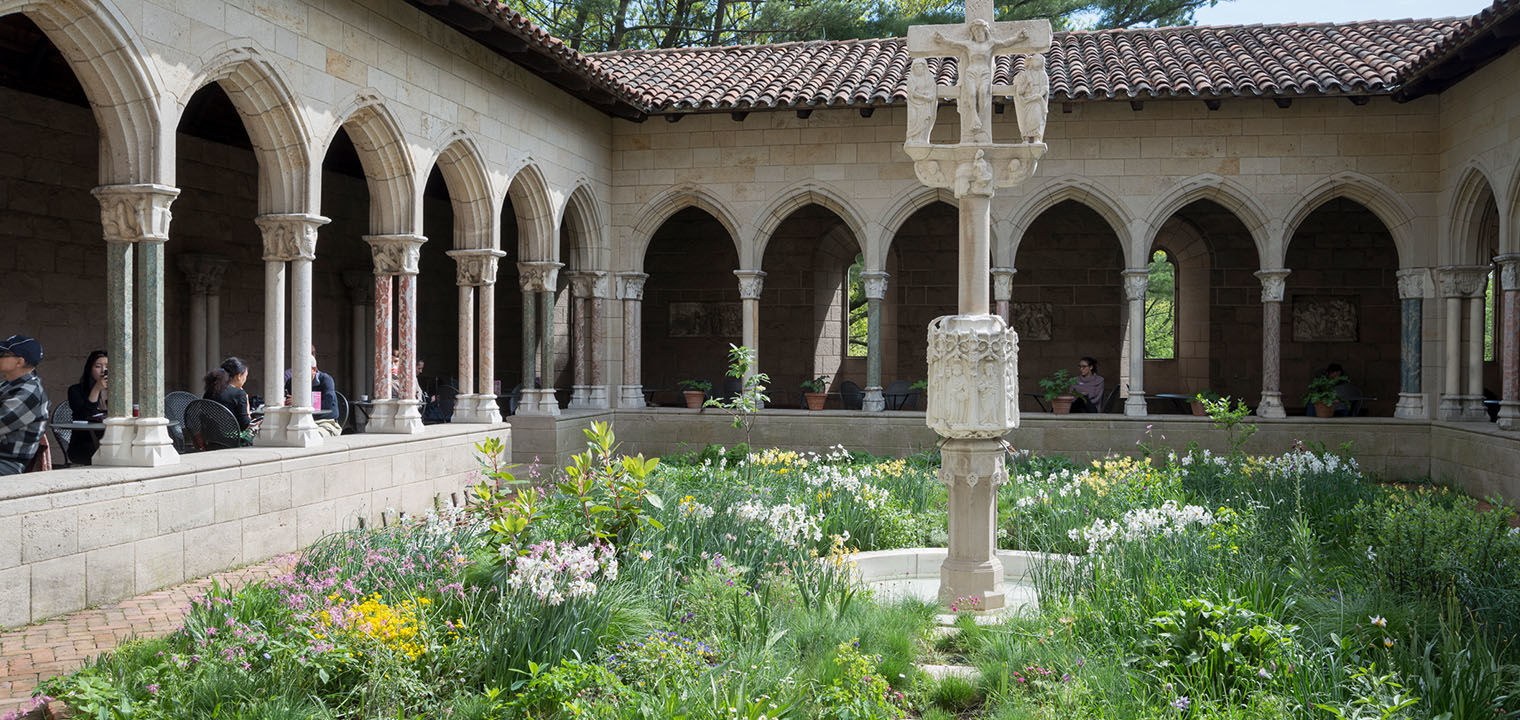
A cloister garden was generally associated with the enclosed spaces of a monastery. In some monastic traditions, the central courtyard could contain planted areas, pathways, wells, or other features that created a controlled environment within the monastery.
The design of gardens varied according to the architectural plan, available space, local climate, and practical needs. Some gardens were primarily decorative, while others served as productive areas for growing vegetables, herbs, or fruit.
Water management was especially important. Monasteries might use wells, channels, cisterns, or natural springs to support cultivation. The location of water sources could influence the organization of both buildings and gardens.
Agricultural and Medicinal Plants
Monastic gardens could contain plants used for food, medicine, and other daily purposes. Vegetables and fruit trees contributed to the food supply, while aromatic and medicinal herbs were valued for their practical uses.
Knowledge of plants was transmitted through experience, written medical traditions, and contact with surrounding communities. Monasteries could therefore contribute to the preservation and use of agricultural knowledge.
The exact plants cultivated at any particular monastery cannot be established simply from the general history of Byzantine gardening. Archaeobotanical evidence, written records, or securely dated cultivation features would be necessary to reconstruct a specific garden.
The Landscape of the Meteora Foothills
The landscape surrounding Meteora contains steep rock formations, valleys, slopes, and areas suitable for agriculture. The relationship between monastic buildings and their environment is central to understanding how communities adapted to local conditions.
Monasteries required access to water, food, building materials, and communication routes. Cultivated plots in the foothills could help support monastic life, while the surrounding landscape provided opportunities for livestock keeping and other agricultural activities.
The natural environment also contributed to the spiritual identity of Meteora. Its isolated rock formations and elevated monastic structures created a setting associated with withdrawal, contemplation, and religious dedication.
Archaeological and Architectural Evidence
The study of Byzantine gardens requires evidence beyond the presence of a courtyard or open space. Researchers may examine soil layers, planting pits, irrigation channels, wells, storage structures, and remains of cultivated plants.
Architectural documentation can help reconstruct the original layout of monastic compounds. Historical maps, manuscripts, property records, and later descriptions may also provide information about the use of surrounding land.
Archaeobotanical analysis can identify preserved seeds, pollen, charcoal, and plant remains. These materials may help establish which species were present in a particular period, although their interpretation depends on preservation and context.
Symbolism and Spiritual Meaning
Gardens could carry religious symbolism in Byzantine Christian culture. Biblical references to gardens, paradise, cultivation, and renewal contributed to the symbolic language of Christian art and religious writing.
A cultivated garden could represent order and care within the natural world. It could also provide a place for quiet reflection and separation from the demands of ordinary life.
However, symbolic interpretations should not replace practical explanations. A monastic garden may have been both a productive agricultural space and an environment with spiritual meaning.
Conservation and Historical Importance
The preservation of monastic landscapes is important because gardens are vulnerable to later construction, changes in land use, erosion, and the loss of traditional cultivation practices.
Conservation work should consider the relationship between buildings, cultivated spaces, water systems, and the surrounding landscape. Protecting only the architectural structures may fail to preserve the wider environmental setting that supported monastic life.
Conclusion
The study of Byzantine cloister gardens in the Meteora foothills provides an opportunity to investigate monastic agriculture, landscape organization, plant knowledge, and religious culture.
Although the general importance of gardens to monastic life is well established, specific Byzantine garden layouts in the Meteora foothills must be demonstrated through archaeological and historical evidence. Such research could deepen understanding of how monastic communities combined spiritual practice with practical management of their natural environment.