Introduction and Historical Background
Silver vessels were among the valuable objects used in ancient domestic, ceremonial, and funerary contexts. Their production required access to precious metals and specialized craftsmanship. Because silver objects could be expensive, their presence in burials may provide information about wealth, social position, cultural connections, and funerary customs.
The ancient region of Epirus occupied parts of northwestern Greece and neighboring territories. It maintained political and cultural relationships with areas of the southern Balkans, including communities around Lake Ohrid. The Ohrid region itself has a long history of settlement and cultural interaction because of its geographical position between inland routes and the western Balkan landscape.
The proposed study of Epirote silver bowls in Ohrid border tombs could contribute to understanding relationships between communities in Epirus and the Ohrid region. However, the identification of particular bowls as Epirote products requires examination of their manufacturing techniques, decoration, inscriptions, and archaeological provenance. Their presence in a tomb near a geographical border would not alone establish their place of manufacture.
Silver Vessels in Ancient Society
Silver vessels served several functions in ancient communities. They could be used for drinking, serving food, presenting offerings, or participating in ceremonial activities. Their value was connected not only to the precious metal but also to their craftsmanship and decorative quality.
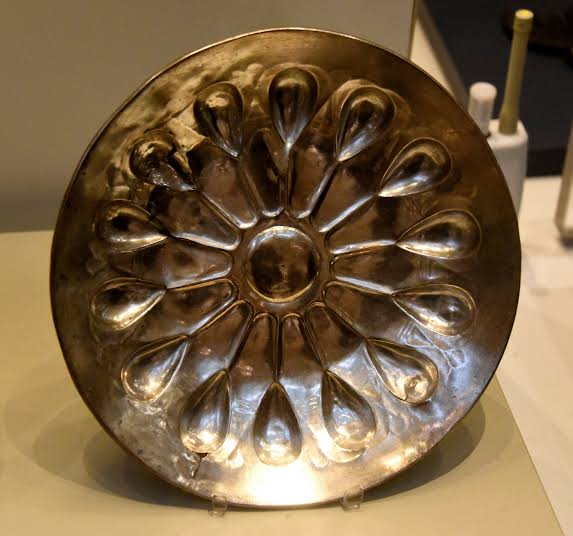
Some vessels were produced through hammering, casting, engraving, or repoussé work. Repoussé decoration involved shaping metal from the reverse side to create raised designs on the front. Engraving and chasing could add details to the surface.
The shape and decoration of a vessel could reflect the traditions of a workshop or the preferences of its intended users. Comparisons between objects from different regions may therefore help identify shared artistic practices and possible connections between production centers.
Funerary Use of Silver Bowls
The inclusion of valuable vessels in burials was part of broader ancient funerary traditions. Objects placed in graves could serve practical, symbolic, or commemorative purposes. They may have represented the deceased's status, household wealth, personal identity, or relationships with the wider community.
Silver bowls may have been deposited as individual grave goods or as part of larger assemblages containing pottery, jewelry, weapons, and other objects. Their meaning depends on the composition of the burial and the way the objects were arranged.
Researchers should also consider whether a vessel was manufactured specifically for funerary use or whether it had previously been used in domestic or ceremonial settings. Wear marks, repairs, and residues may help investigate its history before burial.
Epirus and the Ohrid Region
The relationship between Epirus and the Ohrid region should be understood within the broader context of ancient Balkan interaction. Communities in these areas participated in exchange networks involving metals, pottery, livestock, agricultural products, and crafted objects.
Geographical boundaries did not necessarily prevent cultural contact. Merchants, travelers, political representatives, and craftspeople could move between neighboring regions. Objects could also circulate through gifts, trade, warfare, or the movement of individuals.
The presence of a vessel with stylistic features comparable to Epirote metalwork in an Ohrid burial, if archaeologically documented, could suggest cultural or commercial interaction. It would not necessarily demonstrate that the deceased was Epirote or that the vessel had been imported directly from Epirus.
Craftsmanship and Artistic Features
Silver bowls can be examined through their shape, dimensions, weight, surface decoration, and manufacturing marks. Differences in rim construction, handles, bases, and decorative motifs may help establish relationships between objects.
The study of decorative styles can be particularly useful. Floral motifs, geometric patterns, animal representations, and human figures may reflect artistic traditions shared across different parts of the ancient Mediterranean and Balkans.
However, stylistic similarity does not always indicate common production. Workshops could imitate popular forms, and craftspeople could adapt designs from imported objects. For this reason, stylistic analysis should be combined with technical and compositional examination.
Scientific Analysis and Provenance
Scientific study can provide information about the composition and manufacture of silver vessels. Elemental analysis may identify the presence of copper, gold, lead, and other trace elements.
Researchers may also examine tool marks and manufacturing traces to determine whether a vessel was hammered, cast, or decorated through additional techniques. Microscopic analysis can reveal details of the metal surface that are not easily visible during ordinary examination.
Determining the geographical origin of silver is more difficult. Lead isotope analysis may help compare metal objects with potential ore sources, but the results do not always identify a unique mining area. Recycling and the mixing of metals can further complicate provenance studies.
Social and Cultural Interpretation
The deposition of silver bowls in graves may reflect the economic resources and social relationships of the deceased. Such objects could demonstrate access to valuable materials and participation in networks of exchange.
They may also reveal differences in funerary customs between neighboring communities. If similar vessel forms appear in several regions, researchers can investigate whether these similarities reflect trade, shared ceremonial practices, or the movement of craftspeople.
The interpretation must remain sensitive to local context. Burial practices are shaped by many factors, and wealth alone cannot explain every difference in grave goods.
Conclusion
The study of Epirote silver bowls in Ohrid border tombs offers a valuable research framework for examining ancient metalworking, funerary practices, and cultural exchange in the southern Balkans.
To establish whether particular bowls originated in Epirus, researchers must combine archaeological context, stylistic comparison, manufacturing analysis, and scientific examination. Properly documented finds could contribute to understanding the movement of valuable objects and the relationships between communities across the ancient Balkan landscape.