Introduction and Historical Background
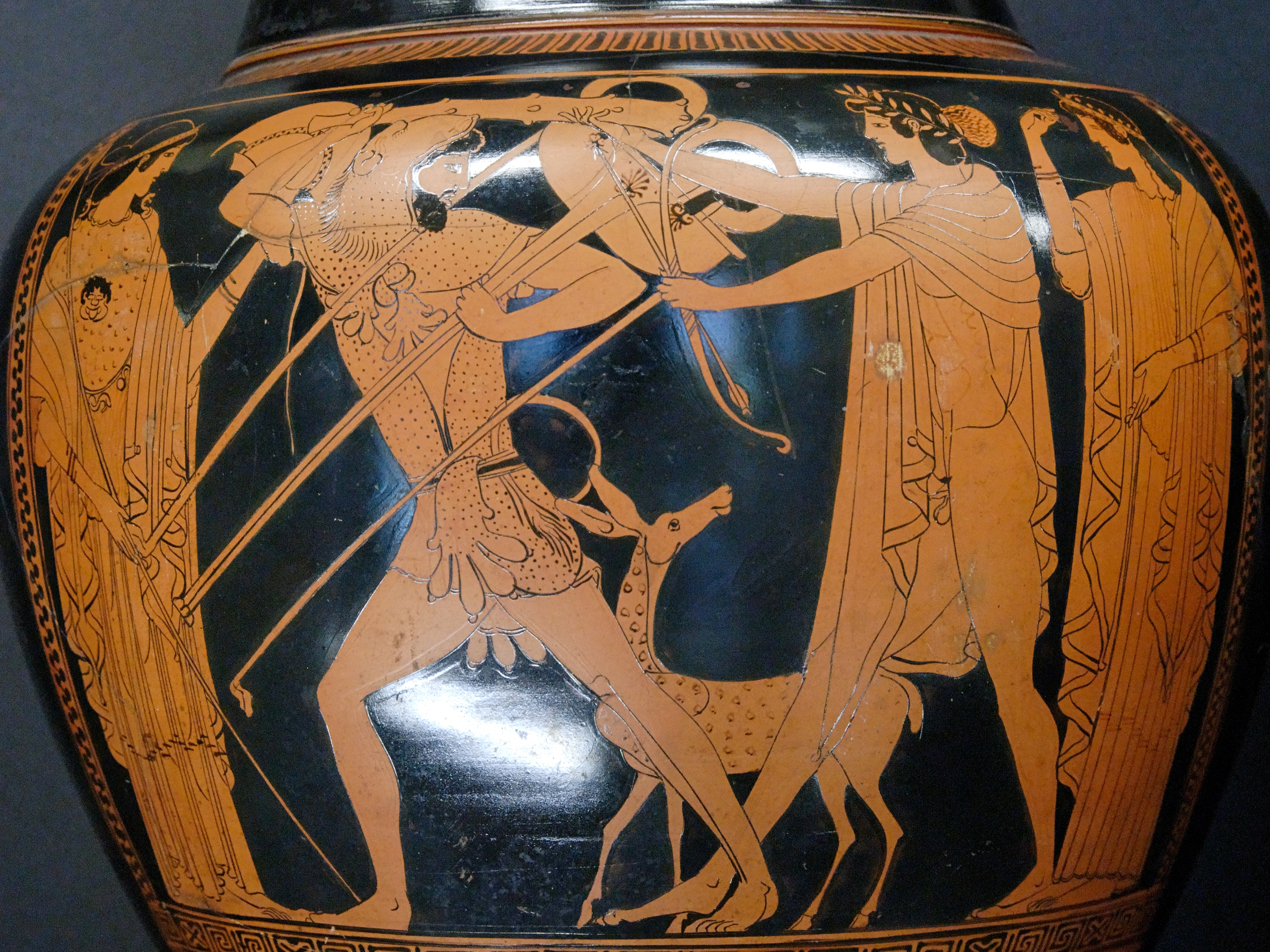
Music played an important role in ancient Greek religious, social, educational, and funerary life. Musical instruments were used during festivals, public performances, private gatherings, religious ceremonies, and theatrical events. They also appeared in artistic representations and literary descriptions.
Dion, located near the eastern foothills of Mount Olympus in Macedonia, was an important religious and cultural center. It was associated with the worship of Zeus and other deities and became closely connected with Macedonian royal and political traditions.
The proposed study of Hellenistic lyres from music-related graves in Dion offers an opportunity to examine the relationship between musical culture, burial customs, and social identity. However, claims about actual lyres recovered from particular graves must be confirmed through excavation reports and museum documentation. Representations of musical instruments should not be confused with surviving physical instruments.
Music in Hellenistic Society
The Hellenistic period followed the conquests of Alexander the Great and was characterized by the expansion of Greek cultural influence across a wide geographical area. Music remained important in religious festivals, theatrical performances, education, and entertainment.
Musical training was associated with education and social refinement. Instruments such as lyres, kitharas, flutes, and percussion instruments were used in different musical settings.
Music could accompany religious processions, sacrifices, celebrations, and communal gatherings. Its presence in public and private life demonstrates that musical performance was not limited to professional musicians.
The Lyre and Its Construction
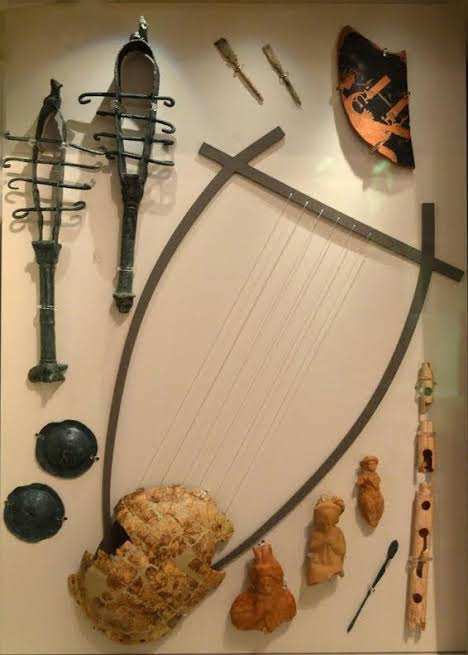
The lyre was a stringed instrument associated with ancient Greek musical traditions. Its basic structure generally included a resonating body, two arms, a crossbar, and strings stretched between the lower part of the instrument and the crossbar.
Different forms of lyres existed, and their construction varied across periods and regions. Materials could include wood, animal products, metal components, and strings made from suitable organic fibers.
The sound of the instrument depended on its dimensions, construction, string material, and playing technique. Because many of these materials were organic, complete archaeological examples are rare.
Musical Instruments in Funerary Contexts
Musical instruments could be associated with funerary practices in different ways. An instrument might be placed in a grave as a personal possession, a symbol of the deceased's identity, or an offering intended to accompany the individual in death.
Other graves may contain objects associated with music without preserving an actual instrument. These could include decorative fittings, fragments of strings, representations on pottery, or objects interpreted as musical accessories.
The identification of a grave as belonging to a musician requires careful consideration. A single musical object does not necessarily establish the occupation of the deceased. Burial assemblages, inscriptions, iconography, and other contextual evidence should be examined together.
Dion as a Cultural and Religious Center
Dion's religious significance made it an important setting for ceremonial and cultural activities. Festivals and public events could involve music, processions, theatrical performances, and other forms of collective participation.
The city's location near Mount Olympus connected it with important religious traditions and the broader Macedonian landscape. Its archaeological remains provide evidence of public buildings, sanctuaries, domestic spaces, and funerary practices.
Research into musical objects from Dion could contribute to understanding how music participated in religious and social life in Hellenistic Macedonia.
Archaeological Identification of Ancient Lyres
The study of ancient musical instruments is challenging because wood, leather, and strings rarely survive. Archaeologists may instead identify instrument components through preserved metal fittings, impressions, fragments, or iconographic representations.
The shape and position of surviving components can help researchers distinguish between different instrument types. Comparisons with ancient images and written descriptions may provide additional information.
Scientific analysis may identify the materials used in preserved fragments. Experimental archaeology can also help reconstruct possible instrument forms and investigate how they may have produced sound.
Music, Identity, and Social Status
Musical knowledge could form part of a person's social identity. Musicians may have participated in religious ceremonies, theatrical events, private entertainment, or professional performances.
The inclusion of musical objects in graves may indicate that music was important to the deceased or to the community responsible for the burial. Such objects could also communicate cultural affiliation and social expectations.
However, interpretations should avoid assuming that every grave containing a musical representation belonged to a professional performer. Music had a much broader role in ancient society.
Conclusion
The proposed study of Hellenistic lyres from Dion music graves provides a framework for examining musical performance, funerary customs, and cultural identity in ancient Macedonia.
Reliable conclusions depend on identifying actual instrument remains and distinguishing them from artistic representations or objects of uncertain function. When supported by archaeological context and comparative evidence, musical finds can contribute significantly to the history of ancient Greek music.