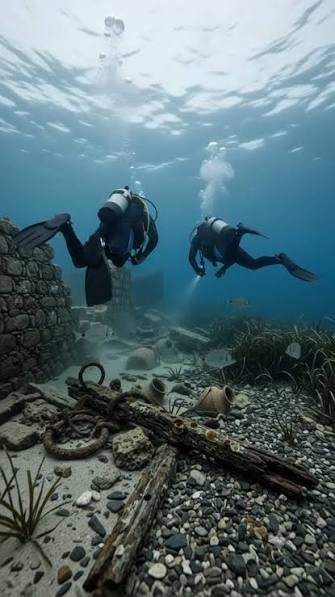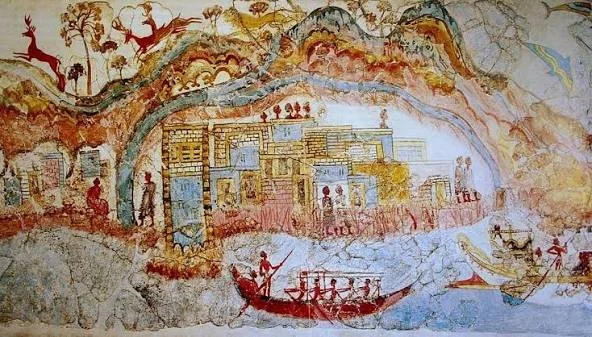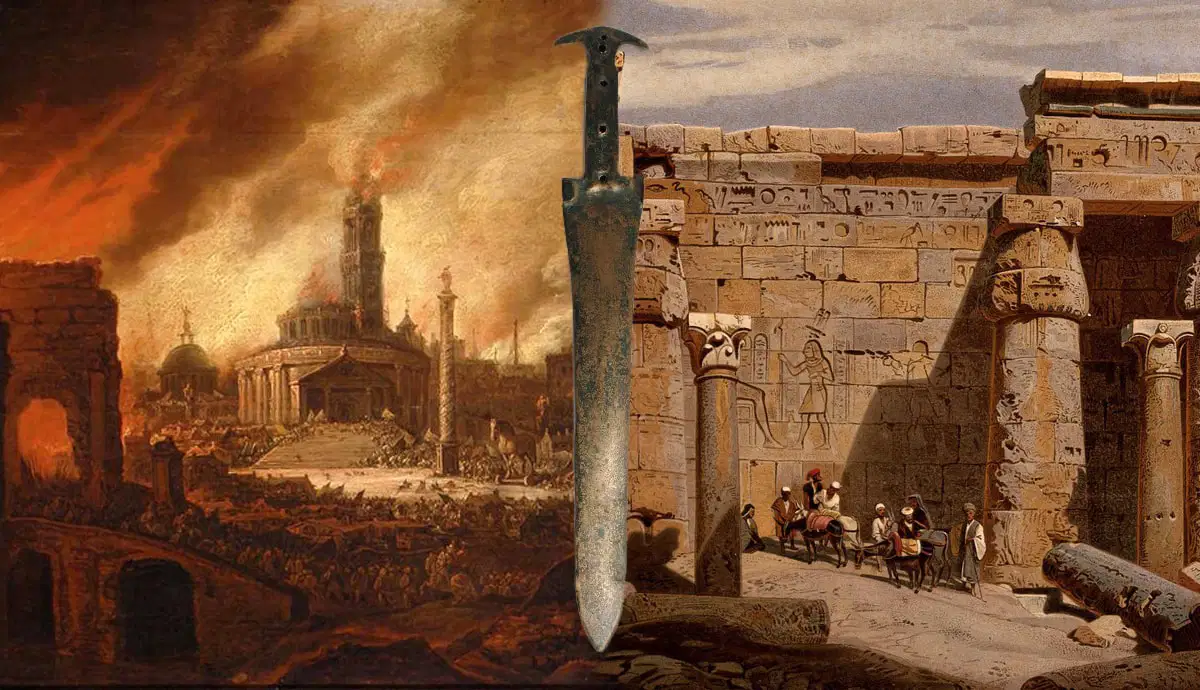
The Late Bronze Age Collapse (c. 1200–1150 BCE) remains one of history’s greatest "whodunnits." In a matter of decades, the sophisticated, literate, and interconnected civilizations of the Eastern Mediterranean—including the Mycenaean Greeks—crumbled. For Greece, this wasn't just a change in government; it was a total systemic failure that ushered in a "Dark Age" lasting nearly 400 years.
1. The Mycenaean World Before the Fall
To understand the impact, we have to look at what was lost. Mycenaean Greece was a world of "Palace Economies."
Bureaucratic Control: Centers like Mycenae, Pylos, and Tiryns managed every aspect of life, from olive oil production to the distribution of bronze weapons.
Linear B: This was the earliest form of Greek writing, used by palace scribes to keep meticulous records of inventories and taxes.
Interconnected Trade: The Mycenaeans were part of a "global" trade network, exchanging pottery and wool for tin from Britain, copper from Cyprus, and gold from Egypt.
2. The Perfect Storm: Why Did It Happen?
Archaeologists no longer look for a single "smoking gun." Instead, they point to a "systems collapse"—a domino effect where multiple stressors hit at once.
The Sea Peoples: Egyptian records describe a mysterious confederation of seaborne raiders who attacked the coasts of the Mediterranean. While they are often blamed for the destruction of palaces, many historians now see them as a symptom of the collapse (refugees or mercenaries) rather than the sole cause.
Natural Disasters: Evidence of "earthquake storms" (a series of seismic events over several decades) has been found in the ruins of Mycenae and Tiryns.
Climate Change and Famine: Paleoclimate data suggests a prolonged "mega-drought" hit the region, leading to crop failures and internal uprisings against the palace elites who could no longer provide food.
3. The Impact: The Greek "Dark Age"
When the palaces fell, the specialized knowledge required to maintain them vanished. The impact on Greek culture was profound:
The Loss of Writing: Linear B was a palace tool. When the palaces were burned, the scribes disappeared, and the Greeks became illiterate for several centuries. * Depopulation and Migration: Large urban centers were abandoned. People moved to smaller, defensible hilltop settlements or fled across the Aegean to the shores of Asia Minor (the Ionian Migration).
Simplified Material Culture: The grand "Cyclopean" masonry and elaborate gold jewelry were replaced by simpler pottery and iron tools. The "Bronze Age" ended because the trade routes for tin (necessary to make bronze) had been severed.
4. From Ashes to Epic: The Memory of Greatness
The Collapse created a massive "memory gap." The Greeks of the later Iron Age looked at the massive ruins of Mycenae and believed they were built by Cyclopes because they couldn't imagine mere humans moving such stones.
Oral Tradition: Without writing, history turned into legend. The stories of the Trojan War and the "Age of Heroes" were oral memories of the Mycenaean era, passed down and embellished until they were finally written down by Homer centuries later.
The Birth of the Polis: The collapse of the centralized monarchy allowed for a new, more localized political structure to eventually emerge: the City-State.
5. A Turning Point for Humanity
While the collapse was a catastrophe for the Mycenaeans, it cleared the deck for the Classical Greece we recognize. The disappearance of the old Chariot-based warrior elite made room for the rise of the hoplite and, eventually, the democratic ideals of the Iron Age.