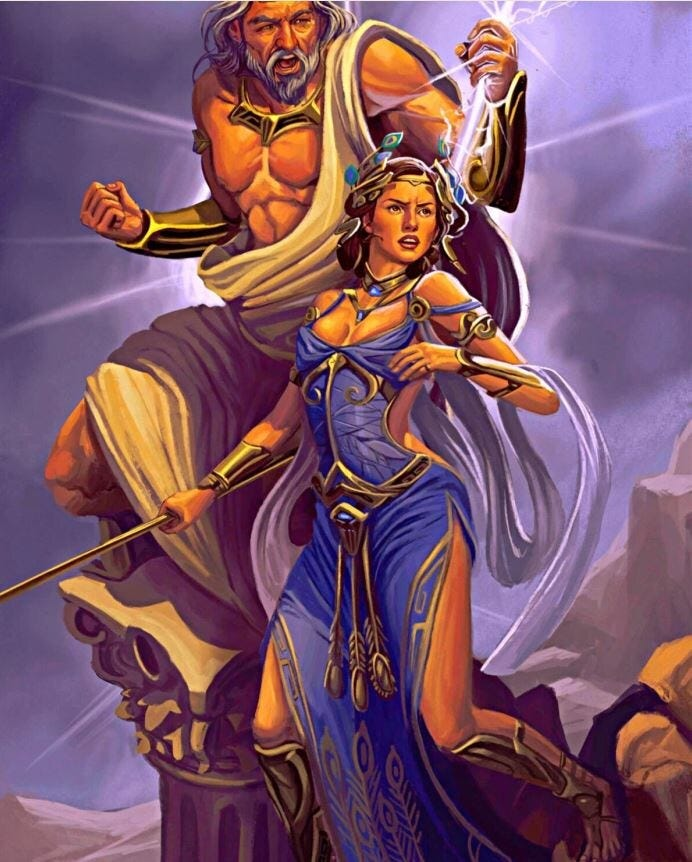
Hera, the Queen of the Gods, was the guardian of marriage and the protector of the family. Because Zeus frequently broke his marital vows, Hera’s mythology is dominated by her relentless pursuit of his lovers and their illegitimate children. Her vengeance was legendary for its creativity, duration, and often its cruelty toward those who were often unwilling participants in Zeus’s schemes.
1. The Transformation of Io
Io was a priestess of Hera whom Zeus seduced. To hide her from his wife, Zeus transformed Io into a snow-white heifer. Hera, seeing through the deception, asked for the cow as a gift.
The Thousand-Eyed Guard: Hera placed Io under the watch of Argus Panoptes, a giant with one hundred eyes, ensuring she could never escape.
The Gadfly: Even after Hermes killed Argus to free Io, Hera sent a gadfly to sting and torment the heifer, driving Io across the ancient world in a state of madness until she finally reached Egypt.
2. The Persecution of Leto
When the Titaness Leto became pregnant with the twins Apollo and Artemis, Hera was so enraged that she forbade any land "under the sun" to provide Leto with a place to give birth.
The Wandering Mother: Leto wandered the earth, shunned by every city and island that feared Hera’s wrath.
Delos: Eventually, the floating island of Delos—which was not considered "fixed" land—offered her sanctuary. Even then, Hera detained Eileithyia, the goddess of childbirth, to prolong Leto’s labor for nine days of agony.
3. The Madness of Athamas and Ino
Hera’s jealousy often extended to anyone who aided Zeus's children. When Ino (the sister of Semele) agreed to nurse the infant Dionysus, Hera viewed it as an act of treason against her dignity.
The Curse of Insanity: Hera struck Ino and her husband, King Athamas, with a sudden and violent madness.
The Tragedy: In his delusion, Athamas hunted and killed his own son, believing him to be a stag. Ino, in her grief and madness, jumped into the sea with her other son, Melicertes.
4. The Trials of Heracles (Hercules)
Perhaps the most famous victim of Hera was Heracles. Her hatred for him began before his birth and lasted until his death.
The Serpent Attack: While Heracles was still in his cradle, Hera sent two giant serpents to strangle him. The infant famously crushed them with his bare hands.
The Twelve Labors: It was Hera who struck Heracles with the fit of madness that caused him to kill his wife and children. To atone for this crime, he was forced to serve King Eurystheus and complete the Twelve Labors, many of which Hera actively sabotaged.
5. The Tragic Fate of Echo
Echo was an Oread (mountain nymph) who had a beautiful voice. Zeus used her to distract Hera with long, engaging stories while he consorted with other nymphs.
The Loss of Speech: When Hera discovered the ruse, she stripped Echo of her ability to form her own words.
The Echo: She cursed the nymph to only be able to repeat the last few words spoken to her. This eventually led to Echo's heartbreak over Narcissus, as she could never tell him of her love.
Hera, the Queen of the Gods, was the guardian of marriage and the protector of the family. Because Zeus frequently broke his marital vows, Hera’s mythology is dominated by her relentless pursuit of his lovers and their illegitimate children. Her vengeance was legendary for its creativity, duration, and often its cruelty toward those who were often unwilling participants in Zeus’s schemes.
1. The Transformation of Io
Io was a priestess of Hera whom Zeus seduced. To hide her from his wife, Zeus transformed Io into a snow-white heifer. Hera, seeing through the deception, asked for the cow as a gift.
The Thousand-Eyed Guard: Hera placed Io under the watch of Argus Panoptes, a giant with one hundred eyes, ensuring she could never escape.
The Gadfly: Even after Hermes killed Argus to free Io, Hera sent a gadfly to sting and torment the heifer, driving Io across the ancient world in a state of madness until she finally reached Egypt.
2. The Persecution of Leto
When the Titaness Leto became pregnant with the twins Apollo and Artemis, Hera was so enraged that she forbade any land "under the sun" to provide Leto with a place to give birth.
The Wandering Mother: Leto wandered the earth, shunned by every city and island that feared Hera’s wrath.
Delos: Eventually, the floating island of Delos—which was not considered "fixed" land—offered her sanctuary. Even then, Hera detained Eileithyia, the goddess of childbirth, to prolong Leto’s labor for nine days of agony.
3. The Madness of Athamas and Ino
Hera’s jealousy often extended to anyone who aided Zeus's children. When Ino (the sister of Semele) agreed to nurse the infant Dionysus, Hera viewed it as an act of treason against her dignity.
The Curse of Insanity: Hera struck Ino and her husband, King Athamas, with a sudden and violent madness.
The Tragedy: In his delusion, Athamas hunted and killed his own son, believing him to be a stag. Ino, in her grief and madness, jumped into the sea with her other son, Melicertes.
4. The Trials of Heracles (Hercules)
Perhaps the most famous victim of Hera was Heracles. Her hatred for him began before his birth and lasted until his death.
The Serpent Attack: While Heracles was still in his cradle, Hera sent two giant serpents to strangle him. The infant famously crushed them with his bare hands.
The Twelve Labors: It was Hera who struck Heracles with the fit of madness that caused him to kill his wife and children. To atone for this crime, he was forced to serve King Eurystheus and complete the Twelve Labors, many of which Hera actively sabotaged.
5. The Tragic Fate of Echo
Echo was an Oread (mountain nymph) who had a beautiful voice. Zeus used her to distract Hera with long, engaging stories while he consorted with other nymphs.
The Loss of Speech: When Hera discovered the ruse, she stripped Echo of her ability to form her own words.
The Echo: She cursed the nymph to only be able to repeat the last few words spoken to her. This eventually led to Echo's heartbreak over Narcissus, as she could never tell him of her love.
6. Summary of Punishments
VictimNature of OffenseHera’s PunishmentIoZeus's LoverTransformed into a cow; hunted by a gadfly.CallistoZeus's LoverTransformed into a bear (later the constellation Ursa Major).LamiaZeus's LoverTransformed into a monster; forced to never sleep.SideClaimed to be more beautifulThrown into Hades.GeranaClaimed to be more beautifulTransformed into a crane.
Hera’s actions highlight a central theme in Greek myth: the gods were not necessarily "moral" in a modern sense. They were personifications of power and natural laws. Hera’s jealousy represented the ferocity with which the Greeks believed the sanctity of the home and marriage must be defended, even at a terrible cost to the innocent.