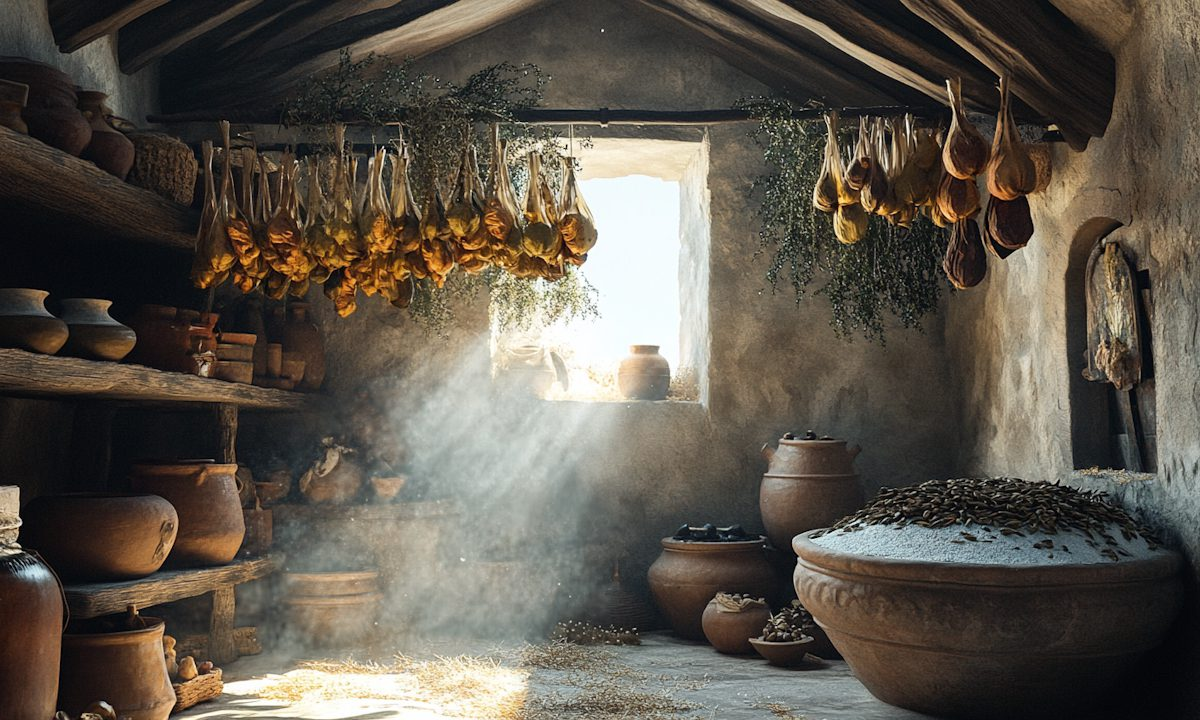
In the "Old Style" Mediterranean world, food preservation was not just a kitchen hack—it was a survival imperative. To endure the scorching summers and the lean winters of the Greek landscape, the Greeks mastered several physical and chemical techniques to arrest decay. Their methods were so effective that many remain the foundations of Greek "slow food" today.
1. The Power of Solar Dehydration
The most abundant resource in Greece was the sun. By removing moisture, the Greeks inhibited the growth of bacteria and molds that cause rot.
Figs and Grapes: These were the "energy bars" of antiquity. Grapes were dried into raisins, and figs were split open, sun-dried on mats, and then strung together or packed into jars with bay leaves.
Legumes: Lentils, chickpeas, and broad beans were dried until rock-hard. These were the primary protein source during winter and were stored in large ceramic pithoi.
2. Salting: The "White Gold" Method
Salt (hals) was the most critical preservative. It works through osmosis, drawing moisture out of food and creating an environment where most bacteria cannot survive.
Tarichos (Salted Fish): This was a massive industry. Fish were cleaned, layered with coarse sea salt in vats, and then packed into amphorae. Salted fish from the Black Sea was a staple import for the Athenian working class.
Meat: While Greeks ate less meat than modern societies, pork was often preserved as "brine-cured" pieces or smoked after salting to create long-lasting hams.
3. Liquid Seals: Oil and Honey
The Greeks utilized the "air-tight" properties of their most famous liquids to prevent oxidation.
Olive Oil Immersion: Fresh vegetables, cheese (the ancestor of Feta), and even small cooked birds were submerged in olive oil. The oil created a physical barrier that prevented air—and thus aerobic bacteria—from reaching the food.
Honey Sealing: As mentioned previously, fruits like quinces were kept in honey. The high sugar concentration acted as a natural desiccant, effectively "mummifying" the fruit in a delicious syrup.
4. Fermentation and Acidity
The Greeks understood that "controlled spoilage" could actually protect food.
Vinegar (Oxos): Vinegar was used to pickle everything from olives to wild greens (horta). The acetic acid lowered the pH of the food, making it too acidic for most pathogens.
Wine: Turning grape juice into wine was, at its core, a method of preserving the caloric value of the harvest in a form that wouldn't rot and provided a safe, sterile liquid to drink.
5. Smoking and Air-Curing
In the cooler, more mountainous regions of Greece, smoking was a common technique.
Chemical Coating: Smoke contains phenolic compounds that act as antioxidants and antimicrobials.
The Kapnisterion: Meat was hung in the rafters of the house or in specialized smoking huts. The combination of salt-curing followed by slow-smoking allowed meat to be kept for months without any cooling.
6. Ceramic Storage and Thermal Mass
The architecture of the Greek pantry (tameion) played a role in preservation.
The Pithos: These massive ceramic jars, often taller than a person, had thick walls that provided thermal mass. By burying them halfway into the cool earth of a cellar, the Greeks created a "natural cellar" that maintained a stable, lower temperature regardless of the heat outside.
Pitch and Resin: To make these jars truly airtight, the interiors were often coated with pine resin. This is the origin of Retsina wine; the resin was originally a sealant that happened to flavor (and help preserve) the wine inside.