In Ancient Greece, hygiene was not merely a matter of personal cleanliness; it was a civic virtue, a physical discipline, and a spiritual requirement. The Greek approach to the body—exemplified by the word gymnasion (from gymnos, meaning "naked")—integrated exercise, bathing, and social interaction into a single "Old Style" lifestyle that influenced everything from medicine to urban planning.
1. The Evolution: From Cold Streams to Built Baths
Early Greek hygiene was rugged and tied to nature. Homeric heroes are often described washing in rivers or the sea to purify themselves after battle.
The Louterion: Before the rise of massive bathhouses, the primary tool for hygiene was the louterion—a large, shallow stone basin on a pedestal. Users would stand beside it and splash themselves with water, or have an attendant pour water over them.
The Balaneia: By the 5th century BC, specialized public bathhouses (balaneia) began to appear in cities. These featured circular rooms with individual hip-baths (small stone tubs) where citizens could sit and wash in heated water.
2. The Gymnasion: The Heart of Hygiene
The most iconic "bath" in Greece was the one attached to the Gymnasion. Hygiene here was a three-step process designed for the athlete:
Anointment: Athletes began by coating their bodies in olive oil. This was believed to protect the skin from the sun and keep the muscles supple.
The Struggle: After training in the dirt or sand, the body was covered in a mixture of oil, sweat, and dust.
The Strigil: Instead of soap, the Greeks used a strigil (stlengis)—a curved bronze tool—to scrape the grime off their skin. This exfoliation was considered far more effective than water alone for deep cleaning.
3. Sophisticated Water Engineering
The Greeks were masters of hydraulic engineering, ensuring that even inland cities had access to fresh, running water for hygiene.
Aqueducts and Pipes: Cities like Athens and Samos used terracotta pipes and stone channels to bring water from mountain springs to public fountains and baths.
The Cold Plunge: Greeks generally preferred cold water, believing that hot water made the body "soft" and unmanly. However, most balaneia eventually included a Pyriaterion (a sweat room or primitive sauna) where hot stones and water created steam to open the pores.
4. Ritual Purity and the Gods
Cleanliness was a prerequisite for interacting with the divine. Hygiene and religion were inseparable.
Lustration: Before entering a temple or performing a sacrifice, a person had to be "ritually clean." This often involved washing the hands or feet in a Perirrhanterion (a sacred water basin) located at the entrance of the sanctuary.
Moral Stains: The Greeks believed that physical dirt mirrored spiritual "miasma" (pollution). Murder or breaking a taboo resulted in a miasma that could only be washed away through specific water rituals.
5. Medical Hygiene: Hippocratic Principles
The "Old Style" of medicine championed by Hippocrates placed a heavy emphasis on the environment and personal habits as the keys to health.
Hydrotherapy: Greek doctors prescribed specific types of baths—sea water, sulfur springs, or cold plunges—to treat various ailments, from skin conditions to melancholia.
Public Health: The Greeks were among the first to realize the connection between clean water sources and the prevention of disease, leading to the construction of public latrines and drainage systems in major cities.
6. The Social Function of the Bath
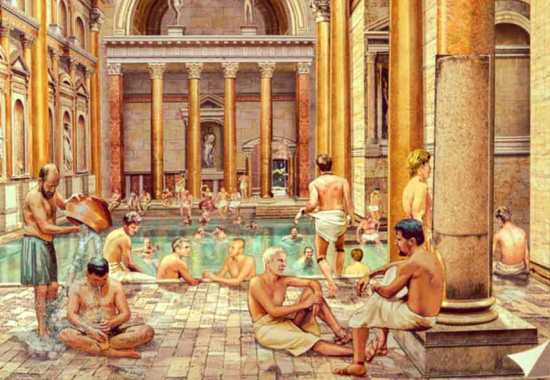
The public baths were the "internet" of the ancient world.
The Great Equalizer: In the bath, status was momentarily stripped away. Philosophers, politicians, and tradesmen all mingled in the steam.
Information Exchange: Much of the city's political gossip and economic news was exchanged in the balaneia. To "not go to the baths" was seen as a sign of extreme poverty or social withdrawal.
The Greek bathhouse was the architectural and social precursor to the much larger Roman thermae. While the Romans would eventually add more luxury and scale, the Greeks established the fundamental idea: that a healthy mind could only exist within a clean, disciplined body.