Ancient Greece was a civilization built on the water. Because the mountainous terrain made inland travel slow and expensive, the Greeks looked to the sea to connect their far-flung colonies. The great trading ports, or Emporia, were the lungs of the Greek world, inhaling raw materials like grain and timber while exhaling finished goods like wine, oil, and fine pottery.
1. Piraeus: The Pulse of Athens
By the 5th century BC, Piraeus was the largest and most sophisticated port in the Mediterranean. Unlike older ports that grew organically, Piraeus was a planned city designed by the architect Hippodamus of Miletus.
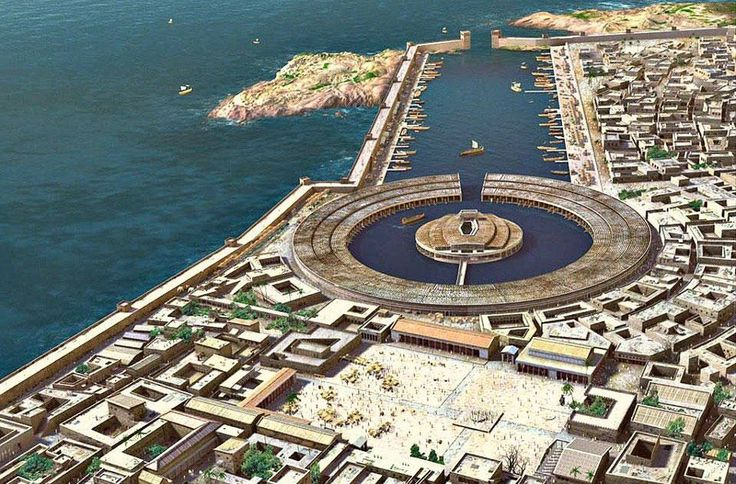
The Triple Harbor: Piraeus was actually three distinct harbors: Kantharos (the large commercial port) and Zea and Mounichia (the military naval bases).
The Emporion: This was the designated commercial zone where foreign merchants (metoikoi) traded. It featured the Deigma, a specialized building where merchants displayed samples of their goods to potential buyers, much like a modern trade showroom.
The Long Walls: Athens connected the city to its port via two massive parallel walls, ensuring that even during a land siege, the "Old Style" maritime lifeline remained unbroken.
2. Corinth: The Master of Two Seas
Corinth occupied the most strategic "choke point" in Greece: the narrow Isthmus. This allowed it to control trade between the Saronic Gulf (the Aegean) and the Corinthian Gulf (the Ionian).
Lechaion and Kenchreai: Corinth operated two separate ports—one on each side of the Isthmus.
The Diolkos: Instead of sailing around the dangerous Peloponnesian coast, the Greeks used the Diolkos, a paved trackway that allowed ships to be hauled across the land on wheeled cradles. This made Corinth the wealthiest "toll-booth" in history.
Export Specialty: Corinthian pottery, particularly the miniature perfume jars (aryballoi), was found in almost every corner of the Mediterranean, from Spain to the Black Sea.
3. Naukratis: The Gateway to Egypt
Located on the Canopic branch of the Nile, Naukratis was a unique "treaty port." It was the only place in Egypt where the Pharaohs allowed Greeks to settle and trade.
A Multi-Polis Hub: Naukratis was not ruled by a single city-state; instead, it was a collective enterprise shared by twelve different Greek cities, including Miletus, Rhodes, and Samos.
The Great Temenos: The Greeks built a massive religious and administrative center here. Archaeologists have found thousands of Greek ceramic fragments alongside Egyptian artifacts, highlighting a unique cultural "Old Style" fusion.
The Grain Trade: For the Greeks, the primary export from Naukratis was Egyptian wheat, which was essential for sustaining the growing populations of cities like Athens.
4. Rhodes: The Mediterranean Warehouse
By the Hellenistic period, the island of Rhodes became the premier financial and maritime center of the ancient world.
Maritime Law: The "Rhodian Sea Law" was the first standardized set of maritime rules, covering everything from cargo insurance to sailor wages. It was so effective that the Romans later adopted it.
The Colossus: The port was guarded by the Colossus of Rhodes, a 33-meter bronze statue of Helios. While it didn't actually straddle the harbor entrance as legend suggests, it served as a monumental lighthouse and a symbol of the port's immense wealth.
The Wine Trade: Rhodes was the primary hub for the trade of wine. Rhodian amphorae, marked with the island’s signature rose stamp, have been found as far away as modern-day Russia.
5. Syracuse: The Western Powerhouse
Located in Sicily, Syracuse was the most powerful Greek port in the West. It served as the bridge between the Greek mainland and the resources of the Western Mediterranean and Italy.
Ortygia: The heart of the port was the island of Ortygia, which created two naturally sheltered harbors: the Great Harbor and the Small Harbor (Lakkios).
Natural Defenses: The "Great Harbor" was large enough to hold the entire Athenian fleet during the Peloponnesian War, but its narrow entrance made it a deadly trap for invaders.
Agricultural Exports: Syracuse grew wealthy by exporting the vast grain harvests of the Sicilian interior, earning the island the nickname "The Breadbasket of the Mediterranean."