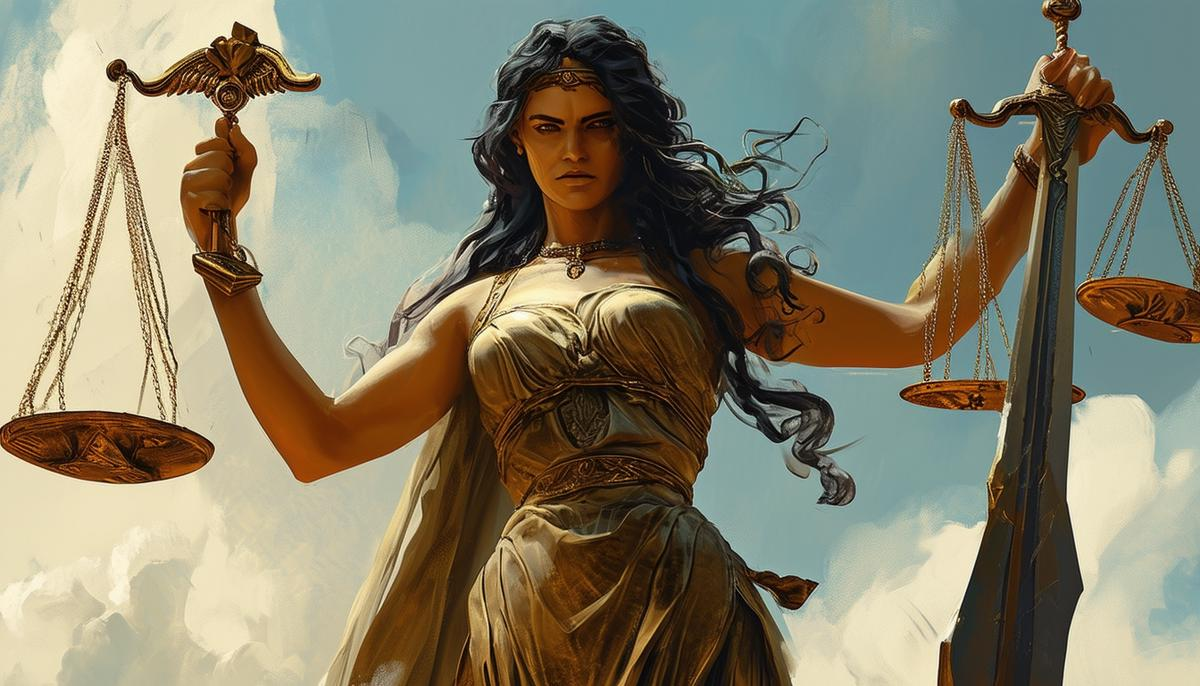
To the ancient Greeks, the universe was not a chaotic vacuum where human actions went unnoticed. It was an intricately balanced cosmic ecosystem governed by absolute moral laws. If a person upset that balance—whether through an act of violent cruelty, unbridled arrogance, or breaking a sacred vow—the cosmos would inevitably snap back to correct the equilibrium.
This mechanical, inescapable correction was the core of divine retribution.
The Greeks did not view retribution as a personal, emotional outburst from a vengeful deity. Instead, it was an immutable cosmic law of cause and effect, an architecture of punishment designed to protect the boundaries between mortals, gods, and nature.
1. The Anatomy of Transgression: Hubris to Nemesis
The progression from a human crime to divine punishment followed a strict, almost mathematical psychological trajectory in Greek thought.
 [ KOROS ] ──► [ HUBRIS ] ──► [ ATE ] ──► [ NEMESIS / TISIS ]
  Satiety       Arrogance      Delusion        Retribution
Koros (Satiety/Excess): It usually began with a mortal receiving too much wealth, power, or good fortune. This abundance bred complacency.
Hubris (Outrageous Arrogance): Overwhelmed by koros, the mortal began to believe they were above the laws of the gods or the community. Hubris wasn't just pride; it was the active, violent crossing of a boundary—treating others with insolent contempt or matching oneself to the immortals.
Ate (Spiritual Blindness/Delusion): As a direct consequence of hubris, the gods would strike the mortal with Ate—a state of temporary madness or mental blindness. Under the influence of Ate, the offender would make catastrophic, self-destructive decisions, completely unaware that they were walking straight into their own doom.
Nemesis / Tisis (Retribution): Finally, the cosmic balance was restored. Nemesis (the goddess of due proportion and divine retribution) or Tisis (vengeance) would step in to violently cast the mortal down, stripping away their wealth, status, or life.
2. The Executioners of Fate: The Chthonic Avengers
While individual Olympian gods like Apollo or Artemis frequently executed retribution for personal slights, the collective, systemic moral order of the universe was policed by primeval, chthonic (earth-born) deities who predated Zeus himself.
The most terrifying of these agents were The Erinyes (The Furies). Born from the drops of blood that fell to the earth when the Titan Cronus castrated his father Uranus, these winged, snake-haired deities inhabited the deepest pits of the underworld.
The Furies did not care about human courts or contextual excuses. They were hardwired to respond to violations of natural taboos—specifically perjury (breaking a sacred oath) and kinslaying (shedding familial blood). If a son killed his mother, the Furies would hunt him across the earth, their howling driving him into physical sickness and howling madness until the blood-debt was paid in full.
3. Categories of Cosmic Crime and Punishment
Divine retribution in myth was always poetically tailored to match the exact nature of the mortal's transgression, resulting in some of the most iconic punishments in world literature.
The Cosmic Lesson Tantalus: Stole ambrosia from Olympus; murdered his own son and served him as a feast to the gods to test their omniscience. Trapped eternally in a pool of water in Hades. Whenever he bends to drink, the water recedes; whenever he reaches for the fruit above, the wind blows it away.
Eternal Starvation: He used food to insult the gods, so he is denied food and drink forever.
Sisyphus: Repeatedly outsmarted Death (Thanatos) and chained him up, disrupting the natural cycle of mortality.Condemned to roll a colossal boulder up a steep hill in the underworld. The moment he nears the crest, the rock's weight causes it to slip and roll back to the bottom.
Futility: He tried to achieve clever, endless longevity, so he was given an endless, completely meaningless labor.
Arachne: A mortal weaver who boasted her skill surpassed Athena's; wove a tapestry exposing the scandalous love affairs of the gods.Athena tore her tapestry to shreds and transformed Arachne into a spider, condemning her and her descendants to weave webs from their bodies forever.
Boundary Protection: If you wish to weave like a god without humility, you will weave as the lowest of beasts.
4. The Inherited Curse: Transgenerational Retribution
Perhaps the most distressing aspect of Greek divine retribution was that it was not bound by a single human lifetime. The Greeks possessed a deeply collective, familial view of guilt. A crime committed by a patriarch could infect the bloodline, creating a generational curse (miasma) that passed down to children, grandchildren, and great-grandchildren.
[ KING TANTALUS ] (Feeds son to gods) ──► [ PELOPS ] (Betrays & murders charioteer) ──► [ ATREUS ] (Feeds nephew to brother) ──► [ AGAMEMNON ] (Sacrifices daughter; murdered by wife)
This concept dominated classical Greek tragedy, most famously visible in the House of Atreus. The initial hubris and cruelty of Tantalus spawned a cycle of murder, cannibalism, and betrayal that tore through his descendants for four generations.
The gods did not need to step down from the sky to punish Agamemnon or Atreus; the inherited spiritual pollution naturally corrupted the family's psychology, forcing each generation to commit new acts of hubris that guaranteed their own destruction. Retribution was an automated trap built into the bloodline itself.
5. The Architecture of Justice
Ultimately, the mythic mechanics of divine retribution served as the moral foundational stone for ancient Greek society. It reassured the ancient Greek that no matter how wealthy, tyrannical, or untouchable a human became within the walls of their city, they were still minor characters operating inside a massive, clockwork universe governed by invisible laws.
The higher the climb, the greater the hubris—and the more devastating the eventual, inevitable strike of Nemesis down into the dirt.