The feud between the brothers Atreus and Thyestes is one of the darkest chapters in Greek mythology, serving as a defining tragedy for the "cursed" House of Atreus. Their conflict was rooted in ambition, betrayal, and a generational cycle of violence that originated with their grandfather, Tantalus.
The Origins of the Rivalry
The brothers were sons of King Pelops and Queen Hippodamia. Their rivalry began in earnest over the throne of Mycenae. To settle the dispute, it was agreed that the throne would go to whoever possessed a miraculous golden lamb.
The Betrayal: Atreus’s wife, Aerope, had secretly become the lover of Thyestes. At his urging, she stole the golden lamb from Atreus and gave it to Thyestes, who then used it to claim the throne.
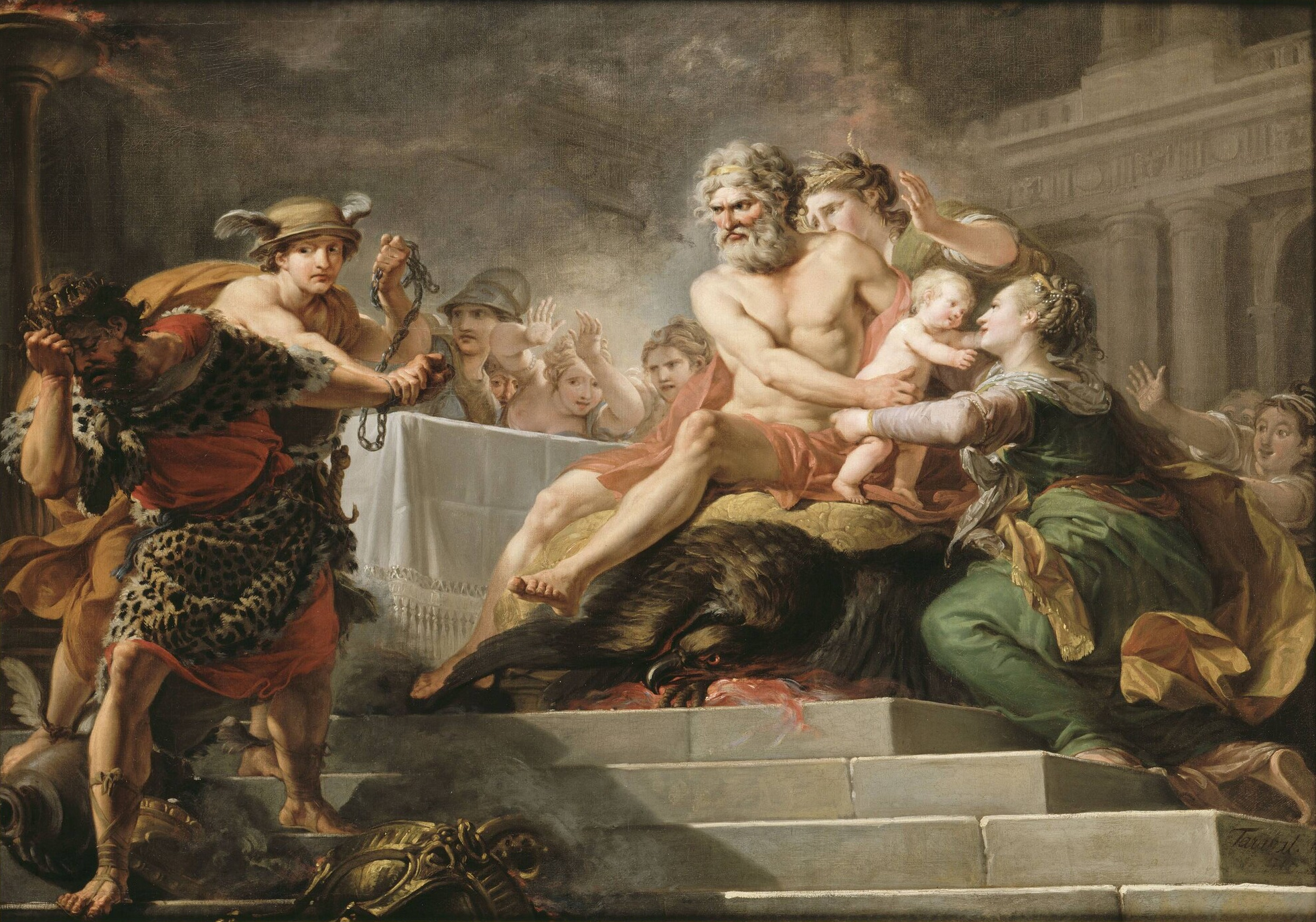
The Divine Intervention: Atreus was eventually restored to power after Zeus intervened, sending Hermes to arrange a deal: if the sun reversed its course in the sky, Thyestes would abdicate. The sun famously moved backward, and Atreus reclaimed his crown, exiling his brother.
The Banquet of Atreus
Atreus, consumed by rage over the affair and the stolen throne, orchestrated a horrific revenge. He lured Thyestes back to Mycenae under the guise of reconciliation and a celebratory feast.
The Cannibalistic Act: During the banquet, Atreus served Thyestes a stew made from the flesh of his own sons (Aglaus, Orchomenus, and Callileon).
The Revelation: After Thyestes had eaten, Atreus revealed the severed heads, hands, and feet of the boys, mocking his brother with the gruesome truth. This event is famously known as the "Thyestean feast," a term that has come to represent the ultimate act of cruelty and taboo.
The Curse Fulfilled: Pelopia and Aegisthus
In his despair, Thyestes sought counsel from an oracle, who told him that the only way to achieve true vengeance was to father a son by his own daughter, Pelopia.
The Forbidden Union: Thyestes, disguised and in the darkness, attacked and raped Pelopia. During the struggle, she managed to take his sword.
The Birth of the Avenger: Unaware of his true parentage, Atreus later encountered Pelopia and married her, raising her son Aegisthus as his own.
The Final Act: Years later, when Thyestes was captured and brought to Mycenae, Atreus ordered Aegisthus to execute him. However, when Aegisthus drew the sword he had been given by his mother, Thyestes recognized it as his own. Upon learning the truth—that Aegisthus was his son and Pelopia was his daughter—Pelopia committed suicide in horror. Aegisthus then turned the sword on Atreus, killing him to avenge his father and restoring Thyestes to the throne.
The tragedy did not end there, as the cycle of violence continued into the next generation with the actions of Agamemnon and the eventual trial of Orestes, which finally brought the era of blood-feuds to an end.