The Role of Women in Greek Warfare: Artemisia, the Warrior Queen
While traditional historical accounts often depict ancient Greece as a male-dominated society, particularly in military and civic affairs, women's roles during times of war were multifaceted. From commanding naval fleets to defending city walls and engaging in espionage, women frequently stepped into active roles to protect their homes and cities.
1. Artemisia I of Caria: A Master Tactician
Artemisia I of Caria is the most famous example of a female military commander in ancient Greece. As the queen of Halicarnassus (a Carian-Greek city-state under Persian rule) following her husband's death, she commanded her own fleet during the Second Persian Invasion of Greece in 480 BCE.
Commanding the Fleet: Unlike other allies, Artemisia joined the campaign of her own volition, leading five triremes. Her squadron was considered the best in the fleet after that of Sidon.
Strategic Advice: Before the Battle of Salamis, she advised Xerxes I against engaging the Greek fleet, correctly predicting the tactical difficulties in the narrow straits.
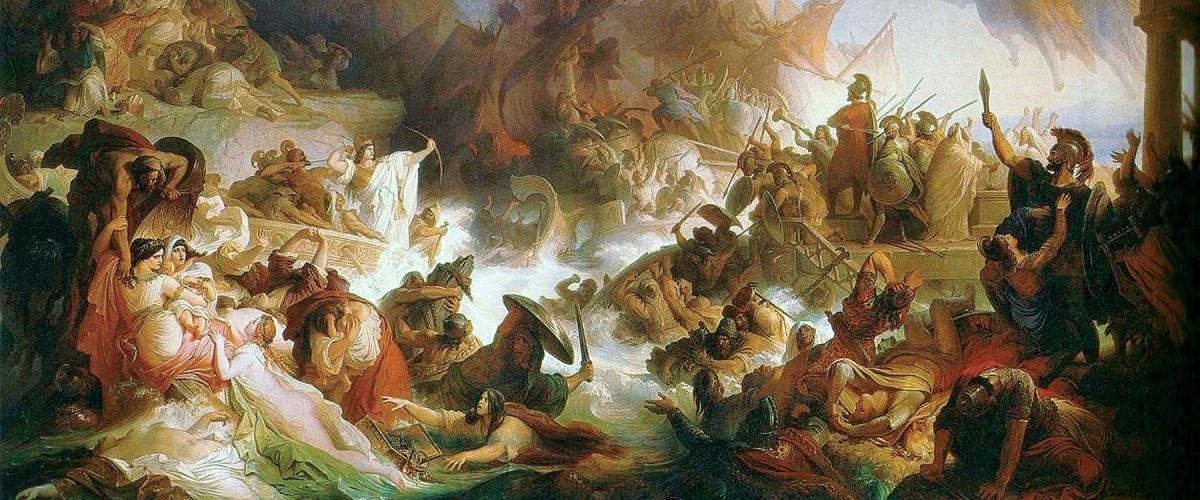
The Battle of Salamis: During the battle, surrounded by enemy vessels, she executed a clever ruse by ramming an allied Persian ship to escape. This maneuver deceived the Greeks into thinking she was on their side, and it deeply impressed Xerxes.
2. Grassroots Defense and Resistance
Beyond the actions of reigning queens, ordinary women in the Greek world played critical roles in home-front defense during sieges.
Rooftop Defense: During the Peloponnesian War and other conflicts, such as the siege of Plataea and in Messenia, women took to the roofs of their homes to throw stones, roof tiles, and other heavy objects to repel invaders.
Telesilla of Argos: The poet Telesilla famously organized the women of Argos to defend their city against the Spartan king Cleomenes I around 494 BCE. The women donned armor and repelled the Spartans using household items and defensive tactics.
3. Espionage and Deception
Women also contributed to military operations through intelligence and covert operations:
Gathering Intelligence: Because women had access to different social spaces and domestic households, they occasionally acted as spies or informants, reporting on the morale or plans of generals (such as the mistress Antigone in Alexander the Great's camp).
Flute Players and Entertainers: Female performers and camp followers were sometimes utilized to gather intelligence or assist in ruses, such as the capture of Latmus by Artemisia II.