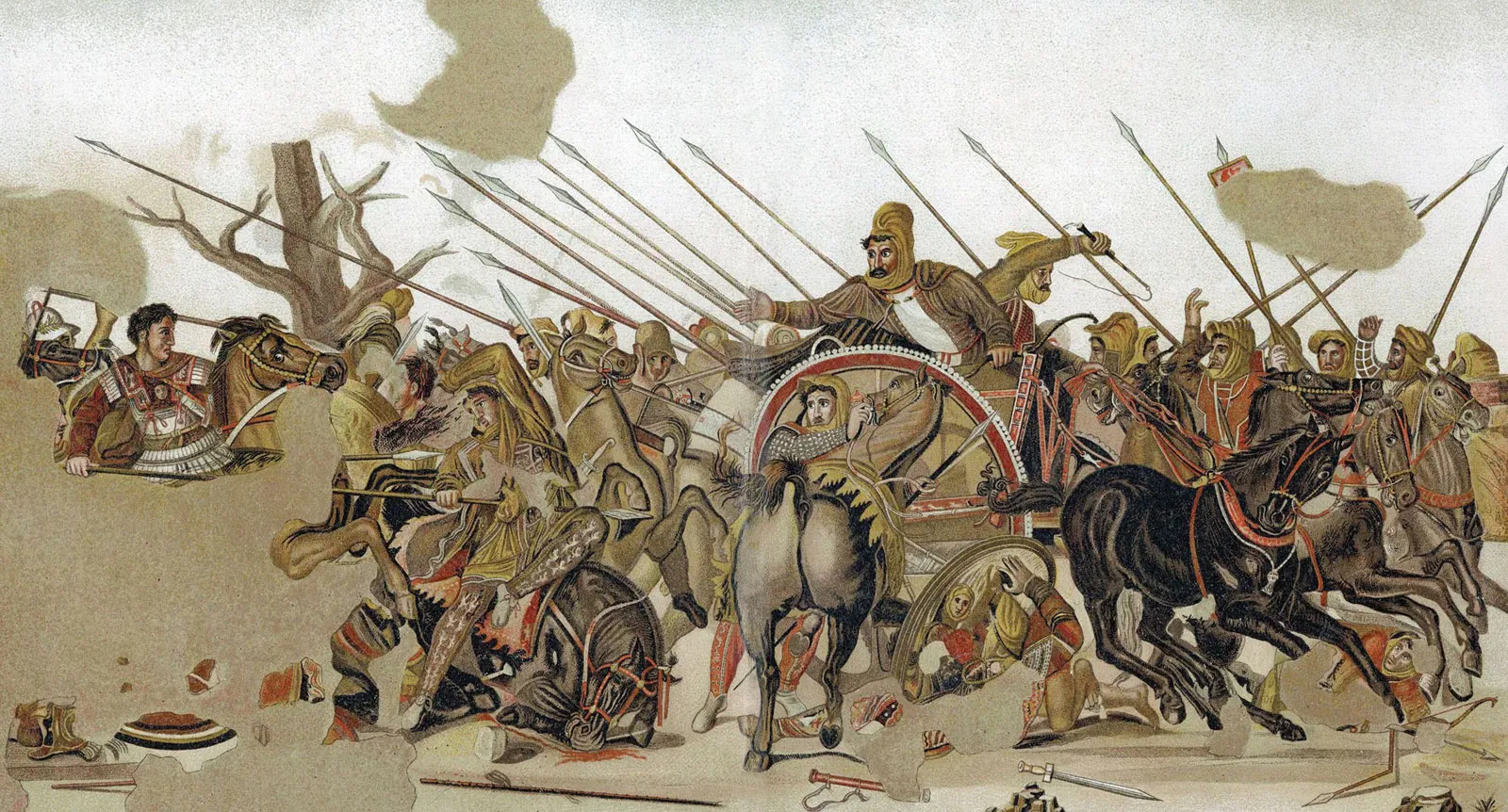
How Alexander the Great Revolutionized Warfare
Alexander the Great transformed ancient warfare by turning the Macedonian military machine, largely developed by his father, Philip II, into the most lethal and adaptable force of its time. By shifting away from the traditional, infantry-heavy style of Greek warfare, Alexander integrated diverse branches of the military into a cohesive, synchronized system.
1. The Hammer and Anvil Tactic
Alexander’s most famous tactical innovation was the combined-arms doctrine known as the "Hammer and Anvil." This approach utilized different units to trap and destroy the enemy.
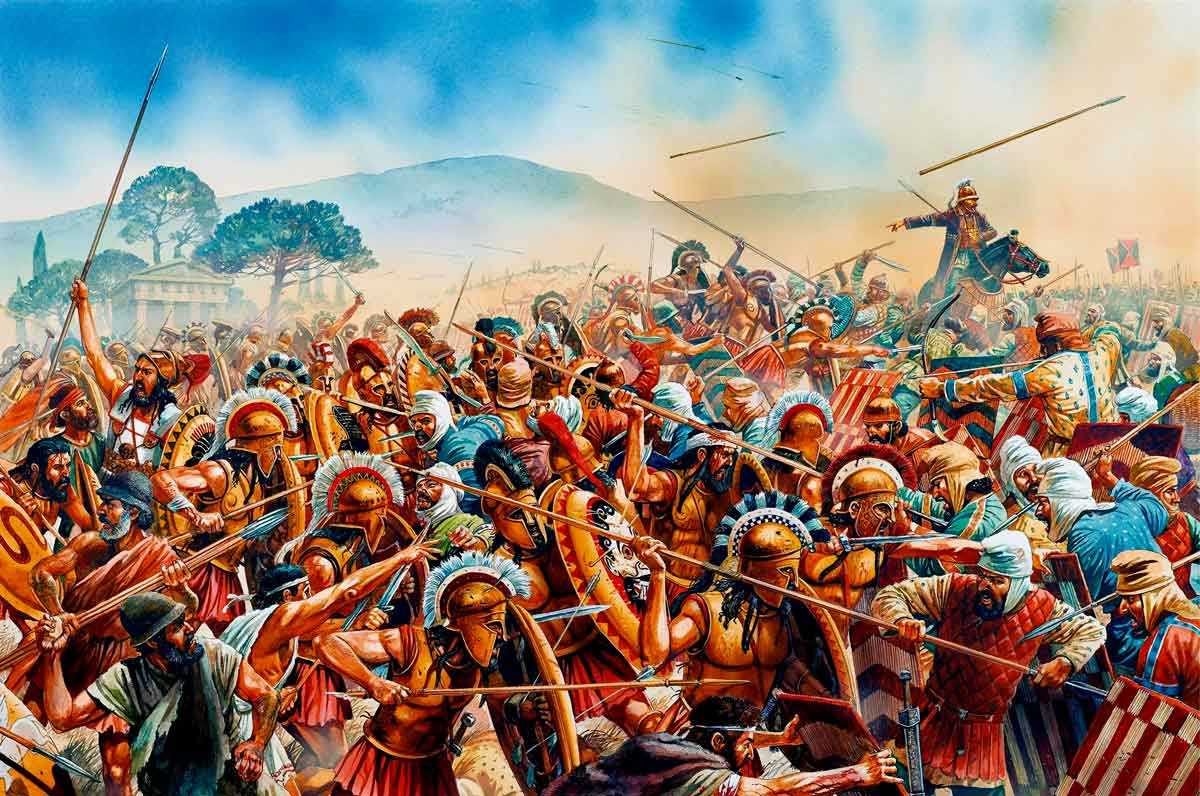
The Anvil: The Macedonian phalanx held the enemy's main force in place from the front. With their incredibly long pikes (sarissas), they presented an impenetrable wall that tied down the enemy infantry.
The Hammer: Once the enemy line was fixed, Alexander would lead the elite heavy cavalry (the Hetairoi or Companion cavalry) in a decisive wedge formation. He would exploit a gap in the enemy line or circle around the flank to strike the rear, delivering the fatal blow.
2. The Sarissa and the Phalanx
While the phalanx formation was a staple of Greek warfare, Alexander and his father revolutionized it by modifying the weaponry and mobility of the infantry.
The Sarissa: The standard Greek dory (thrusting spear) was replaced with the sarissa, a massive pike varying from 18 to 21 feet in length.
Tactical Integration: The front ranks could impale advancing enemies from a distance, while the rear ranks held their pikes upright, creating an umbrella of shafts that deflected incoming arrows and javelins.
Flank Protection: The Macedonian phalanx was divided into smaller, highly maneuverable units (syntagmata) that could adapt to broken terrain much better than the rigid, traditional city-state phalanxes.
3. Revolutionary Siegecraft
Before Alexander, long sieges were a logistical nightmare that often ended in starvation tactics. Alexander revolutionized siege warfare by combining infantry assaults with advanced mechanical engineering.
Torsion Artillery: Alexander’s engineers utilized advanced torsion-powered catapults and ballistae that could hurl stones and bolts to crack defensive walls.
Massive Siege Towers: During operations such as the Siege of Tyre (332 BCE), Alexander built massive wooden towers (helepoleis) and floating moles to breach seemingly impregnable island and coastal fortresses.
4. Strategic Mobility and Logistics
Alexander recognized that the speed of an army was as vital as its striking power.
Lightened Baggage Train: He ordered his troops to carry their own supplies and equipment, radically reducing the need for heavy, slow-moving supply carts.
Marching Speed: By traveling light, Alexander’s armies could cover vast distances, surprising enemies who expected standard, slower Bronze-Age or Persian marching rates.
Combined Operations: He regularly integrated naval and ground units, using the navy to protect troop movements along the coast while the army moved inland.
5. Flexibility and Asymmetric Warfare
During his campaigns in Asia, Alexander adapted his tactical approach to counter asymmetric threats, such as Persian chariots and Central Asian horse archers.
Adapting the Ranks: He added light javelin-throwers (agrianian skirmishers) and mounted archers to his heavy cavalry, allowing them to counter and outflank missile troops.
Incorporating Local Troops: Alexander integrated conquered peoples, such as Persian cavalry, into his own army, recognizing the value of regional military specialties.