Greek Contributions to Zoology and Botany
Ancient Greek contributions to zoology and botany represent a major transition from myth and folklore to systematic observation, classification, and anatomical study. Before the 4th century BCE, information about flora and fauna was primarily utilitarian, focused on agriculture, hunting, or medicine. Greek natural philosophers transformed these subjects by seeking to understand the natural world (physis) through empirical data and structural taxonomy.
1. Aristotle: The Founder of Zoology
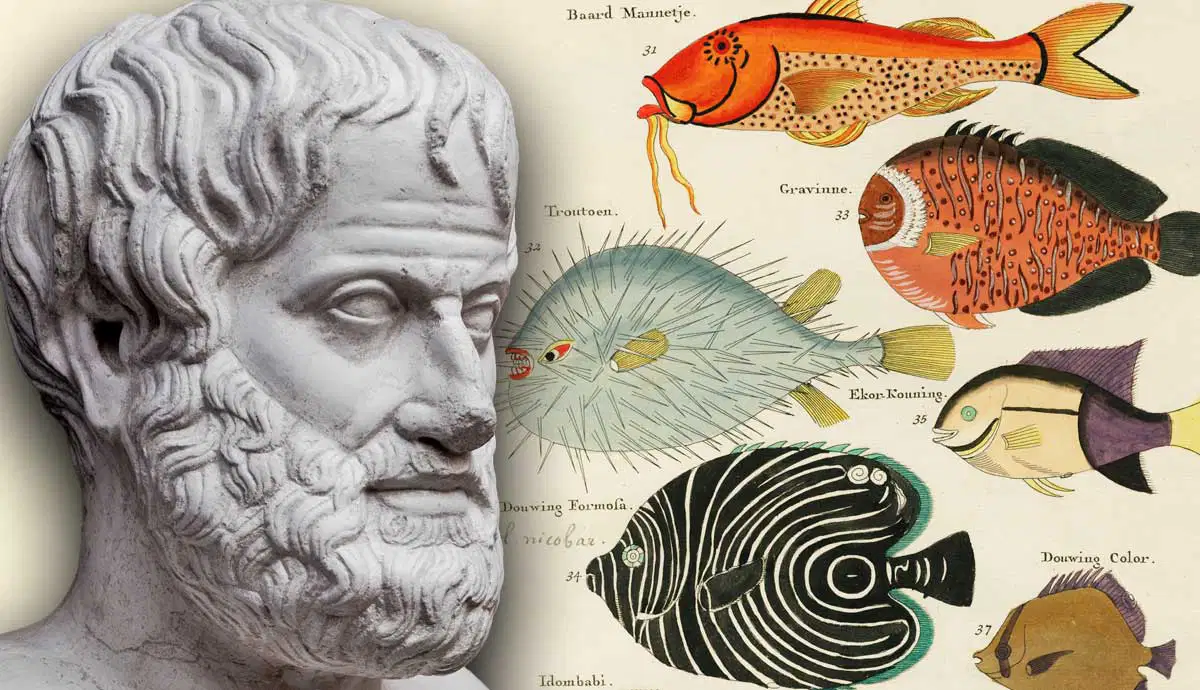
Aristotle (384–322 BCE) is widely regarded as the father of zoology. During his stay on the island of Lesbos, he collected, dissected, and cataloged an immense number of marine and terrestrial animals, recording his findings in works such as History of Animals, Parts of Animals, and Generation of Animals.
Taxonomy and the Scala Naturae: Aristotle organized living things into a hierarchical structure based on their complexity. He categorized animals into two main groups:
Enaima: Animals with red blood (roughly corresponding to vertebrates).
Anaima: Animals without blood (roughly corresponding to invertebrates, such as cephalopods, insects, and crustaceans).
Anatomical Observation: He performed detailed dissections on more than 350 animal species. He accurately described the four-chambered stomach of ruminants, the complex reproductive system of the octopus (he is credited with discovering the hectocotyl arm), and the social behavior of honeybees.
Teleological Approach: Aristotle viewed animal structures through the lens of function and purpose, asking not only what an organ was, but what it was for, laying the groundwork for comparative anatomy and functional morphology.
2. Theophrastus: The Father of Botany
Theophrastus (c. 371–c. 287 BCE), a student and successor of Aristotle at the Lyceum, applied similar rigorous and empirical methods to the plant kingdom, earning the title of the "father of botany."
Botanical Treatises: His two major works, Enquiry into Plants (Historia Plantarum) and On the Causes of Plants, are the earliest surviving scientific texts on botany.
Plant Classification: Theophrastus collected and classified about 500 plant species. Instead of organizing them by medicinal use, he grouped them by their morphology and growth habits:
Trees
Shrubs
Undershrubs
Herbs
Anatomy and Physiology: He identified various parts of plants, including roots, stems, leaves, flowers, and seeds. Furthermore, he recognized the significance of environmental factors like soil and climate, and he differentiated between plants that grow from seeds versus those that propagate from cuttings or root suckers.
3. Pedanius Dioscorides: Applied Botany and Pharmacology
Pedanius Dioscorides (c. 40–90 CE), a Greek physician serving in the Roman army, bridged the gap between theoretical botany and practical medicine. His five-volume encyclopedia, De Materia Medica (On Medical Material), set the standard for pharmacology and botanical identification for over 1,500 years.
Pharmacognosy: Dioscorides described the preparation and medicinal properties of over 600 plants, including opium, belladonna, and colchicum.
Systematic Description: Unlike earlier writers, he ordered plants by their affinities and properties rather than by alphabetical order. He provided detailed descriptions of their roots, leaves, stems, and flowers, accompanied by practical notes on habitat and collection.