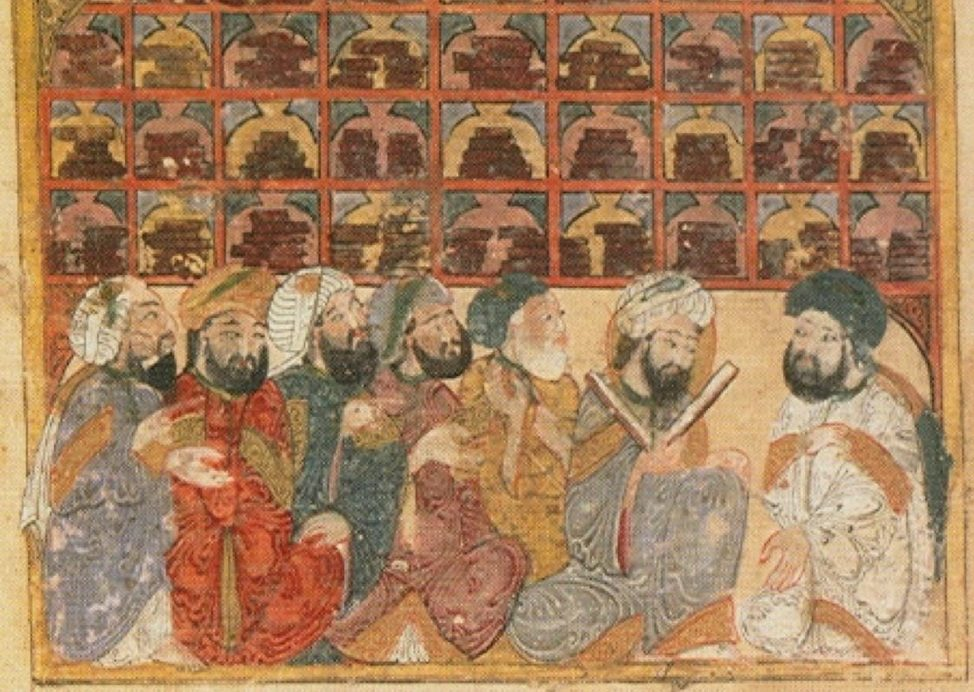
How Greek Science Was Preserved in the Islamic World
During the decline of the Western Roman Empire, much of the scientific and philosophical knowledge of ancient Greece was lost or neglected in Europe. However, this knowledge was not only preserved but vastly expanded during the Islamic Golden Age (roughly the 8th to the 14th centuries). Through a massive translation and scholarship movement, scholars across the Middle East, Central Asia, and Spain integrated Greek science with Indian, Persian, and Babylonian traditions, laying the groundwork for the European Renaissance.
1. The Translation Movement (8th–10th Centuries)
The preservation effort began in earnest under the Abbasid Caliphate, particularly with the founding of the House of Wisdom (Bayt al-Hikma) in Baghdad around 830 CE.
Sponsorship: Caliphs like Harun al-Rashid and Al-Ma'mun heavily funded the acquisition and translation of Greek, Persian, and Sanskrit manuscripts into Arabic.
The Translators: Scholars from diverse linguistic and religious backgrounds—such as the Nestorian Christian physician Hunayn ibn Ishaq—learned Greek and Syriac to translate works by Aristotle, Galen, Euclid, and Ptolemy.
Preservation of the Corpus: Without this monumental effort, many philosophical and scientific texts from figures like Plato and Aristotle would have been lost to history.
2. Critical Integration and Scientific Innovation
Islamic scholars did not simply act as passive librarians; they evaluated, critiqued, and expanded upon the Greek texts.
Mathematics: Scholars like Al-Khwarizmi (whose name gives us the word "algorithm") combined Greek geometric traditions with the Indian decimal system, founding algebra (from al-jabr) and advancing trigonometry.
Optics: Ibn al-Haytham (Alhazen) used empirical experiments to correct the Greek extramission theory of vision (the idea that rays emanate from the eye), establishing the modern scientific method and the science of optics.
Medicine: Physicians like Ibn Sina (Avicenna) synthesized the medical philosophies of Galen and Aristotle with clinical observations in The Canon of Medicine, which became the standard textbook in Europe for centuries.
3. Centers of Learning Across the Islamic World
The preservation and advancement of knowledge took place across various dynamic centers, ranging from modern-day Iraq to Spain.
Baghdad (Iraq): The political and intellectual hub of the Abbasid Caliphate, home to the House of Wisdom.
Cairo (Egypt): Under the Fatimid Caliphate, the city became a major center for astronomy, optics, and medical research.
Cordoba (Andalusia, Spain): A western jewel of Islamic culture where scholars like Ibn Rushd (Averroes) wrote extensive commentaries on Aristotle that later influenced Christian Europe.
4. Transmission to Western Europe
From the 11th to the 13th centuries, the expanded Greek and Arabic scientific knowledge re-entered Western Europe through centers of cultural exchange.
The Translation Schools: Cities like Toledo, Spain and Palermo, Sicily became hubs where scholars translated Arabic texts (and the Greek texts embedded within them) into Latin.
University Foundations: The influx of these texts sparked the birth of the first European universities in cities like Paris, Bologna, and Oxford, where Aristotle and Avicenna were studied alongside new observations.