For the ancient Greeks, a temple was not just a church or a community center—it was the literal earthly home of a living god. To destroy, loot, or violate a temple was to invite agos (a deep, multi-generational spiritual pollution) and the immediate wrath of the cosmos.
Because of this, protecting these sacred sanctuaries during the frequent wars between city-states was a matter of absolute survival, blending physical defense with high-stakes spiritual warfare.
1. The Legal Shield: The Inviolability of Asylia
The primary line of defense for a Greek temple was religious law, specifically the concept of Asylia (the origin of the modern word "asylum").
Under pan-Hellenic law, the grounds of a recognized temple were sacred and neutral territory.
The Right of Sanctuary: If a defeated soldier, a political refugee, or even a runaway slave managed to reach a temple and touch the altar or the cult statue of the god, they were legally untouchable.
The Consequences of Violation: To drag someone away from an altar by force was a capital crime against the gods. When the Spartan commander Pausanias was starved out of the Temple of Athena Chalcioecus, the Spartans were widely believed to be cursed for generations because they let him die just outside the sacred threshold.
2. Sacrosanctity and the Hierosylia (Temple Robbery)
While armies would happily burn crops, slaughter livestock, and enslave citizens of an enemy city, they would almost always march around a temple without touching it. Looting a temple was called Hierosylia.
Armies feared that if they stole the treasury of an enemy's temple, the god of that temple would switch sides and curse their military campaign. For instance, during the Greco-Persian Wars, even the Persian invaders occasionally spared Greek sanctuaries (like the temple of Apollo on Delos) out of fear of divine retribution from the local deities.
3. The Physical Fortification of Sacred Space
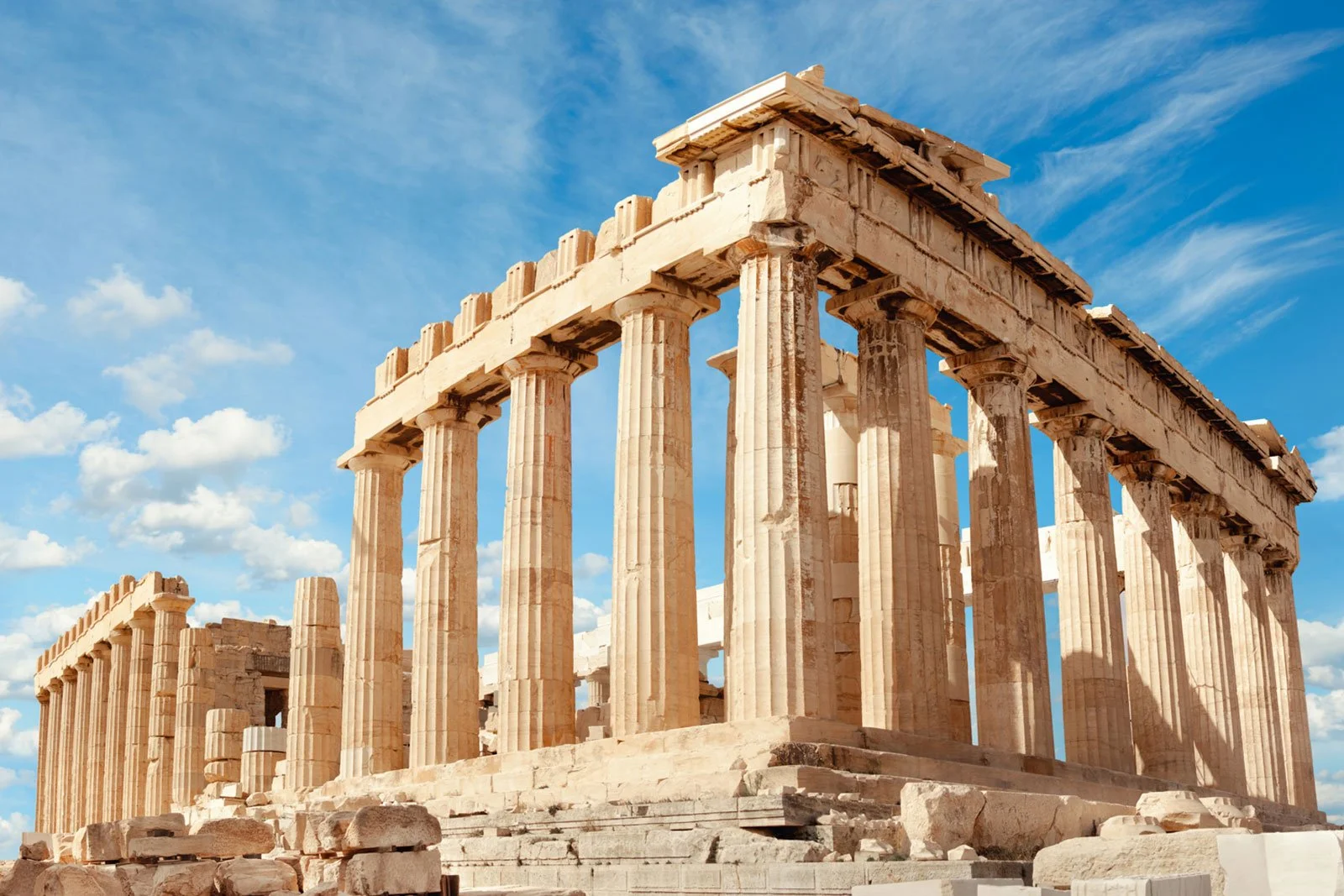
When spiritual taboos weren't enough, the Greeks resorted to heavy military engineering. Many of Greece's most famous temples were built inside an Acropolis (a high city or citadel).
Sacred Fortresses: The Acropolis of Athens, while housing the Parthenon and other shrines, was primarily a massive, walled military fortress. If an invading army breached the outer city walls, the citizens and the military garrison would retreat into the Acropolis, turning the sanctuary into a final, heavily defensible stronghold.
The Peribolos Walls: Even isolated rural temples were surrounded by a peribolos—a stone wall marking the boundary between the sacred ground (temenos) and the profane world. While built for religious separation, these walls could easily be manned by hoplites as makeshift defensive ramparts.
4. The Amphictyonic Leagues: Holy Alliances
To protect major pan-Hellenic sanctuaries that sat outside the control of a single powerful city (like the Temple of Apollo at Delphi), the Greeks formed Amphictyonies. These were religious leagues of neighboring tribes and city-states bound by sacred oaths to protect the sanctuary.
If any city state attempted to seize or loot the sanctuary, the League would declare a Sacred War. There were four major Sacred Wars in Greek history, usually resulting in the total destruction of whichever city dared to violate the temple's neutrality. The League acted as a ancient version of collective security, ensuring that the collective might of Greece would crush anyone who threatened the gods.
5. Moving the Gods: Evacuation of Treasures
When an invasion was overwhelming and physical defense was impossible, the Greeks would evacuate the temple's most valuable assets.
The Treasury: Temples acted as the central banks of the ancient world. During the Peloponnesian War, the Athenians melted down the golden statues of Nike (Victory) from the Parthenon to fund their navy, viewing it as a "loan" from Athena that they would repay with interest after winning.
Evacuating the Cult Statue: The true heart of the temple was the cult statue. During the Persian invasion of 480 BCE, before Athens was sacked, the citizens evacuated the ancient wooden statue of Athena Polias to the nearby island of Salamis. The building could be rebuilt, but the physical link to the goddess had to be saved.
6. When the System Broke Down
Despite these heavy spiritual and physical protections, desperation occasionally bred sacrilege.
During the Third Sacred War (356–346 BCE), the Phocians were facing bankruptcy and military defeat. In an act of total desperation, they seized the Temple of Delphi and melted down its vast treasures of gold and silver to hire an army of 20,000 mercenaries.
While it allowed them to fight for a decade, the act horrified the Greek world. Philip II of Macedon used the outrage to intervene, crushing the Phocians, taking their seat on the Amphictyonic Council, and cementing his rise to power over all of Greece under the guise of "avenging Apollo."
Ultimately, the protection of Greek temples relied on a delicate balance: the physical strength of stone citadels and the psychological weight of divine terror. For most of Greek history, the fear of a god's wrath was far more effective at stopping an army than a line of bronze shields.