Introduction
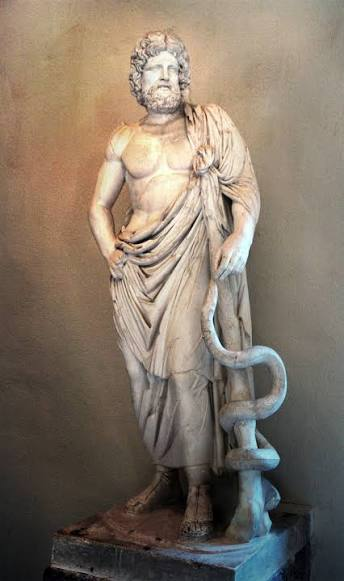
Asclepius was the ancient Greek god of medicine, healing, and physicians, revered as the greatest healer in Greek mythology. The son of Apollo, the god of prophecy and light, and the mortal princess Coronis, Asclepius became famous for his extraordinary medical knowledge and miraculous ability to cure disease. His legend reflects the Greek pursuit of scientific observation, herbal medicine, and compassionate care, while his sacred symbol—the Rod of Asclepius, a staff entwined by a single serpent—remains an international emblem of medicine today.
Birth and Education
Before Asclepius was born, Coronis became unfaithful to Apollo. Enraged, Apollo caused her death but rescued the unborn child from her funeral pyre through a miraculous operation, making Asclepius one of the earliest figures in mythology associated with surgical birth.
Apollo entrusted the infant to the wise centaur Chiron, who raised him on Mount Pelion. Under Chiron's guidance, Asclepius mastered herbal medicine, surgery, anatomy, botany, and the treatment of wounds. His exceptional intelligence soon surpassed that of every other physician.
Master Healer
Asclepius became capable of curing diseases once considered incurable. Using medicinal plants, careful observation, and divine knowledge, he restored countless patients to health. Ancient traditions also describe sacred snakes assisting him, as the serpent symbolized renewal because it shed its skin.
Eventually, Asclepius became so skilled that he reportedly restored several dead individuals to life. Among those revived in different versions of the myth were Hippolytus, Capaneus, and Glaucus.
Zeus' Intervention
The power to reverse death disturbed the natural order established by the gods. Fearing that immortality would spread among mortals and upset the balance between life and death, Zeus struck Asclepius with a thunderbolt.
Apollo mourned his son's death and protested Zeus' decision. Eventually, Zeus honored Asclepius by placing him among the gods as the divine patron of medicine and healing.
Healing Sanctuaries
Throughout Greece, magnificent healing temples called Asclepieia were established in his honor. Patients traveled from across the Greek world seeking treatment through bathing, exercise, diet, herbal remedies, and ritual sleep, during which priests interpreted healing dreams believed to come from Asclepius himself.
These sanctuaries became some of the earliest organized medical centers in history.
Conclusion
The myth of Asclepius celebrates the ideals of compassion, scientific learning, and healing. His extraordinary medical abilities and enduring symbol continue to represent the noble mission of physicians, making him one of the most influential figures in both mythology and the history of medicine.