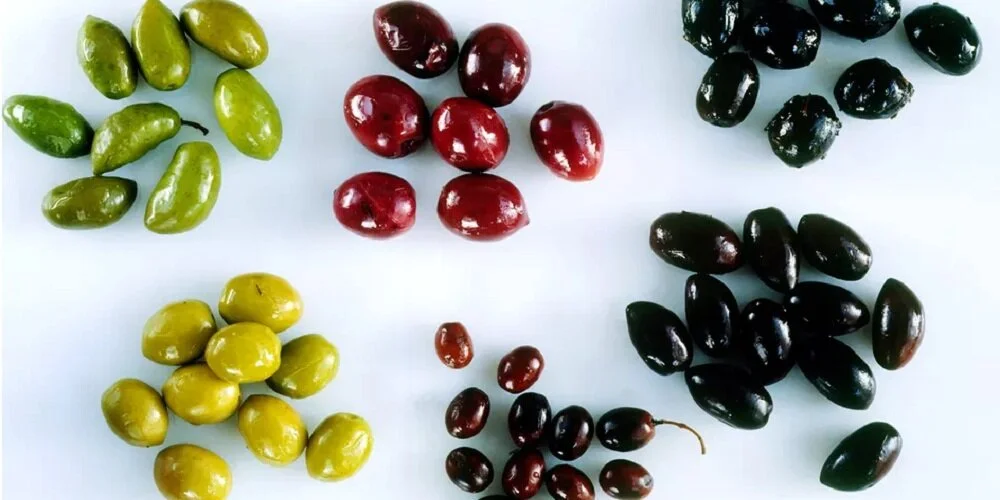
The name "Greek olives" is most often associated with Kalamata black olives. However, there are several different types of olives that are famously cultivated in Greece. You may not be able to find all of the varieties outside of the Mediterranean region, though some of these Greek olives (or elies) make an appearance at markets and specialty food shops.
01 - Cretan Green Olives
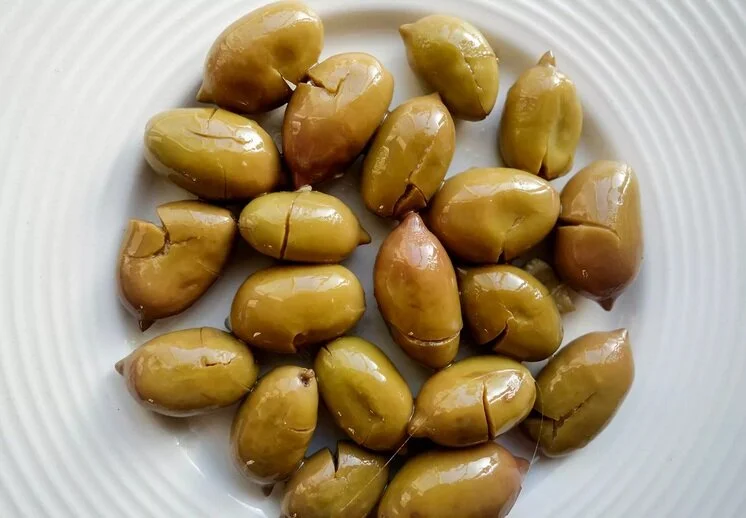
Cretan green olives are called elitses, meaning "tiny olives." The formal name is koroneiki. The island of Crete is famous for these tiny olives. They are also cultivated in Messinia, on the Grecian Peloponnese peninsula, and on the island of Zakynthos. Despite their size, they are packed with oil and the source of some of the world's best olive oil.
When green, small quantities are harvested as table olives. Most are consumed in Greece and never reach Western markets. When black and ripe (December through January, and sometimes February), they are almost exclusively harvested for the production of olive oil. Cretan olive oil is famous the world over, consumed both in Greece and exported.
02 - Halkithiki Green Olives
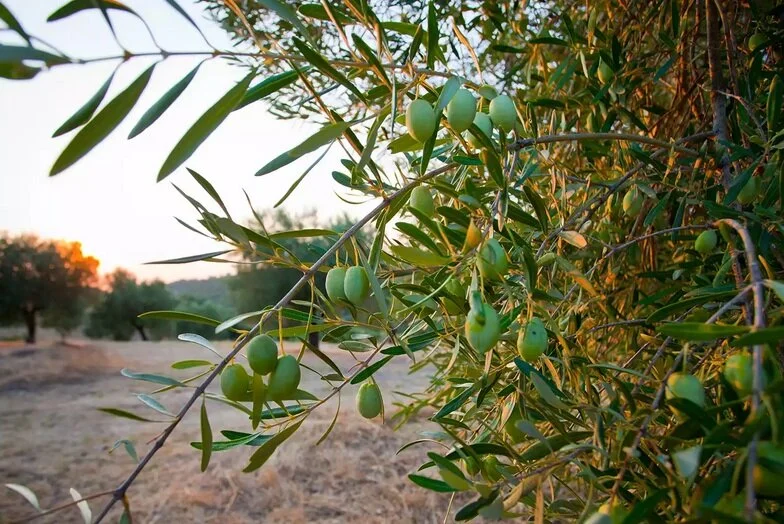
Halkidiki olives are large, oval, pale green Greek olives commonly harvested while still young in October. Often referred to as Chalkidiki, they grow exclusively in Greece's Halkidiki region, which is adjacent to Mount Athos. You may also hear these big fruits called "donkey olives."
This variety is usually processed through brine curing, which gives them a firmer meat texture. The olive has a soft flavor with a little tartness and a note of pepper. The large size enables easy stuffing with things like dried tomatoes, blue cheese, and almonds.
03 - Kalamata Black Olives
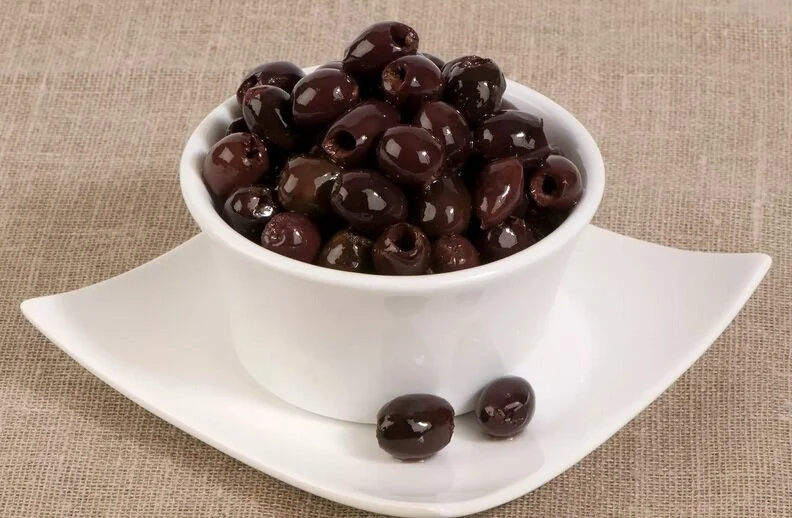
Black or deep purple Kalamata olives are the best-known Greek olive. Grown in the valley of Messina, near the town of Kalamata, they're harvested in December once fully ripened, which explains their dark color. The name is also often spelled Calamata.
The olive has tight, snappy, shiny skin, and a distinctive almond shape. Sliced Kalamata olives cured in a red-wine vinegar brine are often considered the best. They also serve well as a tapenade spread or as an ingredient in a Greek salad.
04 Kalamata Red Olives
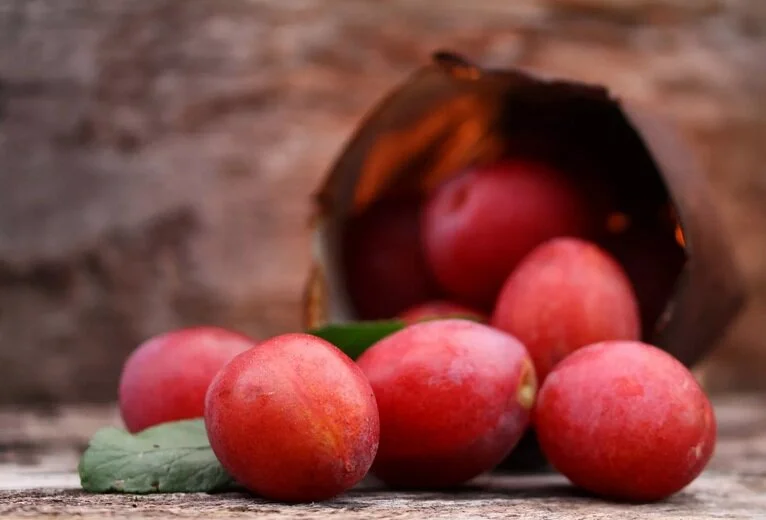
Kalamata red olives are typically picked once fully ripened in December, though harvest may take place as early as November. When they are picked early and not fully matured, they are known as "pink" olives because of their lighter appearance. It's rare to find this variety outside the region.
05 - Nafplion Green Olives
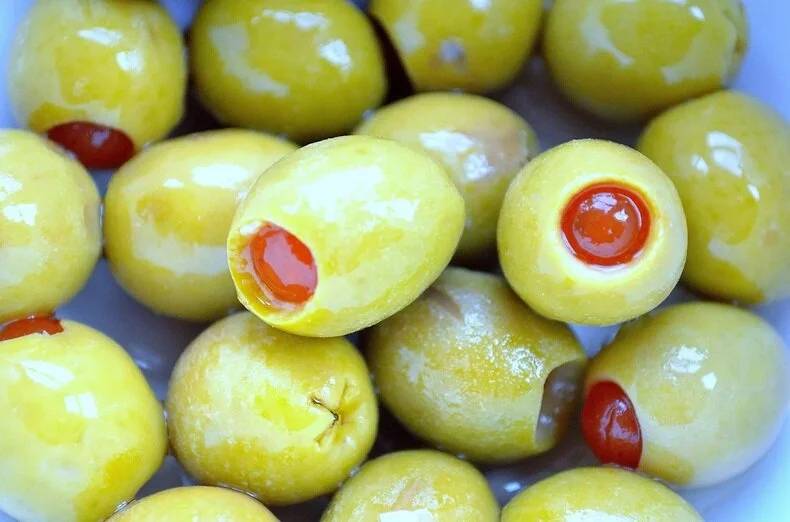
Nafplion green olives grow in the valley of Argos in the Eastern Peloponnese peninsula. Harvested at the beginning of the season in October, they are a small, light green olive, and usually brined. They're rarely seen outside of Greece.
These little gems have a consistent, firm, crunchy texture and a slightly nutty, slightly smoky taste. They're best served as a table olive, sprinkled with olive oil, lemon juice, and a sprig of fresh dill.
06 - Plum Olives
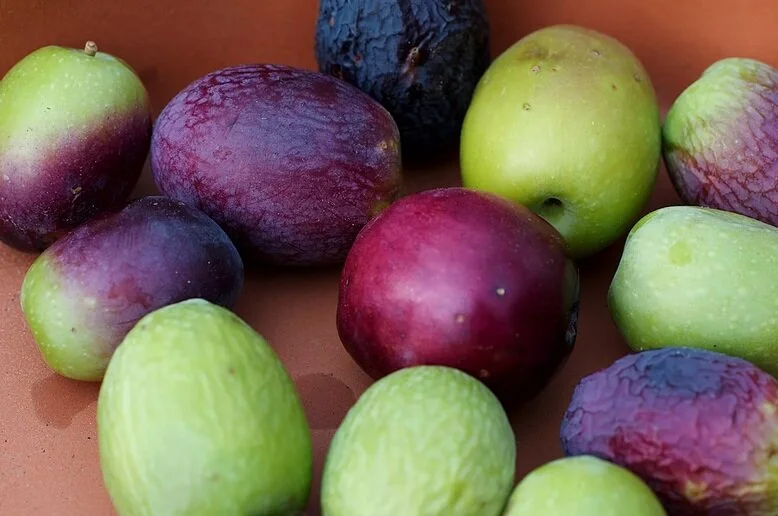
Plum olives are large olives harvested in November, and they're typically fermented or baked. It's considered a revival of an ancient Greek variety of olives. In keeping with traditional ways, they're grown using organic cultivation methods. Plum olive fruits ferment in salted water. The approach takes longer, though the olive will ferment without any chemical additives when given enough time.
07 - Throubes Black Olives

In Greece, wrinkled black olives are the throubes variety. Most come from the Greek island of Thassos. Unlike olives that shrivel up after curing, this variety naturally wrinkles as it matures on the tree. Rather than pick the olives, they're harvested by placing nets under the trees to catch the shriveled fruits as they ripen.
Throubes are the only olives that can be eaten directly from the tree. They're also dry-cured for commercial use, though they're not used to make olive oil. The meaty fruits have a strong olive taste. Favorite ways to serve them are with patatosalata (Greek potato salad), or drizzled with olive oil and sprinkled with oregano.
Source: thespruceeats