How a Revolutionary Glassmaking Technique Transformed Ancient Art
Glass was known long before the Greeks, but the development and spread of glassblowing during the late Hellenistic and especially Roman periods transformed glass production.
This distinction is important.
Ancient Greek artisans certainly worked with glass, but glassblowing was not a purely Greek invention, nor was it a dominant Classical Greek technique.
The technology emerged in the eastern Mediterranean and became especially transformative under Roman rule.
Early Glass
Before glassblowing, artisans could create glass through techniques such as:
Core forming.
Casting.
Molding.
Winding.
These processes could be labor intensive.
Glass vessels were often expensive.
The Glassblowing Revolution
Glassblowing involves gathering molten glass onto the end of a tube and blowing air into it.
The craftsman could then shape the expanding bubble.
This allowed vessels to be produced much faster.
Why This Changed Everything
Before widespread glassblowing, glass was largely a luxury material.
After the technology spread, glass vessels became increasingly accessible.
Artisans could produce:
Bottles.
Cups.
Containers.
Flasks.
Decorative objects.
Greek Artistic Influence
Greek artistic traditions influenced the shapes and decorations of vessels produced in the Hellenistic and Roman worlds.
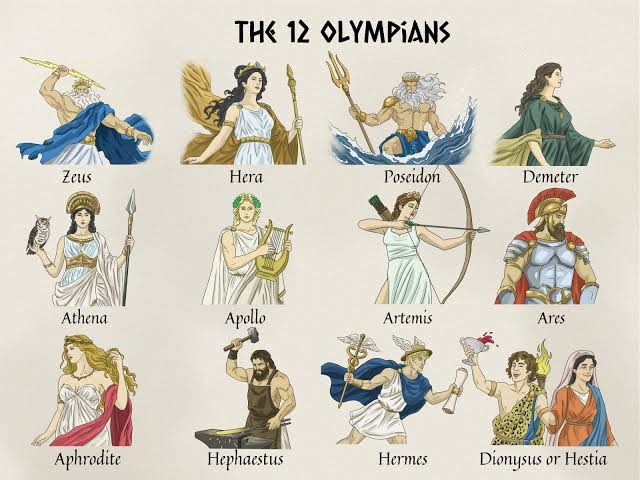
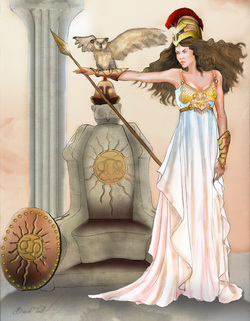
Mythological imagery remained important.
Artists could also experiment with:
Color.
Transparency.
Layering.
Decorative patterns.
Colored Glass
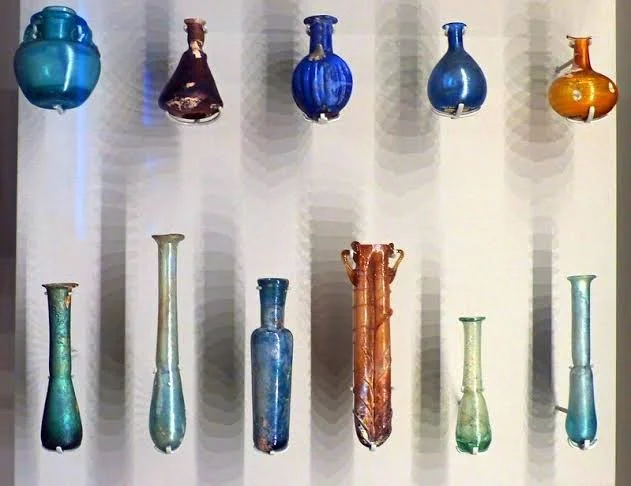
Ancient glassmakers could produce different colors by adding mineral substances to the glass mixture.
This created:
Blue.
Green.
Amber.
Purple.
Other shades.
Color itself became a decorative feature.
Glass and Perfume
Small glass vessels were particularly useful for perfumes and oils.
This connected glassmaking with:
Cosmetics.
Trade.
Personal grooming.
Glass in Luxury Culture
Transparent glass was visually fascinating.
A clear vessel allowed people to see its contents.
This was unusual in a world dominated by ceramic and metal containers.
Glass therefore communicated refinement.
The Science of Glass
Glassmaking required control of temperature.
The material had to remain sufficiently molten to shape.
Too cool and it became difficult to work.
Too hot and control could be lost.
The craft required specialized furnaces and experience.
Why Glassblowing Matters
Glassblowing demonstrates how one technological innovation can transform an entire artistic industry.
A material once difficult to shape became dramatically more versatile.
The result was not simply cheaper containers.
It was an explosion of artistic possibility.
Glass could become transparent.
Colored.
Thin.
Decorative.
Functional.
And eventually, an ordinary part of everyday life.