Introduction
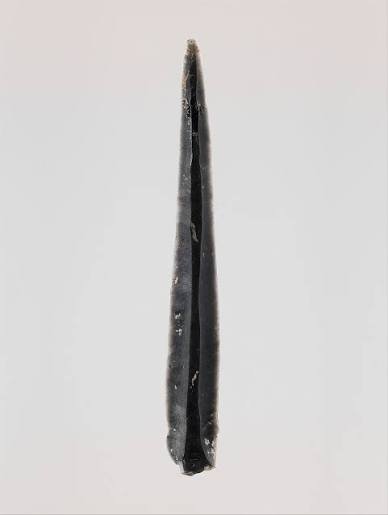
Milos occupies a special place in the prehistoric history of the Aegean because of its abundant obsidian deposits. This naturally occurring volcanic glass was highly valued by prehistoric communities because it could be fractured into extremely sharp cutting edges. Long before the widespread use of metal tools, obsidian was an important material for producing blades, scrapers, points, and other implements.
The island's geological landscape is therefore closely connected to the development of prehistoric trade and technology. Investigating obsidian from potentially unmapped volcanic flows offers an opportunity to explore how geological resources were identified, extracted, and distributed throughout the Cyclades.
However, the phrase "unmapped flows" should not imply that previously unknown obsidian sources have already been confirmed. Any proposed source must be established through geological surveying and scientific analysis.
Milos and Its Volcanic Origins
Milos belongs to the South Aegean volcanic arc, a region shaped by complex tectonic processes associated with the movement of the African and Eurasian plates.
Its volcanic history produced a varied geological landscape containing volcanic rocks, hydrothermal deposits, and silica-rich formations. Under suitable conditions, rapidly cooled silica-rich volcanic material can form obsidian, a natural glass with a distinctive appearance and fracture pattern.
Milos became particularly important because its obsidian could be collected and processed more easily than many alternative stone materials.
The island's prehistoric significance is demonstrated by the widespread distribution of Milos obsidian at archaeological sites throughout the Aegean.
What Makes Obsidian Valuable?
Obsidian fractures in a way that produces extremely sharp edges. This property made it especially useful for cutting, scraping, and piercing.
Prehistoric craftspeople could shape it through controlled percussion, removing flakes from a larger core. Smaller flakes could then be modified into specialized tools.
Obsidian was not necessarily superior to every other available stone. Flint, chert, and other materials were also used extensively. However, its sharpness and predictable fracture behavior made it particularly desirable.
Its distinctive geological composition also allows archaeologists to investigate where ancient communities obtained their raw materials.
The Obsidian Trade Network
Milos obsidian circulated widely during the Neolithic and Bronze Age. Archaeological discoveries at sites across the Aegean demonstrate that the island's volcanic glass traveled considerable distances.
This distribution provides evidence of maritime contact between communities that may have been separated by substantial stretches of open water.
Obsidian could have been transported as raw nodules, partially prepared cores, or finished tools. The form in which it circulated depended on local production practices and the needs of receiving communities.
The movement of obsidian does not necessarily indicate a centralized trading system. Exchange could have involved direct voyages, repeated transfers between neighboring islands, or informal relationships among maritime communities.
Investigating Unmapped Geological Sources
Although Milos is famous for obsidian, the island's geological deposits are not necessarily uniform. Different volcanic formations may contain materials with distinct chemical characteristics and physical properties.
Geological mapping can identify exposed glass-bearing formations and areas where erosion has revealed previously unrecorded deposits.
Researchers can examine mineral composition, texture, and chemical signatures to distinguish different geological sources.
These investigations are important because not every dark volcanic rock is obsidian. Basalt, volcanic glass, and other siliceous materials can appear similar at a distance but have different properties.
Scientific Provenance Analysis
Archaeologists use geochemical methods to connect obsidian artifacts with their geological origins.
Techniques such as X-ray fluorescence and neutron activation analysis can measure characteristic elemental compositions. These results can then be compared with reference samples collected from known geological sources.
A reliable match can help establish whether an artifact originated on Milos or elsewhere.
Such research can also distinguish between different source areas within an island when their chemical signatures are sufficiently distinct.
The identification of an unknown source requires careful sampling and comparison rather than visual resemblance alone.
Prehistoric Communities and Craft Production
Obsidian working was an important technological activity. Craftspeople needed knowledge of the material's fracture properties and the ability to control the removal of flakes.
The presence of cores, production debris, and unfinished tools at a settlement can indicate local processing.
A large concentration of finished tools without manufacturing waste might instead suggest that the objects arrived through exchange.
These distinctions help archaeologists reconstruct the organization of prehistoric production and the economic relationships between islands.
Environmental Change and Source Accessibility
Natural obsidian deposits can become exposed or concealed through erosion, landslides, vegetation growth, and changes in surface conditions.
Ancient communities may have accessed geological formations that are difficult to recognize today. Conversely, modern erosion may expose deposits that were not easily accessible in antiquity.
Environmental reconstruction can help researchers understand how prehistoric people encountered and exploited these resources.
The location of a source is only one part of the investigation. Its accessibility, quality, and distance from landing places also influenced its economic importance.
Preservation and Future Research
Obsidian artifacts are generally durable, but archaeological deposits containing them can be disturbed by construction, agricultural activity, and unauthorized collecting.
Scientific research depends on preserving the relationship between artifacts and their excavation contexts.
Future investigations on Milos could combine geological mapping, remote sensing, systematic surface survey, and laboratory analysis. This approach would improve understanding of the island's raw material resources and their prehistoric distribution.
Conclusion
Milos obsidian provides one of the clearest examples of how a geological resource shaped prehistoric exchange across the Aegean. Its distinctive properties made it valuable to early communities, while its chemical composition allows modern researchers to trace ancient movement between islands.
Investigating potentially unmapped obsidian-bearing formations could refine knowledge of prehistoric resource exploitation. However, any newly proposed source must be verified through geological and geochemical evidence. The wider story of Milos obsidian demonstrates how geology, technology, and maritime exchange became closely connected during the prehistoric development of the Cyclades.