Hellenes Have Nothing to Do With Helen of Troy
By N.S. Gill
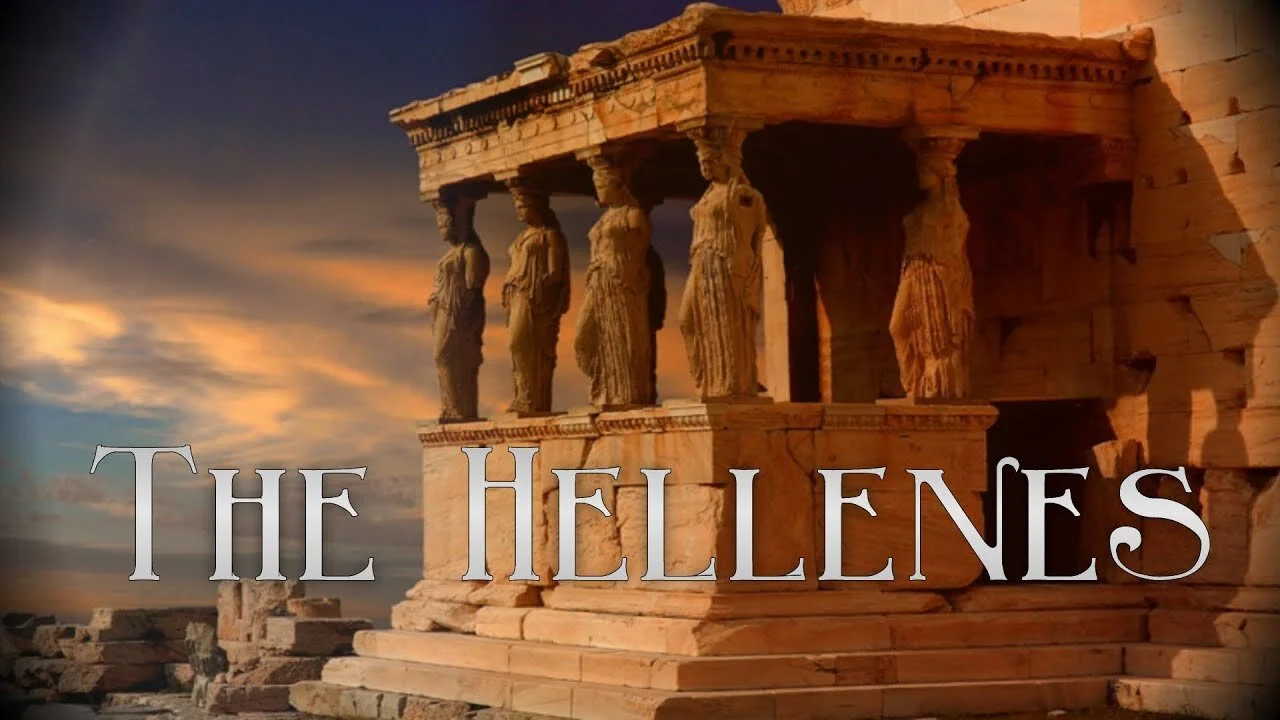
If you read any ancient Greek history, you'll see references to the "Hellenic" people and the "Hellenistic" period. These references describe only a relatively brief period between the death of Alexander the Great in 323 BCE and the defeat of Egypt by Rome in 31 BCE. Egypt, and particularly Alexandria, came to be the center of Hellenism. The end of the Hellenistic World came when the Romans took over Egypt, in 30 B.C., with the death of Cleopatra.
Origin of the Name Hellene
The name comes from Hellen who was not the woman famed from the Trojan War (Helen of Troy), but the son of Deucalion and Pyrrha. According to Ovid's Metamorphoses, Deucalion and Pyrrha were the only survivors of a flood similar to the one described in the story of Noah's Ark. To repopulate the world, they throw stones which turn into people; the first stone they throw becomes their son, Hellen. Hellen, the male, has two l's in his name; whereas Helen of Troy has only one.
Ovid did not come up with the idea of using the name Hellen to describe the Greek people; according to Thucydides:
"Before the Trojan war there is no indication of any common action in Hellas, nor indeed of the universal prevalence of the name; on the contrary, before the time of Hellen, son of Deucalion, no such appellation existed, but the country went by the names of the different tribes, in particular of the Pelasgian. It was not till Hellen and his sons grew strong in Phthiotis, and were invited as allies into the other cities, that one by one they gradually acquired from the connection the name of Hellenes; though a long time elapsed before that name could fasten itself upon all. The best proof of this is furnished by Homer. Born long after the Trojan War, he nowhere calls all of them by that name, nor indeed any of them except the followers of Achilles from Phthiotis, who were the original Hellenes: in his poems they are called Danaans, Argives, and Achaeans." (Richard Crawley's translation of Thucydides Book I)
Who the Hellenes Were
After the death of Alexander, some city-states came under Greek influence and were thus "Hellenized." The Hellenes, therefore, were not necessarily ethnic Greeks as we know them today. Instead, they included groups we now know of as Assyrians, Egyptians, Jews, Arabs, and Armenians among others. As Greek influence spread, Hellenization even reached the Balkans, the Middle East, Central Asia, and parts of modern India and Pakistan.
What Happened to the Hellenes
As the Roman Republic became stronger, it began to flex its military might. In 168 BCE, the Romans defeated Macedon; from that point forward, Roman influence grew. In 146 BCE the Hellenistic region became a Protectorate of Rome; it was then that Romans began imitating Hellenic (Greek) clothing, religion, and ideas.
The end of the Hellenistic Era came in 31 BCE. It was then that Octavian, who later became Augustus Caesar, defeated Mark Antony and Cleopatra and made Greece a part of the new Roman Empire.
Source: www.thoughtco.com