Ancient Greece is often celebrated as a golden age in world history, but what were the origins of this remarkable civilization, and what was the genetic makeup of its people? To understand this, let's first take a closer look at Ancient Greece itself.
The roots of Ancient Greece can be traced back to the period between the 12th and 9th centuries BC, when city-states began to emerge from the remnants of the Greek Dark Age, following the collapse of the Mycenaean civilization—a topic we’ll explore further later on. During the 8th century BC, the epic poems of Homer, the Iliad and the Odyssey, made their mark as some of the earliest contributions from the ancient Greeks.
The timeline of Ancient Greece is often debated. Some historians mark its end with the death of Alexander the Great in 323 BC, while others argue that it continued until the fall of the Western Roman Empire in the 5th century AD. Regardless of the exact date, the Classical period in Ancient Greece, spanning the 5th and 4th centuries BC, is perhaps the most renowned. This era witnessed the peak of democratic Athens, the Peloponnesian War between Athens and Sparta, and the rise of Macedonia under Philip II, later expanded by his son, Alexander the Great.
This was also the time of great philosophers like Socrates, Plato, and Aristotle, and historians like Herodotus, who classified the Greeks into four major tribes: the Achaeans, Aeolians, Ionians, and Dorians. Another key historian, Thucydides, is known for identifying the “Thucydides Trap,” a concept still discussed today in the context of rising and established powers.
It's important to note that for most of its history, Ancient Greece was not a unified empire but a collection of city-states sharing cultural and linguistic bonds. However, Greece did experience brief unification under Alexander the Great’s empire.
So, where did Ancient Greece originate? The answer lies in the Bronze Age civilizations of the region, particularly the Mycenaeans and the Minoans. The Minoans, who are especially known for their stunning frescoes, played a critical role in shaping the early Greek world.
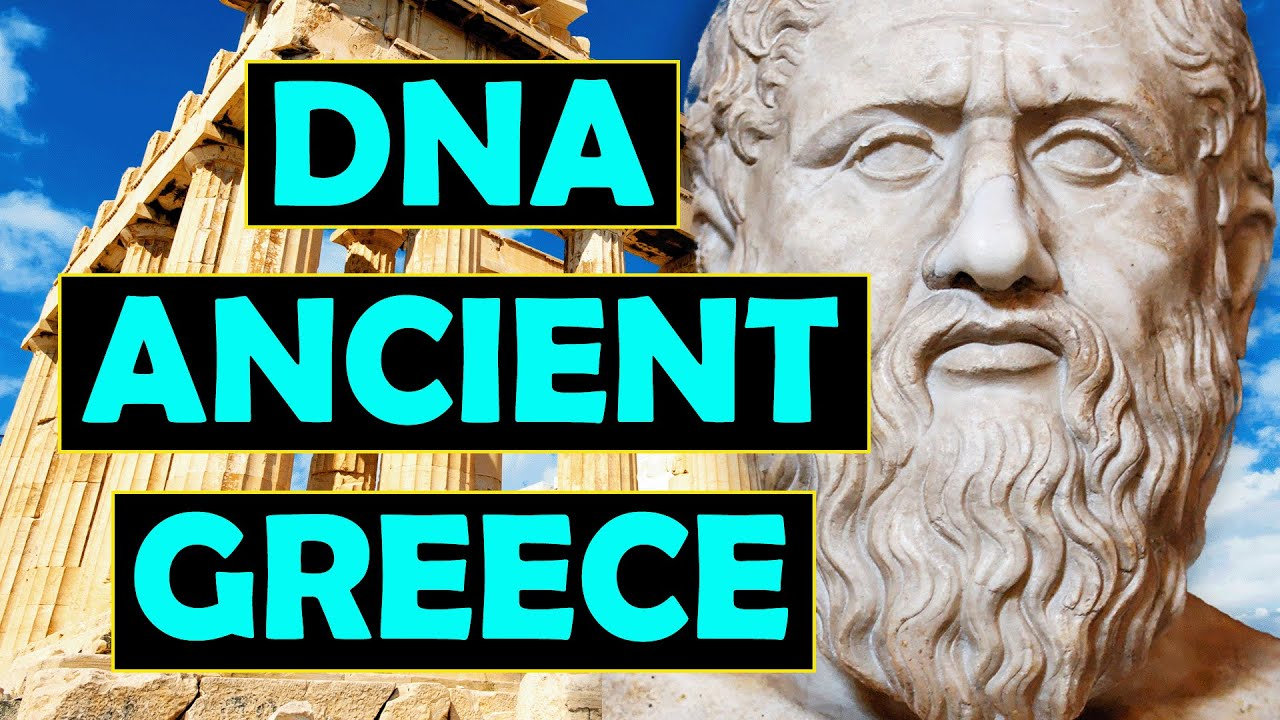
To delve deeper into the DNA and genetic origins of the ancient Greeks, watch the video below.