During the Greek War of Independence, hunger was just as formidable an enemy as the Ottoman forces. The revolutionaries not only fought for freedom but also struggled daily for survival. Living under harsh conditions—often in the mountains or besieged cities—securing food was a constant challenge. Their diet was simple, dictated by what they could forage, hunt, or acquire from local communities.
The Staple: Bread and Hardtack
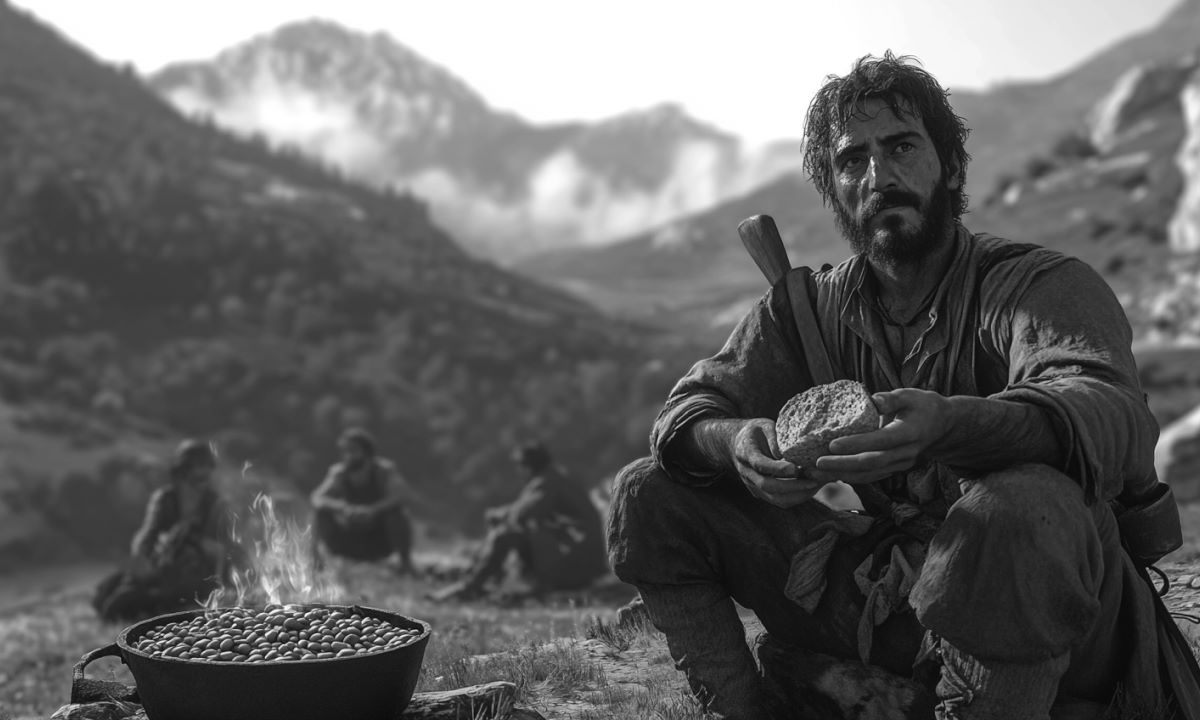
Bread was the foundation of their diet, typically made from cornmeal or barley since wheat was scarce and expensive. Hardtack, a type of dry, twice-baked bread, was the most practical option as it could last for months without spoiling. To make it edible, they often softened it by soaking it in water or wine.
Meat: A Rare Luxury
Meat was difficult to come by, but when available, the fighters ate goats, sheep, or wild game from the mountains. During prolonged sieges, however, fresh meat became an unattainable luxury, forcing them to rely on dried meat—or in desperate times, even slaughter their own horses to survive.
Dairy: A Precious Nutrient Source
Dairy products such as cheese and yogurt were among the most valuable food items, offering essential nutrition and long shelf life. Feta cheese, in particular, was easy to carry and consume without preparation.
Legumes: A Reliable Energy Source
Legumes—such as beans, chickpeas, and lentils—were dietary staples, especially in areas where revolutionaries could access village supplies. These foods were filling and could be cooked relatively easily, even with limited resources.
Wine, Spirits, and Natural Sweets
Wine and tsipouro (a strong distilled spirit) often accompanied meals, serving not just as a drink but also as a way to purify contaminated water. Honey was one of the few available sweeteners, while dried figs and walnuts provided much-needed energy during long marches and battles.
Surviving the Siege: Extreme Measures
Hunger was one of the war’s greatest hardships, particularly in besieged regions like Missolonghi. In the most desperate situations, fighters and civilians resorted to eating wild greens, roots, and even boiled animal hides to stay alive.
The Greek revolutionaries of 1821 weren’t just battling the Ottomans—they were also fighting against nature and deprivation. Yet, through their simple but resilient diet, they endured, fought, and ultimately made history.