Sacred architecture, tesserae, and the visual language of Byzantine religious spaces.
The Art of the Church Entrance
In Byzantine church architecture, the narthex generally served as an entrance or vestibule connecting the outside world with the main worship space. Its location made it an important area for movement, ceremony, and visual communication.
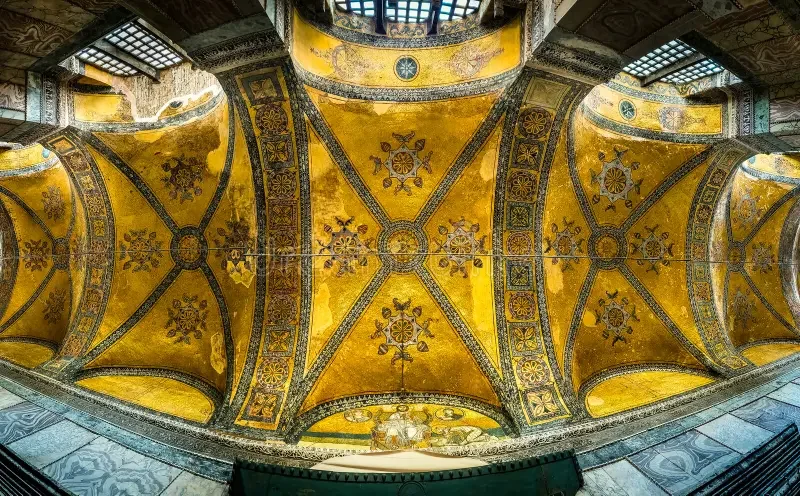
Mosaics in such a space could combine religious imagery, decorative patterns, and inscriptions. Their meaning depended on the building's historical period, local artistic traditions, and the expectations of the community that used the church.
The proposed discovery of Byzantine mosaics in an unknown narthex on Thasos would be significant if verified. Without an identified church, excavation report, or documented mosaic fragments, however, the specific find remains unconfirmed.
How Byzantine Mosaics Were Made
Mosaics are assembled from small pieces known as tesserae. These may be made from stone, glass, ceramic, or other materials, depending on the design and available resources.
Artists arranged the pieces within a prepared surface, using differences in color, size, and angle to create images or patterns. Glass tesserae could contain colored compounds or metallic effects that changed the appearance of the surface under different lighting.
The quality of a mosaic depends not only on the materials but also on the skill of its makers and the relationship between the image, architecture, and viewing position.
Thasos and Its Religious Heritage
Thasos has a long history of settlement and cultural change, including periods of ancient Greek, Roman, and Byzantine activity. Its archaeological landscape contains evidence of religious, civic, and domestic architecture from different eras.
A newly identified narthex would need to be dated independently. Architectural features alone may not be enough because buildings were often modified, repaired, or repurposed over time.
Researchers would investigate the building's plan, masonry, inscriptions, associated ceramics, and any securely dated deposits. The relationship between the mosaic and the architectural phase would be especially important.
Reading a Mosaic's History
Mosaic imagery can help scholars understand religious devotion, artistic influence, and the visual priorities of a community. Inscriptions, when present, may identify donors, commemorated individuals, or religious figures.
However, iconography must be interpreted in context. A fragment depicting a familiar motif does not automatically establish a precise date or the identity of the building.
Scientific examination can also reveal information about pigments, glass composition, and repairs. Differences between tesserae may indicate multiple construction phases or later restoration.
Conservation Beneath the Surface
Mosaics can deteriorate when exposed to moisture, salts, temperature changes, and structural movement. Excavating a buried mosaic may change the conditions that helped preserve it, so conservation planning should begin before large areas are exposed.
Digital recording, detailed photography, and careful stabilization can preserve information about the original arrangement. Unauthorized removal of tesserae would destroy the context needed for interpretation.
An Unverified Discovery Worth Investigating
The alleged mosaics from an unknown Thasos narthex remain unconfirmed. If documented, they could contribute to the study of Byzantine worship, local building traditions, and artistic exchange in the northern Aegean.
The real significance would lie in understanding the mosaic as part of a complete architectural and religious setting—not simply as a collection of decorative stones.