
Ancient currency, political change, and the archaeological meaning of a buried collection.
Why Ancient Coins Are Buried
Coin hoards are collections of currency deposited together, sometimes in containers or concealed locations. People may have hidden money during periods of conflict, political uncertainty, or personal danger. In other cases, a collection could represent savings, a ritual deposit, or a group of coins that was never recovered.
A Hellenistic coin hoard from Lesbos would offer a way to study the island's economy and political relationships after the campaigns of Alexander the Great. Yet the specific hidden hoard described in this title needs confirmation through archaeological documentation.
The Hellenistic World of Coinage
The Hellenistic period began in the late fourth century BCE and extended through the centuries in which kingdoms formed from Alexander's conquests interacted across the eastern Mediterranean.
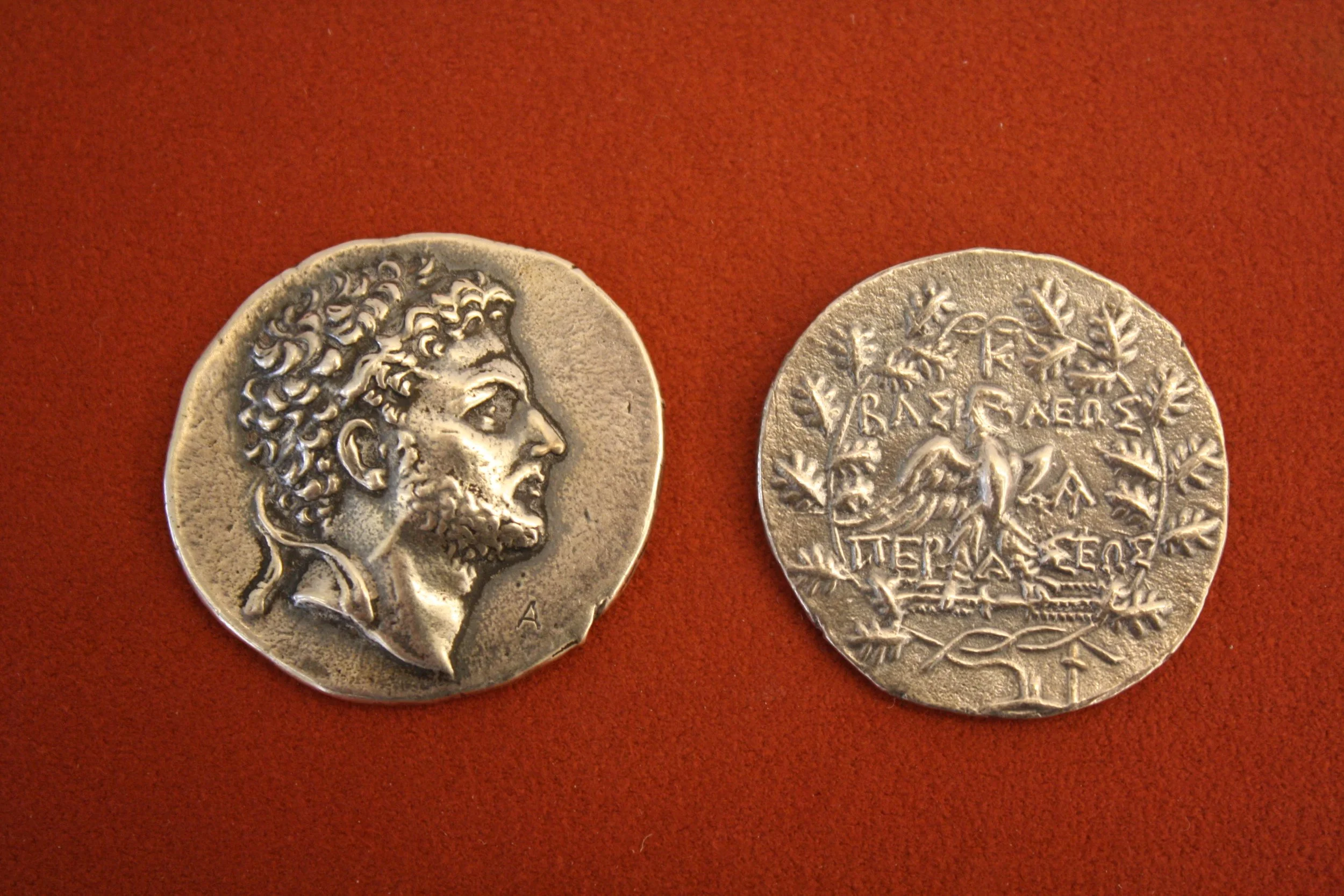
Coins could carry rulers' portraits, divine figures, civic symbols, and inscriptions identifying the issuing authority. Their designs and weights provide evidence about political identity, economic practices, and changes in monetary systems.
A coin's date of manufacture is not necessarily the date when it was buried. A hoard may contain coins that circulated for decades before being deposited, so researchers examine the youngest securely dated coins alongside archaeological context.
Lesbos and Its Monetary History
Lesbos occupied a strategic position in the northeastern Aegean, near routes connecting the Greek mainland, Anatolia, and other islands. Its cities participated in the wider political and economic developments of the ancient Mediterranean.
Coins found on the island could reflect local civic activity, regional exchange, military movement, or trade. Their significance depends on their precise origin and the circumstances in which they were deposited.
The presence of Hellenistic coinage in the region does not establish the existence of a newly discovered hidden hoard. Researchers would need a verified location, a documented inventory, and information about the find's archaeological context.
How Numismatists Study a Hoard
Numismatists record each coin's weight, diameter, inscription, imagery, metal composition, and condition. These details help identify the issuing authority and compare the coin with established catalogues.
The combination of coins is often more informative than any single specimen. A hoard containing issues from several cities may reveal patterns of circulation or economic connections, while a group dominated by one authority may reflect a particular monetary environment.
Scientific analysis can help distinguish silver, copper alloys, gold, and other materials, although cleaning and conservation must be performed carefully to avoid damaging surfaces.
Why Find Context Matters
A hoard recovered through controlled excavation can preserve information about its container, burial depth, surrounding structures, and associated artifacts. These details may help researchers determine whether the collection was hidden in a domestic building, deposited near a route, or placed in another setting.
A collection assembled from unrecorded finds loses much of that contextual value. Its contents may still be studied, but the historical interpretation becomes more uncertain.
A Buried Economy, Not Just Buried Treasure
A confirmed Hellenistic hoard on Lesbos could illuminate monetary circulation and the island's relationships with neighboring communities. Until a specific discovery is documented, the proposed cache remains unverified.
The value of a coin hoard lies in the combined evidence of its coins, chronology, and archaeological setting. Together, these details can reveal how people stored wealth and navigated the political and economic changes of the Hellenistic Mediterranean.







