Introduction
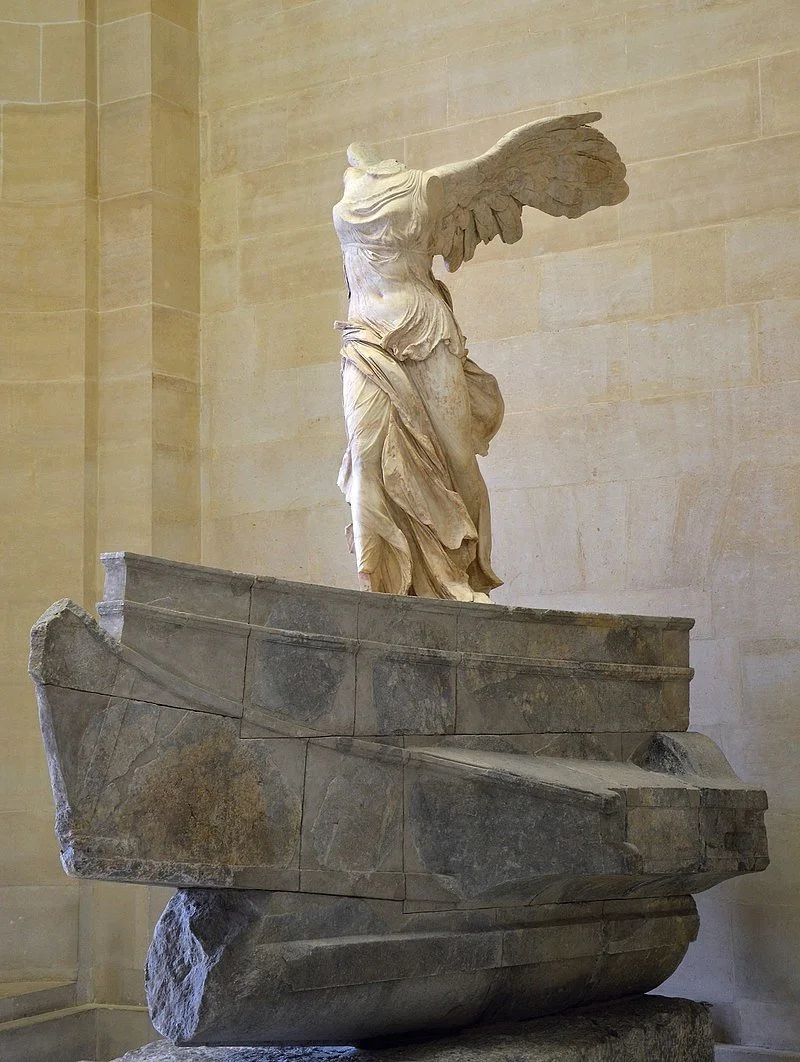
The island of Samothrace, located in the northern Aegean Sea, was home to one of the ancient Mediterranean's most important sanctuary complexes. The Sanctuary of the Great Gods attracted visitors from different parts of the Greek world and beyond. Its religious importance rested partly on initiation rites whose details were deliberately restricted, making the sanctuary a subject of continuing scholarly interest.
The phrase “forbidden rituals” evokes the secrecy associated with ancient mystery cults. Yet it can also create a misleading impression that the sanctuary was devoted to sinister or prohibited practices. In the ancient world, secrecy was often a formal component of religious initiation. It distinguished initiates from non-initiates and protected sacred knowledge from casual disclosure.
The sanctuary's origins and religious identity are complex. Samothrace lies in a region associated with Thracian peoples, and the island maintained connections with the northern Aegean and the Balkan mainland. However, the cult of the Great Gods should not simply be labeled a “Thracian cult” without qualification. Its development involved local traditions, Greek religious practices, and connections that changed over time.
A historical examination must therefore separate what is known about the sanctuary from what remains uncertain about its earliest origins and secret ceremonies. Archaeology, inscriptions, ancient literature, and the broader history of Greek religion provide important evidence, but none gives us a complete transcript of the initiation rites.
Samothrace's Geographic and Religious Position
Samothrace occupies a distinctive position in the northern Aegean. The island lies near the Thracian coast and maritime routes linking the Aegean with the Dardanelles and the Black Sea approaches. Its mountainous terrain and relative isolation contributed to its distinctive character, while its location allowed travelers to reach it by sea.
The island's religious significance developed within a wider regional environment. Ancient communities traveled between islands and mainland settlements for trade, diplomacy, military service, and religious observance. Sanctuaries could attract visitors whose home communities were separated by considerable distances.
The Sanctuary of the Great Gods became an important destination for initiation. Its visitors included people from different social and geographic backgrounds, and its reputation extended beyond the island itself.
Religious sanctuaries could serve several purposes simultaneously. They were places of worship, sites of initiation, settings for offerings and dedications, and locations where people from different communities encountered one another. A sanctuary's influence could therefore extend into political and social life without requiring it to function as a conventional political institution.
Samothrace's religious importance should be understood within this broader pattern of ancient mobility and sacred geography.
The Great Gods of Samothrace
The deities worshipped at Samothrace were commonly referred to collectively as the Great Gods. Their identities do not map neatly onto the familiar Olympian pantheon, and the surviving evidence does not permit every deity or title to be identified with certainty.
Ancient mystery cults sometimes employed divine names, titles, or ritual language that were not fully disclosed to outsiders. The Great Gods were associated with a distinctive religious tradition whose details differed from the public cults familiar from many Greek cities.
Some ancient writers connected Samothrace with the Dioscuri, the twin figures Castor and Pollux, particularly in relation to protection at sea. However, this does not mean that the entire cult can be reduced to a single pair of deities. The sanctuary's religious traditions were more complex, and the identities and functions of its divine figures require careful interpretation.
The term “Great Gods” itself reflects a collective designation rather than a complete explanation of the cult's theology. Inscriptions and literary accounts provide clues, but they do not reveal every element of the sanctuary's religious system.
This uncertainty is not unusual for mystery religions. Initiation was intended to communicate experiences or knowledge that were not available to everyone, and the surviving sources were not designed to preserve a comprehensive description of every ceremony.
What Made the Cult a Mystery Religion?
In ancient Greek religion, mystery cults offered forms of participation that differed from ordinary public worship. Initiation could involve preparation, purification, ritual actions, the disclosure of sacred objects or narratives, and a transformed relationship between the initiate and the divine.
Mystery traditions were not all identical. The Eleusinian Mysteries, the Samothracian rites, and other initiatory institutions had different histories, deities, ritual structures, and local contexts. The general term “mystery religion” describes a family of practices rather than one universal system.
Secrecy served religious and social functions. It marked a distinction between people who had undergone initiation and those who had not. It could also enhance the perceived significance of the experience and help preserve the sanctuary's authority.
The restriction on disclosure did not necessarily mean that the ceremonies were illegal or socially condemned. Many mystery cults were respected religious institutions. People could travel considerable distances to participate, and initiation could provide a lasting connection to a sanctuary.
Calling the Samothracian rites “forbidden” is therefore potentially misleading. The ceremonies were secret in the sense that some aspects were restricted to initiates, not necessarily forbidden by law or considered immoral by ancient worshippers.
What Do We Know about Initiation?
Archaeological evidence demonstrates that the sanctuary contained spaces associated with ritual activity and initiation. Its buildings developed across several periods, reflecting changes in architecture, patronage, and the sanctuary's religious life.
Inscriptions and ancient accounts provide additional evidence of participation and dedication. Initiates and visitors could leave records or offerings that connected their names to the sanctuary. Such evidence helps demonstrate that the cult attracted people from outside Samothrace and became important to a wider Mediterranean community.
Ancient writers sometimes described initiation at Samothrace as beneficial or protective. One recurring association was with safety at sea, although the precise relationship between this reputation and particular ritual experiences remains difficult to reconstruct.
What is missing is a complete, reliable account of every stage of initiation. The surviving evidence does not allow historians to reproduce the ceremonies in full detail or establish the exact meaning of every ritual object.
Claims that initiates experienced a specific secret drama, drank a particular substance, or participated in an elaborate hidden ceremony should therefore be assessed according to the evidence supporting them. Some reconstructions may be plausible, but plausibility is not the same as certainty.
The Sanctuary's Architecture and Archaeology
The archaeological remains at Samothrace include monumental buildings, ritual spaces, altars, and other structures associated with the sanctuary's development. Their construction and modification reflect the changing resources and ambitions of those who supported the cult.
Architecture can reveal how people moved through the sacred landscape, where offerings may have been placed, and how different buildings related to one another. It can also help researchers distinguish construction phases and identify changes in the sanctuary's organization.
However, buildings do not automatically reveal the precise meaning of a ritual. A room's dimensions and position may suggest a particular function, but the interpretation becomes stronger when supported by inscriptions, artifacts, or written accounts.
The sanctuary's architecture also demonstrates that the cult was not an isolated or static institution. Its physical setting changed over time, and different political authorities contributed to its development.
The study of Samothrace therefore involves more than the search for a single hidden ceremony. It requires an understanding of how sacred space was constructed, used, maintained, and reinterpreted over centuries.
Was the Cult Originally Thracian?
The relationship between Samothrace and Thracian religious traditions is an important but complicated question. The island's proximity to Thrace encouraged contact between the sanctuary and the mainland, and the region's cultural history involved interactions among different populations.
However, geographical proximity does not prove that a cult originated with a particular ethnic group. Ancient religious institutions could incorporate local traditions, borrow practices, adapt divine names, or develop through sustained contact between communities.
The surviving evidence does not justify a simple account in which a clearly defined Thracian religion was transferred unchanged to Samothrace. The sanctuary's early history remains difficult to reconstruct, and the meaning of its earliest religious practices is debated.
The term “Thracian” itself covers diverse communities rather than one uniform culture. Thracian-speaking peoples occupied a broad region, and their political and religious traditions varied. Treating them as a single group with one standardized cult would obscure that diversity.
A careful account can examine Thracian connections without assuming that every element of the Samothracian sanctuary was Thracian in origin. The cult's development should be understood as part of the wider religious history of the northern Aegean.
Initiation, Identity, and Social Connections
Initiation could create a shared religious identity among people from different places. Participants who had undergone the same rites might feel connected through their experience, even if they came from different cities or spoke different languages.
This was especially significant in the ancient Mediterranean, where travel brought people into contact with unfamiliar communities. A sanctuary could provide a recognized setting in which visitors participated in a religious institution beyond the boundaries of their home city.
Initiation did not necessarily erase differences in wealth, political status, or social identity. The ancient world remained hierarchical, and access to travel or religious participation could depend on personal resources and social circumstances.
Nevertheless, the sanctuary's wide appeal suggests that its significance extended beyond a narrowly local audience. Its reputation could connect Samothrace with merchants, sailors, political figures, and travelers from elsewhere in the Greek world.
These connections illustrate how religion helped organize relationships across geographic boundaries. A sanctuary could be local in its location while international in the range of people who visited it.
Ancient Accounts and Modern Speculation
The secrecy of the Samothracian rites has encouraged later writers to imagine dramatic or highly unusual ceremonies. Some accounts attempt to reconstruct the initiation experience from indirect references, architectural interpretations, or comparisons with other mystery cults.
Comparative research can be valuable, but it has limitations. A ritual documented at Eleusis cannot automatically be assigned to Samothrace. Likewise, a practice associated with another ancient sanctuary does not establish that the same practice occurred on the island.
Modern speculation can also be influenced by the desire to make ancient religion appear exotic or mysterious. Words such as “forbidden,” “occult,” or “secret” may attract attention, but they can distort the historical meaning of initiation if used without explanation.
The most reliable approach is to identify what the sources establish, explain where scholars are making interpretations, and acknowledge where the evidence is insufficient. This does not make the subject less interesting. It reveals how ancient religious life can remain meaningful even when its central experiences are not fully recoverable.
Conclusion
The Sanctuary of the Great Gods on Samothrace was an important center of ancient initiation and religious activity. Its location in the northern Aegean connected it to the wider Greek world and to neighboring communities around the Thracian coast. Its reputation attracted visitors whose participation created relationships extending beyond the island.
The sanctuary's secret rites were part of an established religious tradition, not necessarily “forbidden” practices in the modern sense. Archaeology, inscriptions, and ancient accounts provide evidence of its buildings, participants, and religious significance, but they do not reveal every detail of the initiation experience.
The cult's relationship with Thracian traditions remains a question requiring careful historical interpretation. The island's location encouraged cultural contact, but it does not justify treating the Great Gods as the product of a single, uniform Thracian religion.
By separating documented evidence from speculation, historians can examine Samothrace as a major religious center whose influence depended on secrecy, sacred space, and connections across the ancient Mediterranean. The mystery lies not in an imagined catalogue of forbidden rites, but in the genuine limits of what the surviving evidence allows us to know.