Introduction
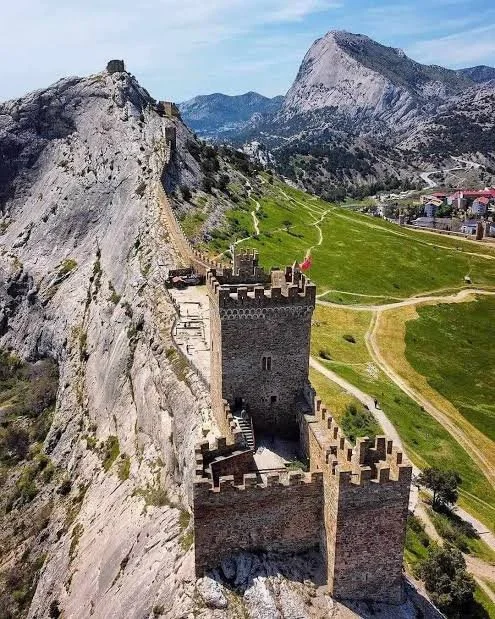
Pieria, in the region of Central Macedonia in northern Greece, includes coastal plains, foothills, mountain terrain, and sedimentary deposits that record changes in the environment over geological time. The landscape has been shaped by tectonic movement, erosion, sediment accumulation, and changes in sea level.
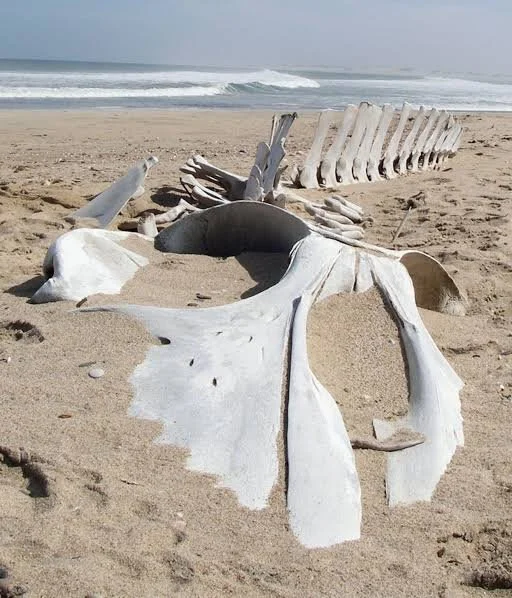
The idea of fossil whale skeletons exposed in Pieria's cliffs suggests a striking encounter with the remains of large marine mammals embedded in rock. Fossil whales are known from many parts of the world, and the Mediterranean region has a complex geological history that includes ancient marine environments. Nevertheless, a specific concentration of exposed whale skeletons in the cliffs of Pieria requires paleontological evidence.
The subject provides an opportunity to explore how whale fossils form, what they can reveal about ancient seas, and how scientists distinguish a verified fossil site from an unconfirmed report.
Whales in the Fossil Record
Whales belong to the mammalian order Cetacea, which includes baleen whales, dolphins, porpoises, and their extinct relatives. Their evolutionary history stretches back tens of millions of years and records a major transition from land-dwelling ancestors to fully aquatic mammals.
Fossil cetaceans are particularly important for understanding changes in anatomy, locomotion, hearing, feeding, and habitat. Early whales retained features associated with life on land, while later forms developed adaptations for swimming and feeding in water.
The fossil record is uneven. Some geological formations preserve numerous marine vertebrates, while other regions provide only scattered remains. Preservation depends on burial conditions, sediment type, the chemistry of the surrounding environment, and the likelihood that the remains will survive later geological processes.
A review of Neogene and Quaternary mammal sites in Greece shows that the country contains numerous fossil-rich continental deposits and important mammal localities. However, such records cannot be used as proof that whale skeletons occur at a particular site in Pieria. Marine mammal fossils require their own documented identification and geological context. <Cite refs={["turn478061search1","turn478061search3"]} />
How a Whale Skeleton Becomes a Fossil
Whales are large animals, but their remains do not automatically become fossils after death. A carcass may float, be scavenged, decompose, or break apart before the bones are buried.
In some circumstances, a carcass sinks to the seabed. Sediment may accumulate around it, protecting parts of the skeleton from erosion and scavenging. The bones can then undergo chemical changes as groundwater and sediment interact with the remaining tissues.
Minerals may fill pores in the bone or replace parts of its original material. Over time, sediment becomes rock, and tectonic movement or erosion may eventually expose the fossil at the surface.
The completeness of a fossil skeleton depends on many factors. Currents can scatter bones, scavengers can remove portions of the carcass, and later erosion can destroy exposed remains. A complete whale skeleton is therefore much less common than an isolated vertebra, rib, tooth, or fragment of skull.
Researchers use anatomical features to identify fossil cetaceans. Because many whale bones are large and distinctive, even fragmentary material can sometimes provide useful information, but identification requires careful comparison with reference specimens.
What Fossil Whales Reveal About Ancient Seas
A confirmed whale fossil can provide information about the animal itself and the environment in which it lived. Bone structure, tooth shape, and skull anatomy may reveal aspects of feeding behavior, body size, and evolutionary relationships.
The sediment surrounding a fossil is equally important. Marine mollusks, microscopic organisms, sedimentary structures, and chemical signatures can help reconstruct water depth, salinity, and the conditions of the ancient seabed.
The age of a fossil is established through stratigraphy, associated fossils, and suitable dating methods. Researchers must also determine whether the bones are preserved in the same layer in which they were originally buried or whether they were transported into younger sediment.
These distinctions matter because a fossil's location today is not necessarily identical to the environment in which the animal lived millions of years ago.
Pieria's Coastal and Geological History
The wider Pieria region contains sedimentary environments that preserve evidence of changes in coastline, sea level, and landscape development. Geological and geoarchaeological research in the coastal area has examined sediment layers, ancient shorelines, and changes in the relationship between people and the marine environment. <Cite refs={["turn478061search10","turn478061search16"]} />
Such research demonstrates the value of studying the region's sedimentary record. However, evidence of ancient marine conditions does not by itself establish the presence of fossil whales. A site containing marine shells, for example, is not necessarily a whale-bearing deposit.
To confirm whale skeletons in Pieria's cliffs, researchers would need to identify the locality, document the exposed material, establish the geological formation, and compare the bones with known cetacean fossils. Published research, museum collections, and official geological records would be appropriate sources for verifying the claim.
Until that evidence is available, the title should be treated as a research topic rather than as a confirmed description of a known fossil site.
Why Cliff Exposures Are Valuable
Cliffs and natural rock exposures can reveal sedimentary layers that are difficult to examine elsewhere. Weathering may expose fossils that were previously buried, while erosion can remove overlying material and make the geological sequence easier to study.
However, the same processes that reveal fossils can also destroy them. A bone exposed to weather, wave action, and repeated changes in moisture may deteriorate quickly. Fossils can also become detached and fall from cliffs, making their original position difficult to establish.
Researchers therefore document fossils carefully. They record the position of each specimen within the rock layers, photograph the surrounding sediment, and collect samples where permitted. This context allows later researchers to evaluate the identification and geological interpretation.
Cliff work also presents physical hazards. Loose rock, unstable surfaces, falling material, and changing coastal conditions make professional assessment essential.
Protecting Fossils and Geological Heritage
Fossils are valuable scientific records, not simply decorative objects. Removing a fossil without recording its location can destroy information about its age and environment.
Responsible fossil research follows relevant legal requirements and conservation standards. Significant discoveries should be documented and, where appropriate, preserved in recognized collections so that qualified researchers can examine them.
Public interpretation can also help protect fossil sites. Clear information about geological history encourages visitors to appreciate the landscape without removing specimens or damaging exposed formations.
Conclusion
Fossil whale skeletons can reveal important details about the evolution of marine mammals and the history of ancient seas. Their scientific value depends on reliable identification, geological dating, and the preservation of information about the surrounding sediment.
Pieria has a meaningful geological and sedimentary record, but the specific claim of whale skeletons exposed in its cliffs requires confirmation from paleontological evidence. Researchers would need to establish the locality and identify the remains before describing the area as a confirmed whale-fossil site.
This careful approach does not diminish the region's natural history. Instead, it shows how geology and paleontology turn unusual discoveries into reliable knowledge about Earth's changing environments.