Introduction
Tattooing has served many purposes across human history. It can express group identity, mark social status, communicate religious beliefs, commemorate life events, or provide decoration. Ancient Mediterranean writers occasionally described tattooing among peoples they regarded as culturally distinct from the Greeks, including communities in the western Balkans. These accounts have encouraged modern interest in the body markings of ancient Illyrian populations.
Corfu, known in antiquity as Corcyra, occupied a strategic position near the coast of the western Balkans. Its location connected Greek maritime networks with regions associated with Illyrian communities. The island's history therefore provides a useful setting for examining cultural contact between Greek settlements and neighboring populations.
However, the phrase “secret tattoos of ancient Illyrian tribes in Corfu” combines several claims that require separate evidence. Ancient authors' references to tattooing among certain Balkan peoples do not establish that every Illyrian group practiced it, that the practice was secret, or that a distinctive tattoo tradition existed on Corfu itself.
A careful historical investigation must distinguish written testimony, archaeological evidence, and modern reconstruction. It must also recognize that the ancient label “Illyrian” covered diverse communities rather than one uniform population with identical customs.
Who Were the Illyrians?
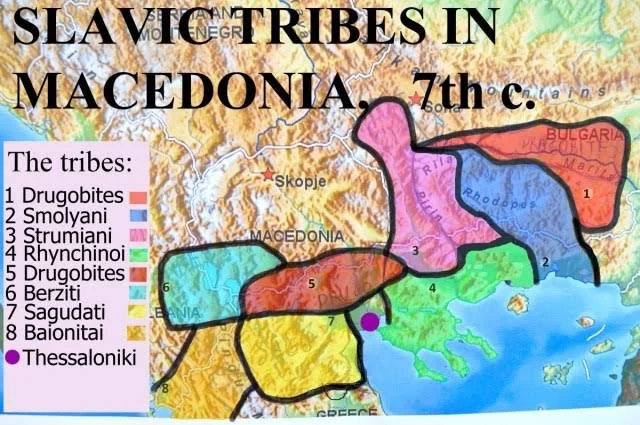
The term Illyrian was used by ancient Greek and Roman writers to describe various peoples living across parts of the western Balkans. The geographic extent of the label changed across periods, and ancient authors did not always use it consistently.
Illyrian communities included different political groups, local identities, and social structures. Some controlled coastal settlements and maritime routes, while others lived in inland regions or maintained relationships with neighboring peoples through trade, warfare, and diplomacy.
The ancient western Balkans were culturally diverse. Greek-speaking settlers and traders interacted with local communities, while later Roman expansion brought new administrative and military structures. These relationships produced exchange and adaptation rather than a simple division between isolated ethnic groups.
The term “tribe” can be useful when discussing some ancient political groupings, but it can also imply more uniformity than the evidence supports. Communities identified as Illyrian did not necessarily share one language variety, political system, or set of religious practices.
This diversity matters when interpreting tattooing. Evidence for a custom among one group cannot automatically be generalized to every population described as Illyrian.
Corfu and the Western Balkans
Corfu lies near the coast of Epirus and the western Balkan mainland. Its maritime position made it important to trade and communication between the Adriatic and the Ionian and Aegean seas.
The island's ancient Greek settlement developed in a region where Greek communities interacted with neighboring populations. Maritime exchange could involve pottery, metal goods, agricultural products, and other commodities, while political relations could range from cooperation to conflict.
Corcyra also possessed its own civic institutions and religious traditions. Its residents participated in the wider Greek world while maintaining local interests and relationships with neighboring regions.
The island's proximity to Illyrian territories makes cultural contact plausible, but proximity alone cannot establish the presence of a particular tattooing custom. To claim that Illyrian tattoos were practiced on Corfu, researchers would need evidence linking tattooed individuals, artistic representations, or written accounts to the island.
Without such evidence, Corfu is best treated as a place where cultural interaction could have occurred, not as a confirmed center of a distinct Illyrian tattoo tradition.
What Did Ancient Sources Say about Tattooing?
Ancient Greek and Roman authors sometimes described tattooing or body marking among populations they considered foreign. Such accounts could refer to different practices, and the terminology used by ancient writers does not always correspond neatly to modern categories.
Some descriptions associated body markings with status, punishment, warfare, or ethnic distinction. Others may reflect the author's tendency to emphasize cultural differences between Greeks and neighboring peoples.
Written accounts must be evaluated in context. An author might be reporting direct observation, repeating information from an earlier writer, or using a description to reinforce a literary contrast between different societies.
The fact that an ancient source mentions tattooing among a particular population is evidence that the practice was known or attributed to that group. It does not necessarily reveal the exact designs, pigments, tools, or meanings involved.
Nor does a literary reference prove that a practice was widespread. Ancient authors could describe a custom without explaining how common it was or whether it varied among communities.
Archaeological Evidence and Its Limitations
Tattooing is difficult to study archaeologically because pigments are usually applied beneath the skin. In most burial environments, skin and its markings do not survive. Consequently, the absence of tattooed human remains cannot establish that a population did not practice tattooing.
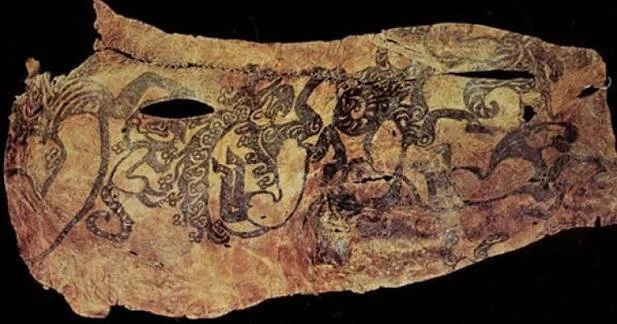
Direct evidence may occasionally survive under exceptional preservation conditions, but such finds are uncommon. Researchers may also examine figurines, images, and other representations of human bodies for patterns that could indicate body marking.
These representations must be interpreted cautiously. Painted lines on a figurine might depict tattoos, body paint, clothing, jewelry, scars, or artistic conventions. The interpretation becomes stronger when the same motifs appear repeatedly in a clear cultural context and when other evidence supports the conclusion.
Tools sometimes proposed as tattooing instruments may also have served other purposes. Sharp points, needles, and small blades could be used for sewing, craft production, medical procedures, or decoration.
A convincing identification therefore requires a combination of evidence rather than the presence of a single pointed object.
Possible Meanings of Ancient Tattoos
Where tattooing is documented, its meaning can vary widely. Body markings may identify membership in a group, represent religious devotion, mark transitions in life, or communicate status. They can also be associated with punishment or the treatment of captives.
These possibilities should not be treated as universal explanations. The meaning of a tattoo depends on the community, historical period, location on the body, design, and circumstances of application.
For ancient Illyrian populations, the surviving evidence is insufficient to reconstruct one standardized tattoo system. It would be speculative to assign specific meanings to geometric shapes, animal figures, or symbols without a reliable source connecting them to the relevant group.
The same caution applies to claims about secrecy. A design might have been meaningful primarily to members of a community, but that does not prove that it was deliberately concealed from outsiders. Some markings may have been publicly visible and intended to communicate identity.
Modern interpretations often assign precise meanings to ancient symbols, but those meanings should not be accepted unless they are supported by evidence.
Tattooing, Identity, and Cultural Boundaries
Body decoration can communicate identity in societies where people interact across linguistic, political, or religious boundaries. A visible marking may indicate affiliation, status, or participation in a shared practice.
In the ancient western Balkans, cultural boundaries were not necessarily fixed. Trade, intermarriage, migration, military service, and political alliances brought different communities into contact. Individuals could adopt practices from neighboring groups or reinterpret them within their own traditions.
If tattooing was practiced by some Illyrian communities, it could have contributed to local identity. However, the practice may also have varied according to social position, gender, occupation, or regional custom.
It is important not to treat bodily markings as a complete map of ethnic identity. Similar designs can occur in different cultures, and the same community may use multiple forms of decoration.
Corfu's history of maritime exchange makes it a useful setting for investigating such interactions, but specific claims must remain tied to the evidence available for the island and its surrounding region.
How Researchers Could Test the Claim
An investigation into Illyrian tattooing on Corfu would begin by identifying the ancient sources that mention body marking among relevant populations. Researchers would examine the original context and determine whether the source refers to a specific group, geographic area, or historical period.
The next step would be to review archaeological material from Corfu and nearby mainland sites. This could include human remains, figurines, painted representations, inscriptions, and tools that might be relevant to body decoration.
Researchers would need to establish the date and archaeological context of each item. A motif from a later period cannot automatically be used to reconstruct an earlier Illyrian custom, and an object from the mainland cannot automatically be attributed to the population of Corfu.
Comparative research could help identify broader regional patterns, but similarities should not be mistaken for proof of direct transmission. The strongest conclusions would emerge from converging evidence rather than an isolated resemblance.
Conclusion
Ancient tattooing is a valuable subject for understanding body decoration, identity, and cultural interaction. Ancient writers provide evidence that tattooing or body marking was associated with some populations of the western Balkans, but their descriptions do not establish a uniform Illyrian practice.
Corfu's position near the Illyrian world made contact between communities likely. Nevertheless, the existence of a distinct and secret Illyrian tattoo tradition on the island remains unproven without specific archaeological or textual evidence.
The responsible approach is to examine ancient descriptions alongside archaeological material and to distinguish documented practices from modern interpretations. It is equally important to avoid assigning fixed meanings to designs whose original context is unknown.
Rather than presenting the island as the site of a hidden tattoo system, historians can use Corfu's location to investigate how people, objects, and cultural practices moved across the western Balkans and the Greek maritime world.