Introduction
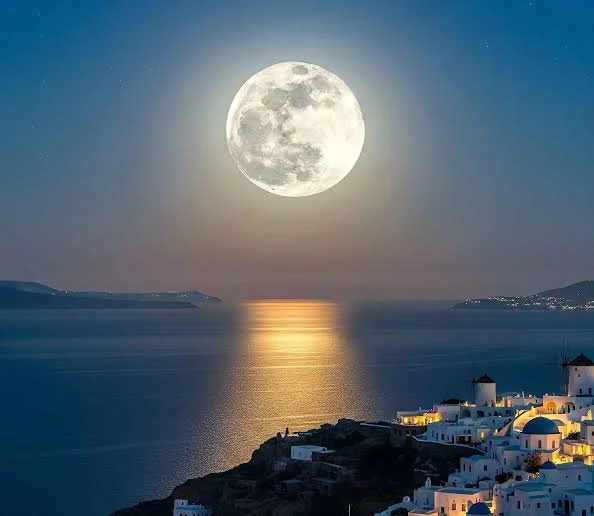
The Northern Aegean is a region of islands, coastal settlements, maritime routes, and long-established connections between mainland Greece and Anatolia. Its communities developed in environments shaped by fishing, agriculture, seafaring, and seasonal changes. Across antiquity and later periods, the moon played a role in the organization of calendars, religious festivals, navigation, and the measurement of time.
The idea of rare lunar festivals on forgotten Northern Aegean islands invites questions about how local communities observed the moon and incorporated celestial cycles into religious and social life. Ancient Greek calendars were frequently organized around lunar months, and several religious festivals were associated with particular days of the lunar cycle. Yet the existence of lunar calendars does not mean that every island maintained a unique moon festival, nor does it establish that such festivals survived unchanged into modern times.
To investigate this subject, it is necessary to distinguish documented ancient festivals, local traditions recorded in later periods, and modern interpretations of seasonal celebrations. The Northern Aegean's rich history makes such an investigation worthwhile, but the term “forgotten isles” should not obscure the fact that these islands have their own continuing communities and histories.
The Moon and Ancient Greek Timekeeping
Ancient Greek communities used calendars that were often based on the phases of the moon. A lunar month followed the cycle from one new moon to the next, lasting approximately twenty-nine and a half days. Because twelve lunar months are shorter than a solar year, calendars required adjustments to keep festivals aligned with the seasons.
There was no single, universally identical Greek calendar. Individual cities and regions used their own month names, festival schedules, and methods of intercalation. As a result, a festival celebrated in one city might occur at a different point in the civic calendar of another.
Lunar phases nevertheless provided a widely understood way of organizing time. The new moon marked the beginning of a new month in many systems, while particular days were associated with sacrifices, household observances, or festivals.
This relationship between the moon and civic life was not unique to the Northern Aegean. It formed part of the broader religious and administrative structure of the ancient Greek world.
Lunar Cycles and Religious Practice
The moon had several associations in Greek religion. Selene personified the moon, while Artemis and Hecate could also be connected with lunar imagery in particular traditions and later interpretations. These associations were not identical, and ancient religious identities should not be reduced to a single universal lunar system.
Certain days of the lunar month had religious significance. The new moon could mark the beginning of a new period, and offerings to household or other deities might be associated with specific dates. Festivals could also be scheduled according to civic calendars whose months followed lunar cycles.
A lunar calendar, however, is not the same thing as a lunar festival. A community might schedule a festival on a particular day of the month without treating the moon itself as the object of worship.
To identify a festival as specifically lunar, researchers would need evidence of the moon's ritual importance. Such evidence might include ancient literary descriptions, inscriptions, calendrical records, iconography, or a documented local tradition that explicitly connected the ceremony with a lunar phase.
Islands and Maritime Life
The Northern Aegean includes islands with varied landscapes and historical experiences. Some were important centers of trade and settlement; others were more closely connected with agriculture, fishing, or regional maritime routes. Their communities interacted through shipping, migration, religious travel, and exchange.
The moon could have practical significance for people who traveled or worked at sea. Lunar phases influence the timing of tides, although local tidal patterns in the Aegean are generally less dramatic than those in some oceanic regions. Moonlight could also affect visibility during nighttime travel and work.
These practical relationships may have influenced how people thought about the moon, but they do not prove that sailors held a particular lunar ceremony. Historical interpretation must distinguish between the everyday importance of celestial observation and formal religious practice.
Island communities could also adapt broader Greek religious festivals to local conditions. A festival associated with a deity might include a procession, sacrifice, communal meal, or gathering at a sanctuary. The local landscape and economy could shape the way the festival was observed.
How Local Festivals Become “Forgotten”
The survival of a festival depends on more than its original importance. Changes in population, religious institutions, political administration, and economic life can transform or discontinue communal celebrations.
Ancient Greek festivals were affected by the transition to Roman rule, the spread of Christianity, changes in settlement patterns, and the gradual decline of traditional public cults. Later periods brought further transformations through Byzantine administration, Ottoman rule, and the development of modern national institutions.
Some customs survived in altered forms, while others disappeared from regular practice. Local traditions might be remembered in stories, place names, or later accounts without remaining active ceremonies.
The term “forgotten” can therefore describe a practice that is poorly documented or no longer widely known. It should not imply that a festival has been deliberately concealed or that a continuous tradition survives beyond the reach of historical evidence.
Researchers must also be careful not to mistake a modern revival for an unbroken ancient custom. Communities sometimes revive historical festivals as expressions of local identity, education, or cultural tourism. Such revivals can be valuable, but their modern origins should be acknowledged.
Evidence for Ancient Island Festivals
The reconstruction of ancient festivals depends on several types of evidence. Inscriptions can record festival calendars, dedications, priestly offices, and civic decisions. Archaeological remains may identify sanctuaries, altars, processional routes, or spaces used for communal gatherings.
Literary sources can describe particular ceremonies, although their reliability depends on the author's date, purpose, and access to information. A writer discussing a famous festival might provide details unavailable for smaller local observances.
Coins and images can also reveal religious symbolism, though they rarely establish the precise structure of a festival. A lunar symbol on a coin, for example, may reflect a deity or civic identity rather than a ceremony performed at a particular lunar phase.
For a specific Northern Aegean island, researchers would need to combine these sources with the local archaeological record. Evidence from one island should not be transferred automatically to another simply because they share a maritime environment.
The Problem of Direct Continuity
Modern festivals sometimes include bonfires, processions, communal meals, music, or seasonal customs that resemble practices known from antiquity. Such similarities can make the idea of surviving lunar festivals attractive.
However, comparable practices can arise independently. Communities across different periods have used seasonal gatherings to organize work, reinforce social relationships, and mark important moments in the agricultural year.
A modern celebration held near a full moon might be scheduled for practical reasons, tourism, or local convenience. It does not necessarily preserve an ancient lunar rite.
To establish direct continuity, researchers would need evidence connecting the ancient ceremony with the modern practice across the intervening periods. That evidence might include records describing the same ritual sequence, a documented chain of transmission, or distinctive elements whose historical survival can be traced.
Without such evidence, it is more accurate to describe a thematic resemblance than an uninterrupted tradition.
Oral History and Community Memory
Oral histories can help recover local knowledge that was never recorded in official documents. Residents may remember stories about an old sanctuary, a traditional gathering, a place associated with moonlight, or a ceremony once performed by earlier generations.
Such accounts should be collected respectfully and recorded with attention to the circumstances in which they were transmitted. Researchers should ask when a tradition was last practiced, who participated, how the date was chosen, and whether the community understands it as religious, social, or commemorative.
Oral testimony does not need to prove ancient origins to be historically valuable. A twentieth-century festival may reveal how an island community understood its past, even if it cannot be traced directly to an ancient rite.
Local people should not be treated merely as sources of colorful folklore. Their knowledge can provide important evidence about changing landscapes, social relationships, and cultural memory.
Conclusion
Lunar cycles were important to ancient Greek timekeeping, and the moon appeared in religious symbolism across the Greek world. Northern Aegean island communities participated in a wider maritime and cultural network in which calendars, seasonal events, and local festivals helped organize social life.
However, a lunar calendar does not automatically establish the existence of a distinct lunar festival, and a modern celebration cannot be identified as an ancient survival without supporting evidence.
The most reliable investigation would focus on specific islands and festivals, using inscriptions, archaeological remains, literary sources, and carefully documented oral histories. It would distinguish festivals explicitly connected with lunar phases from ceremonies that merely followed a lunar calendar.
This approach makes it possible to explore the Northern Aegean's cultural diversity while respecting the historical limits of the evidence. The region's local traditions deserve attention not because they must conceal forgotten ancient mysteries, but because each offers a distinct record of how communities organized time, expressed belief, and maintained collective identity.