Introduction
Hecate occupies a distinctive place in ancient Greek religion as a goddess associated with crossroads, thresholds, night, protective magic, ghosts, and transitions between different states of existence. Her image often evokes the boundary between the familiar and the unknown. In modern discussions of ancient Greek spirituality, this association has inspired stories about nocturnal ceremonies, whispered invocations, and sacred hymns preserved beyond the reach of written history.
The island of Samos, located in the eastern Aegean near the coast of Asia Minor, provides an intriguing setting for exploring these traditions. Samos possessed an important religious landscape, maritime connections, and a long history of cultural exchange. However, the idea of a distinct, continuously preserved Samian tradition of secret hymns to Hecate should be treated cautiously. Although Hecate was worshipped in the ancient Greek world, evidence for a specific collection of unwritten Samian night hymns is not established.
The subject nevertheless offers a valuable opportunity to investigate how ancient communities understood darkness, sacred speech, and the protective power of ritual.
Hecate and the Significance of Night
In Greek religious tradition, Hecate was associated with places where boundaries converged. Crossroads were particularly significant because they represented the meeting of different routes and, symbolically, different worlds. A traveler standing at a crossroads faced a choice, while a household doorway marked the boundary between domestic safety and the uncertainty outside.
Hecate's protective role developed around these symbolic thresholds. Offerings known as Hecate's suppers are described in ancient sources as being placed at crossroads. Such offerings could include food, and their meaning was connected with religious obligations, purification, and the relationship between the living and the unseen.
Night strengthened these associations. Darkness reduced visibility, altered the familiar appearance of landscapes, and created conditions in which unusual sounds and movements could inspire religious interpretations. For communities dependent on walking between settlements, traveling by sea, or working after sunset, darkness was both an ordinary part of life and a source of uncertainty.
Ritual speech offered a way to respond to that uncertainty. A prayer, hymn, or invocation could establish a relationship with a deity believed capable of protecting travelers, households, or individuals passing through dangerous circumstances.
Samian Religious Life and Regional Traditions
Samos was not an isolated island. Its proximity to western Anatolia placed it within a network of maritime commerce, artistic exchange, political competition, and religious interaction. Sanctuaries dedicated to major Greek deities formed part of this broader religious environment, while local communities also maintained practices shaped by their own civic identities and landscapes.
The island's religious history should not be reduced to a single tradition. Ancient Greek worship varied between cities, sanctuaries, households, and historical periods. A deity's significance in one location did not necessarily mean that the same rituals were performed elsewhere.
Hecate's worship was particularly adaptable because her associations with protection and transitions could be relevant to different communities. Nevertheless, a connection between the goddess and Samian religious life does not automatically demonstrate the existence of specialized nocturnal ceremonies on the island.
Archaeological inscriptions, sanctuary remains, votive objects, and literary references are the kinds of evidence needed to establish the character of a local cult. Without such evidence, descriptions of hidden Samian rites must remain interpretations rather than historical conclusions.
The Power of Unwritten Hymns
Ancient Greek religion depended on spoken and performed traditions as well as written texts. Prayers, songs, invocations, and ritual formulas could be transmitted orally between generations. A community did not need a written book to preserve a familiar religious expression.
Hymns could praise a deity's genealogy, describe divine powers, request assistance, or establish the proper atmosphere for a ceremony. Their language might be poetic, repetitive, and structured around memorable phrases. Performance could involve a leader and a group, with participants responding to a repeated line or joining in a communal refrain.
Some ritual knowledge was also restricted by context. A prayer might be associated with a particular sanctuary, household, festival, or group of participants. This does not mean that every restricted practice was part of a secret mystery religion. Ordinary religious traditions could also have rules governing who performed a rite and when it took place.
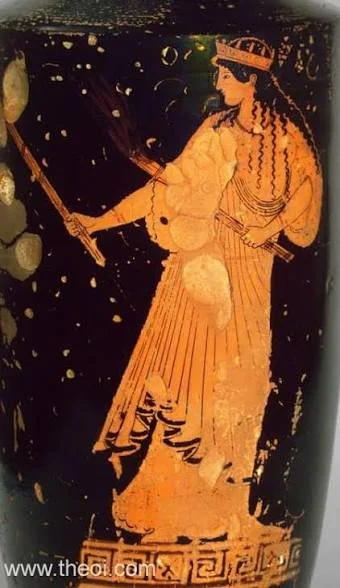
For Hecate, the imagery of torches, crossroads, and nighttime offerings makes the concept of an evening hymn especially evocative. Yet the existence of such imagery cannot establish the words of an otherwise undocumented Samian song.
From Ancient Worship to Modern Imagination
The notion of unwritten hymns survives as a compelling modern theme because it connects historical uncertainty with the human desire to recover lost voices. The absence of a complete written record can encourage speculation, especially when a deity is associated with secrecy and supernatural power.
A responsible interpretation must distinguish between three things: documented ancient beliefs, plausible forms of oral religious practice, and modern reconstructions. The first can be studied through surviving evidence. The second can be explored comparatively, with appropriate caution. The third belongs to historical imagination unless supported by new evidence.
This distinction does not make the subject less interesting. On the contrary, it reveals how much ancient religious life existed beyond the texts that happened to survive.
Conclusion
The idea of The Unwritten Hymns to Hecate in Samian Night Rituals invites us to consider the relationship between oral tradition, religious secrecy, and the symbolism of night in ancient Greece. Hecate's associations with crossroads, protection, and thresholds provide a historically grounded framework for exploring the subject.
A specific Samian corpus of secret hymns, however, cannot currently be treated as established fact. The most meaningful approach is to investigate the broader religious world in which such songs would have made sense, while recognizing the difference between surviving evidence and imaginative reconstruction. In doing so, we can appreciate both the richness of Greek religious practice and the limits of what the historical record allows us to know.