Introduction
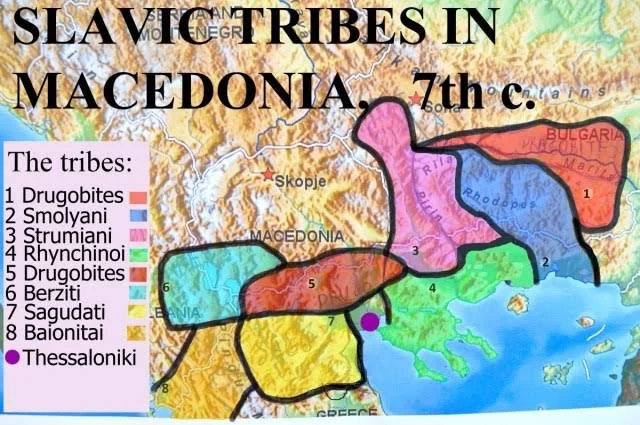
The ancient region of Thrace occupied a broad area of southeastern Europe, encompassing parts of present-day Bulgaria, northeastern Greece, and European Turkey. Its varied landscapes included mountain ranges, river valleys, fertile plains, and routes connecting the Aegean with the interior of the Balkans. Throughout antiquity, Thracian communities interacted with Greeks, Macedonians, Persians, Romans, and neighboring peoples, creating a complex cultural environment.
Modern accounts sometimes describe Thracian religious specialists as shamans who used drums to communicate with spirits, enter altered states, or conduct healing ceremonies. Such descriptions are attractive because percussion instruments have played important roles in ritual traditions across many societies. However, the specific claim that a well-defined collection of ancient Thracian shamanic drums survives in historical memory or archaeological records requires caution.
The term shamanic is often used loosely in popular writing. It should not automatically be applied to every ancient religion involving ecstatic performance, music, prophecy, or communication with the divine.
Thracian Religion and the Role of Ritual Specialists
Thracian religious practices were diverse and changed over time. Ancient Greek and Roman writers described Thracian beliefs, sanctuaries, priests, divinatory practices, and religious figures, but these accounts were often written by outsiders. Their descriptions must therefore be interpreted within the cultural assumptions of the authors.
One figure frequently associated with Thracian religion is Orpheus, the legendary musician and poet whose songs could move animals, influence nature, and even reach the realm of the dead. Ancient traditions connected Orpheus with Thrace, although his mythological identity cannot be treated as a straightforward biography of a historical religious leader.
The association between music and supernatural influence is important. In Greek mythology, music could establish harmony, inspire emotion, accompany worship, and bridge the human and divine worlds. Thracian traditions were often represented through this wider Mediterranean understanding of music's power.
Nevertheless, a mythological musician does not provide archaeological proof of a particular instrument or ritual system. The historical study of Thracian religion must separate literary symbolism from evidence for actual musical performance.
Drums, Percussion, and Ancient Sound
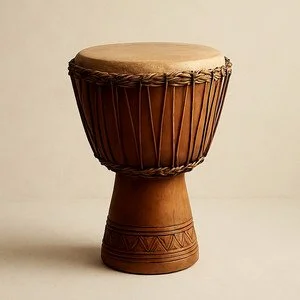
Drums and other percussion instruments have been used in many cultures to maintain rhythm, coordinate movement, accompany singing, and intensify collective ceremonies. A repeated beat can help participants move together and focus attention on a shared activity.
In a ritual setting, percussion might accompany processions, dances, funerary observances, healing ceremonies, or seasonal celebrations. A drum's sound could also be associated with the presence of a deity or with the transformation of an ordinary gathering into a sacred event.
These functions make percussion a plausible subject for research into ancient Balkan ritual life. Yet plausibility is not the same as direct evidence. To establish the use of a particular type of drum among a specific Thracian community, researchers would need material remains, reliable depictions, written testimony, or a combination of independent sources.
Organic instruments are especially difficult to study archaeologically. Wooden frames, animal-skin membranes, cords, and other components can deteriorate over time. The absence of surviving drums does not prove that percussion was absent, but it also does not justify inventing detailed instruments or rituals.
Borderlands as Zones of Cultural Exchange
Thracian borderlands were not static frontiers separating clearly defined civilizations. They were regions of interaction in which people exchanged goods, technologies, stories, religious practices, and artistic forms.
Greek colonies along the northern Aegean and Black Sea coasts brought different musical and religious traditions into contact with communities in the Thracian interior. Later Macedonian and Roman expansion created further opportunities for cultural exchange. Instruments and performance practices could travel with merchants, soldiers, migrants, entertainers, and religious specialists.
This movement complicates the idea of a single, uniquely Thracian drum tradition. An instrument found in a borderland might reflect local innovation, foreign influence, or a combination of traditions. Similarity between two instruments does not automatically establish direct transmission, and similar ritual functions can develop independently in different societies.
A careful history of Thracian music would therefore examine the region's connections rather than assume that every practice belonged to a sealed cultural system.
Ecstatic Worship and the Limits of the Shamanic Label
Ancient sources associate parts of Thracian religious life with ecstatic worship and with deities whose cults involved intense emotional expression. The Greek god Dionysus, for example, was connected with wine, altered states, performance, and ritual celebration. Ancient authors sometimes represented Thracian religious traditions through these themes.
It can be tempting to interpret ecstatic worship as evidence of shamanism. However, shamanism refers to particular religious roles and practices that are best understood in their cultural contexts. The term should not simply serve as a general label for any ceremony involving music or unusual states of consciousness.
For Thrace, the surviving evidence does not support a universal model in which all religious specialists used drums to undertake spiritual journeys. A more precise account would identify the particular community, historical period, instrument, and ceremony under discussion.
Reconstructing a Lost Soundscape
Even when an ancient instrument has not survived, researchers can reconstruct aspects of a historical soundscape through depictions, written references, instrument comparisons, and experimental archaeology. Such reconstructions must make their assumptions clear.
A modern performance inspired by Thracian history might use frame drums, rattles, pipes, and vocal music to explore possible combinations of rhythm and movement. It should be presented as an artistic interpretation, not as an exact reproduction of a documented ancient ceremony.
The distinction is especially important for public history. Music can create a powerful sense of the past, but a compelling performance should not be mistaken for direct historical testimony.
Conclusion
Forgotten Shamanic Drums from Thracian Borderlands is a subject that opens a window onto the relationship between music, ritual, and cultural exchange in southeastern Europe. Thracian religious traditions, the myth of Orpheus, and the broader ancient association between sound and divine power provide meaningful areas of investigation.
The specific existence of a unified Thracian shamanic drum tradition remains unproven. By distinguishing archaeological evidence, ancient literary accounts, comparative interpretation, and modern artistic reconstruction, we can explore the subject without turning uncertainty into invented history. The result is a richer understanding of Thrace as a connected and culturally diverse region.