Introduction
Quantum computing is one of the most technically ambitious areas of modern computer science and physics. Unlike conventional computers, which process information using bits represented as zeros and ones, quantum computers use quantum states that can exploit phenomena such as superposition and entanglement.
Greece has a growing research ecosystem involving universities, engineering institutions, physics departments, and technology companies. Patras is particularly relevant because it is an established academic and research center.
The title Greece's Covert Quantum Computing Labs in Patras suggests secretive quantum facilities operating in the city. There is no sound basis for presenting the existence of a covert network as established fact without credible documentation. However, the broader subject of quantum research in Patras provides an interesting way to examine Greece's position in advanced computing.
What Makes Quantum Computing Different?
A classical computer processes information using bits. A bit has a value represented as either zero or one.
A quantum bit, or qubit, can exist in a quantum state involving combinations of possible values.
This does not mean a quantum computer simply performs every calculation simultaneously and instantly. Quantum algorithms are carefully designed to manipulate probability amplitudes so that useful answers become more likely when measurements are performed.
This makes quantum computing fundamentally different from conventional high-performance computing.
Why Quantum Research Is Strategic
Quantum technologies have potential applications in optimization, chemistry, materials science, cryptography, sensing, and simulation.
Some applications remain experimental, and quantum computers currently face substantial technical limitations.
Qubits are fragile. Environmental noise can disrupt quantum states, creating errors.
Different quantum-computing architectures require different approaches to maintaining and controlling qubits.
Research laboratories therefore require highly specialized equipment and scientific expertise.
Patras as a Research Center
Patras has an established academic environment with universities and research institutions involved in science and engineering.
This makes it a plausible location for quantum-related research even if no classified quantum-computing laboratory exists.
Research could involve quantum information theory, photonics, materials science, cryogenics, algorithms, communications, or related fields without necessarily involving a large-scale quantum computer.
This distinction is important because “quantum research” and “quantum computer development” are not identical activities.
Why Quantum Labs Need Specialized Infrastructure
Some quantum-computing platforms require extremely controlled environments.
Certain systems operate at temperatures close to absolute zero, requiring sophisticated cryogenic equipment.
Other approaches may use trapped ions, photons, superconducting circuits, neutral atoms, or other technologies.
Each platform has different engineering requirements.
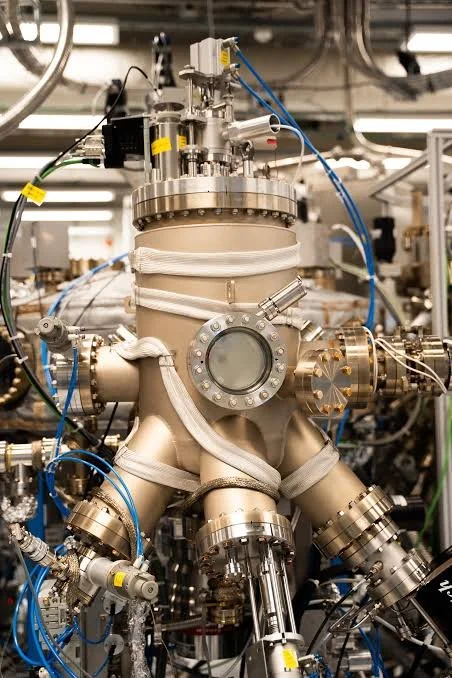
Laboratories may therefore contain vacuum systems, lasers, microwave electronics, cryogenic equipment, vibration isolation, shielding, and specialized measurement systems.
Such infrastructure is difficult to hide completely.
The Meaning of “Covert”
Advanced research can involve confidential industrial projects or sensitive government programs.
However, confidentiality should not be assumed simply because a laboratory works on advanced technology.
Universities regularly conduct research whose technical details are published in scientific journals.
Patents and research papers can also reveal aspects of commercial development.
A genuinely classified facility would require evidence before being described publicly as such.
Quantum Computing and Cybersecurity
One reason governments take quantum technology seriously is cryptography.
Powerful future quantum computers could threaten certain public-key cryptographic systems.
This has encouraged governments and companies to develop post-quantum cryptography, which is designed to resist attacks from sufficiently capable quantum computers.
The strategic importance of quantum computing therefore extends beyond faster calculations.
It involves communications security, national infrastructure, financial systems, and long-term data protection.
Greece's Position in the European Quantum Ecosystem
Greece participates in European research networks, which can provide access to collaborative quantum projects, academic partnerships, and funding opportunities.
European quantum strategy emphasizes research, technology development, education, and industrial applications.
A country does not need to build the world's largest quantum computer to participate.
It can specialize in algorithms, components, sensors, photonics, software, or theoretical research.
This distributed model could be particularly relevant to smaller European economies.
Research Challenges
Quantum computing remains difficult.
Maintaining qubit coherence, reducing errors, scaling systems, and developing useful algorithms are all major challenges.
A laboratory possessing quantum equipment does not automatically have a commercially useful quantum computer.
The field should therefore be evaluated using measurable indicators such as published research, patents, demonstrated systems, collaborations, funding, and experimental results.
Conclusion
The idea of covert quantum-computing laboratories in Patras is intriguing but should not be presented as established reality without evidence.
Patras is nevertheless an appropriate setting for discussing Greece's potential role in advanced computing because of its academic and research infrastructure.
The country's strongest opportunity may lie not in operating a secret supercomputer but in becoming part of the broader European quantum ecosystem through research, specialized components, software, education, and scientific collaboration.