Introduction
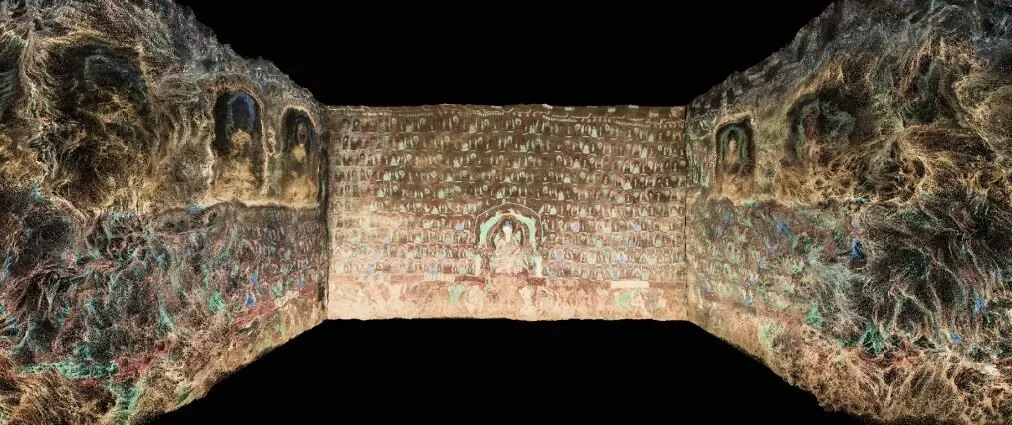
Digital technology has transformed the way museums, archaeologists, and collectors document cultural heritage. Three-dimensional scanning can create highly detailed digital representations of sculptures, pottery, coins, architectural fragments, and other archaeological objects.
At the same time, non-fungible tokens, or NFTs, introduced a new model for associating blockchain-based records with digital assets.
The title The Hidden NFT Market for Ancient Artifact Scans combines these technologies with the sensitive world of archaeological heritage. The idea of a hidden market for scanned ancient objects should not be treated as a verified global system without evidence. However, the possibility of unauthorized commercialization of cultural-heritage scans raises important questions about ownership, authenticity, access, and ethics.
What Is an NFT?
An NFT is a blockchain-based token representing a unique digital record.
The token itself is not necessarily the digital artwork or file it references.
This distinction is essential.
A blockchain token can establish that a particular digital record exists and is associated with a particular account, but it does not automatically establish legal ownership of the underlying object.
This becomes especially complicated when the digital asset represents a physical archaeological artifact.
Scanning Archaeological Objects
Three-dimensional scanning can capture the geometry of an artifact with remarkable precision.
Photogrammetry uses photographs taken from multiple angles to reconstruct three-dimensional surfaces.
Structured-light scanners and laser-based systems can capture highly detailed geometry.
The resulting models can be used for research, conservation, education, exhibition design, and virtual access.
Digital models can also document objects before restoration or transportation.
Who Owns a Digital Scan?
Ownership is complicated.
A museum may own a physical artifact while a researcher or contractor produces the digital scan.
Copyright may apply differently depending on the jurisdiction and the originality of the digital representation.
Even where a scan is not strongly protected by copyright, the institution may impose contractual restrictions on how its data can be used.
An NFT seller therefore cannot assume that possessing a copy of a scan gives them the right to commercialize it.
Cultural Heritage and Ethical Concerns
Ancient artifacts are not ordinary commodities.
Many objects have archaeological, religious, historical, or cultural significance.
Some were removed from archaeological sites under circumstances that would be considered unacceptable under modern heritage standards.
Digitization can provide a way to make heritage more accessible without physically moving fragile objects.
But commercialization can create ethical conflicts.
If a museum makes a scan available for educational research and someone later sells derivative versions as NFTs, the institution may object even if the technical copying is easy.
Could a Hidden Market Exist?
Digital files can be copied easily, which makes unauthorized markets technically possible.
A seller could create a digital token associated with a copied scan and market it to collectors.
But blockchain records do not automatically verify authenticity.
A token can be genuine as a blockchain transaction while the associated claim about an artifact is false.
This creates an important distinction between blockchain authenticity and cultural-heritage authenticity.
Provenance Becomes Critical
A legitimate digital artifact should ideally have clear provenance.
The record could identify:
the physical artifact;
the institution holding it;
the scanning process;
the date of digitization;
the scanner or imaging method;
the person or organization responsible;
licensing terms;
restrictions on commercial use.
Such information can make digital cultural-heritage assets more trustworthy.
Without provenance, buyers may have little reason to believe that a digital file represents the claimed artifact.
Museums and Digital Cultural Heritage
Museums increasingly use digital models for education and research.
Virtual exhibitions can allow people to inspect objects that are normally inaccessible because of fragility, security, or geographic distance.
Researchers can also compare three-dimensional scans from different collections.
This can improve scholarship while reducing physical handling.
A well-designed digital heritage system therefore provides significant public value without requiring the commercialization of every scan.
The Legal Dimension
Ancient artifacts are subject to national heritage laws, international agreements, museum policies, and ownership rules.
The legal status of an object can be complex, particularly when its excavation history or acquisition records are incomplete.
Creating an NFT does not override those legal frameworks.
A digital token cannot transform an unauthorized copy into legitimate cultural property.
The Future of Digital Heritage Markets
There may be legitimate opportunities for digital cultural-heritage markets.
Museums could issue authorized digital collectibles, educational models, virtual exhibition experiences, or licensed reproductions.
The important distinction is authorization.
A transparent market can identify the institution responsible for the digital asset, explain licensing rights, and provide accurate information about the underlying object.
Conclusion
The idea of a hidden NFT market for ancient artifact scans raises legitimate concerns about digital copying, cultural ownership, provenance, and commercialization.
There is no need to assume that a vast secret market exists in order to recognize the risks.
As three-dimensional scanning becomes increasingly accessible, cultural institutions will need clear policies governing the creation, licensing, publication, and commercial use of digital heritage.
The most valuable digital future for archaeology may not be one in which ancient objects become speculative tokens, but one in which accurate digital models expand research, education, and public access while respecting ownership and cultural heritage rights.