Introduction
The Gorgons are among the most recognizable supernatural figures in Greek mythology.
The best-known Gorgon is Medusa, whose gaze could transform observers into stone.
Ancient traditions also describe her sisters Stheno and Euryale.
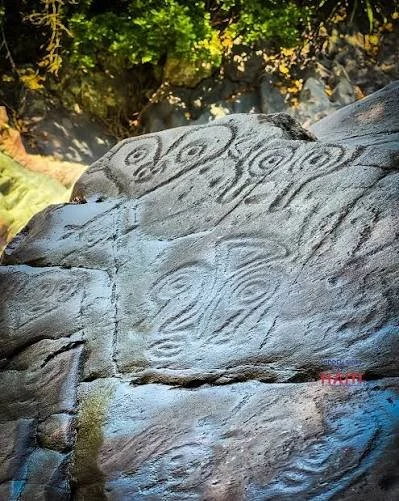
The title Hidden Gorgon Sisters' Petroglyphs in the Argive Plains suggests the existence of rock carvings depicting these mythological figures.
Such a discovery would be archaeologically significant, but it should not be presented as established without documented archaeological evidence.
The Gorgon Tradition
Gorgons occupy an important position in Greek mythology.
Medusa became especially famous through the story of Perseus.
Her image was also used as a protective symbol in ancient Greek art.
The Gorgon face, often called a gorgoneion, appeared on shields, temples, pottery, coins, and other objects.
Gorgons as Protective Symbols
The frightening appearance of the Gorgon was not necessarily intended simply to terrify.
The image could serve an apotropaic function, meaning that it was believed to repel danger or evil.
This helps explain why Gorgon imagery appears in protective contexts.
Petroglyphs and Dating
A genuine petroglyph depicting a Gorgon would require careful archaeological analysis.
Researchers would examine carving technique, weathering, geological context, associated artifacts, and stylistic characteristics.
Dating rock art is often difficult.
A carving may be much younger than the landscape itself.
Argive Mythology
The Argive region has a rich mythological tradition involving heroes, kings, monsters, and gods.
Stories connected with Perseus are particularly relevant because Argos and surrounding areas played important roles in his mythology.
This makes Gorgon imagery culturally plausible in a broad sense.
But cultural plausibility does not prove that a particular rock carving exists.
Conclusion
The concept of hidden Gorgon petroglyphs in the Argive plains is an intriguing archaeological hypothesis rather than an established discovery.
If authentic ancient carvings were ever identified, they would provide valuable evidence about the development of Gorgon imagery and local religious traditions.
Until such evidence exists, the story belongs to the fascinating boundary between mythology, archaeology, and modern imagination.