Introduction
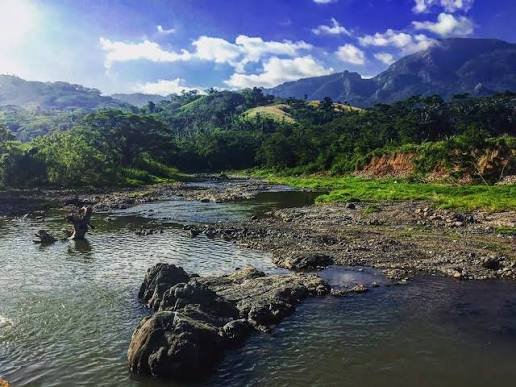
The Nestos River is one of northeastern Greece's most important river systems, flowing through landscapes of forests, cliffs, wetlands, and deeply incised gorges before reaching the Aegean coast. The river valley is particularly notable for its ecological diversity and dramatic geological scenery.
The idea of “hidden thermal mud pools” within the Nestos River gorges is intriguing because geothermal and hydrothermal phenomena can occur in tectonically active regions. However, a specific thermal mud-pool system should not be presented as a confirmed feature of the Nestos gorge without geological and hydrological documentation.
The subject provides an opportunity to explore the relationship between geothermal processes, river landscapes, mineral-rich waters, and the geological history of northeastern Greece.
What Makes a Mud Pool Thermal?
A thermal mud pool forms when underground heat warms water that reaches or approaches the surface. In some geothermal environments, hot water interacts with clay-rich sediments, producing pools of mud that can bubble or move because of escaping gases.
The presence of warm water alone does not necessarily indicate a major geothermal system. Temperature, mineral composition, dissolved gases, geological structures, and underground circulation patterns all need to be examined.
Thermal systems commonly depend on fractures that allow groundwater to circulate deep underground. Water may descend through permeable rock, become heated at depth, and then rise again through fractures.
The geological structure of an area therefore plays a critical role in determining whether geothermal activity can occur.
The Nestos Geological Landscape
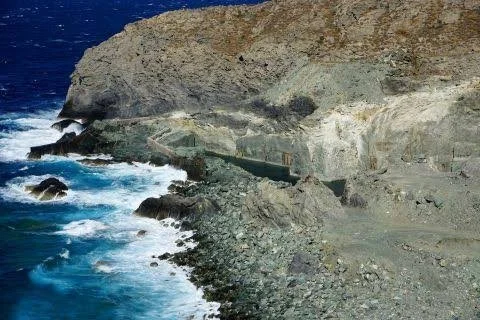
The Nestos region contains a complex mixture of mountains, river terraces, sedimentary deposits, and metamorphic or crystalline rocks. The river has gradually carved its course through this terrain, producing steep valley walls and distinctive gorge landscapes.
Rivers can expose geological structures that would otherwise remain hidden. Erosion cuts through rock layers and reveals faults, fractures, mineral deposits, and changes in sediment composition.
If unusual warm springs or mineral-rich pools existed within the gorge, researchers would examine whether they were associated with particular geological structures.
Temperature measurements alone would not be enough. Scientists would also investigate water chemistry and the origin of the fluids.
Hydrothermal Circulation
Groundwater can travel considerable distances underground. Rain and surface water infiltrate through cracks and porous materials, moving downward under gravity.
At greater depths, temperatures increase because of Earth's geothermal gradient. The heated water can then rise toward the surface through fractures.
The chemistry of such water can change during its journey. It may dissolve minerals from surrounding rocks, acquire gases, or react with different geological layers.
Scientists can analyze dissolved minerals, isotopes, temperature, and gas composition to reconstruct the movement of underground water.
This type of investigation is particularly valuable because a surface spring may represent only the visible part of a much larger underground system.
Mud, Minerals, and Microbial Life
Mud pools can contain high concentrations of clay minerals and dissolved substances. Their appearance may range from gray and brown mud to colors influenced by mineral deposits and microorganisms.
Some geothermal environments support specialized microbial communities adapted to elevated temperatures or unusual chemical conditions.
These organisms can be scientifically valuable because they demonstrate how life adapts to environments that would be stressful for many other species.
However, the existence of unusual microorganisms should not be inferred merely from the presence of warm mud. Sampling and laboratory analysis are required.
Why the Gorges Are Ecologically Important
The Nestos gorge is significant not only because of geology but also because of its ecosystems. Forested slopes, river habitats, and surrounding mountain environments support diverse plant and animal communities.
A thermal feature, if present, would exist within this wider ecological system.
Changes in water temperature or chemistry could affect local organisms. This makes environmental assessment important before any development or tourist promotion.
A previously inaccessible thermal pool might attract visitors if publicized. Increased visitation could lead to trampling, litter, water contamination, and damage to surrounding vegetation.
Investigating a Suspected Thermal Site
Scientists would begin by measuring water and sediment temperatures at different points. They would compare these measurements with normal seasonal river temperatures to determine whether a genuine thermal anomaly exists.
Water samples could then be analyzed for dissolved minerals, pH, electrical conductivity, and other chemical characteristics.
Geological mapping would determine whether the feature lies along a fault or fracture system.
Researchers could also use thermal imaging and remote sensing to identify temperature anomalies, although these methods would need to be validated through field measurements.
Distinguishing Geothermal Activity from Ordinary Warm Water
A common challenge is distinguishing true geothermal activity from water warmed by sunlight or local environmental conditions.
A shallow pool exposed to strong sunlight may become warmer than the surrounding river without having a geothermal origin. Similarly, slow-moving water can have a different temperature from rapidly flowing water.
A genuine geothermal interpretation requires evidence that heat is coming from underground rather than simply from atmospheric conditions.
Long-term monitoring would strengthen such an interpretation by demonstrating persistent temperature differences across seasons.
Conservation and Responsible Exploration
The Nestos gorge is environmentally sensitive. Any geological investigation should minimize disturbance, especially in areas supporting rare habitats.
If a genuine thermal feature were discovered, access would need to be managed carefully. Publicity could increase tourism rapidly, particularly if the location were promoted as a hidden natural wonder.
Scientific value and conservation should therefore come before commercialization.
Conclusion
The concept of hidden thermal mud pools in the Nestos River gorges illustrates the geological complexity of northeastern Greece. Thermal waters can emerge where groundwater interacts with heat and fractured rock, creating unusual mineral and ecological environments.
Whether specific thermal mud pools exist within the Nestos gorge would require field verification. Nevertheless, the geological principles behind such phenomena demonstrate how rivers, tectonic structures, groundwater, and Earth's internal heat can interact to produce remarkable landscapes.
The Nestos region deserves investigation not only for spectacular scenery but also for the scientific information contained beneath its forests, cliffs, and river channels.