Introduction
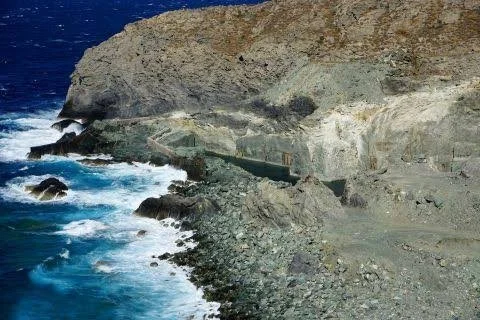
Antikythera is a small Greek island positioned between the Peloponnese and Crete. Its remote location, rugged terrain, archaeological importance, and relatively low population have contributed to its reputation as a place where natural and historical features can remain comparatively undisturbed.
The title Rare Moonstone Beaches of the Forgotten Antikythera Shores evokes an unusual mineralogical phenomenon involving moonstone-like minerals along isolated beaches. The term “moonstone,” however, has a specific mineralogical meaning and should not be used simply to describe any pale or shimmering beach stone.
There is no basis for treating the existence of rare moonstone beaches on Antikythera as an established fact without geological documentation. Nevertheless, the subject provides an interesting framework for understanding beach minerals, feldspar, erosion, and the geological diversity of Greek islands.
What Is Moonstone?
Moonstone is a variety of feldspar that can display a distinctive optical effect known as adularescence. Light appears to move through the stone, creating a soft, floating glow.
This phenomenon results from interactions between different feldspar structures at microscopic scales. When light enters the mineral, it can scatter in ways that create the characteristic sheen.
Moonstone is therefore not simply a white stone that looks bright in sunlight. Proper identification requires mineralogical examination.
Several types of feldspar can produce related visual effects, and weathered fragments on beaches may be difficult to identify accurately without laboratory analysis.
How Minerals Reach Beaches
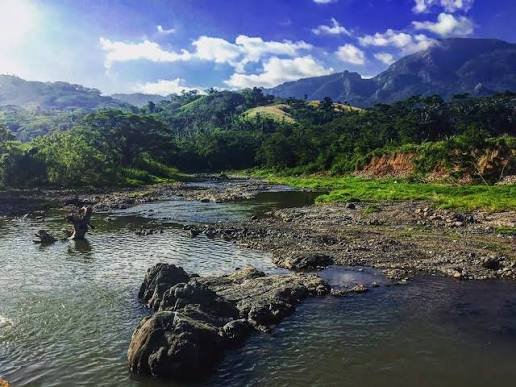
Beaches are dynamic geological systems. Waves, currents, storms, and river runoff transport sediment and concentrate particles according to size, density, shape, and mineral durability.
A mineral found on a beach may have originated from nearby bedrock or been transported from a considerable distance.
Repeated wave action can break larger rocks into smaller fragments. Softer minerals may weather rapidly, while more resistant minerals remain concentrated in beach deposits.
Heavy minerals can accumulate in particular zones depending on wave energy and coastal geometry. These concentrations can sometimes create distinctive dark or light bands in beach sediments.
Antikythera's Geological Setting
Antikythera is part of the broader geological environment of the eastern Mediterranean, where tectonic activity has produced complex rock formations and rugged island landscapes.
The island's rocks reflect a long history of geological deformation, uplift, erosion, and sediment deposition.
Such geological complexity means that the mineral composition of different beaches can vary significantly.
A beach composed largely of material derived from one nearby rock formation may have a very different appearance from a beach receiving sediment from several geological sources.
Why a Beach Might Appear to Glow
The “moonlit” appearance of beach stones can have several causes.
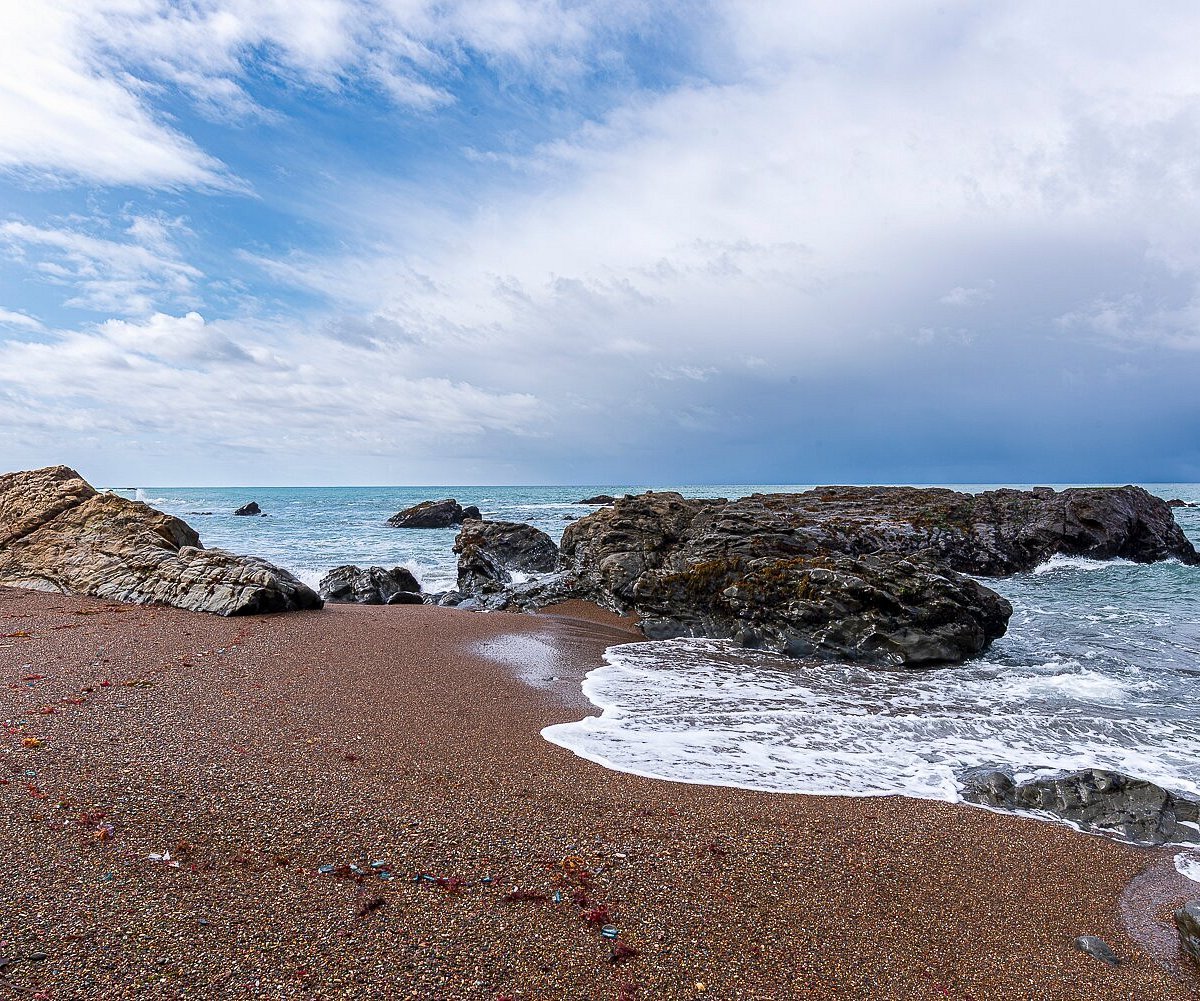
Quartz, feldspar, mica, calcite, and other minerals can reflect or scatter light in distinctive ways. Wet surfaces often appear especially bright because a thin film of water changes how light interacts with the mineral surface.
Under low-angle sunlight, some beaches can appear unusually luminous. Moonlight can create an even softer effect, especially when pale stones are wet.
These visual effects can produce compelling landscapes without requiring the presence of gemstone-quality moonstone.
Identifying Genuine Moonstone
A suspected moonstone fragment should be examined for its physical properties. Mineralogists may consider hardness, cleavage, crystal structure, density, and optical behavior.
Laboratory methods such as X-ray diffraction or spectroscopy can provide stronger identification than visual inspection alone.
This is important because feldspar minerals are widespread, and many can appear similar when weathered.
A tourist collecting a shiny white pebble from a beach cannot reliably determine whether it is moonstone simply from appearance.
Coastal Geology and Island Change
Antikythera's beaches are constantly changing. Storms can remove sediment from one location and deposit it elsewhere. Seasonal wave patterns can expose previously buried stones.
Sea-level changes over geological and historical timescales have also influenced Mediterranean coastlines.
Archaeological evidence around Mediterranean islands demonstrates that coastal environments experienced substantial changes in the past. Ancient shorelines may not correspond exactly to modern beaches.
This makes coastal geology important not only for understanding minerals but also for interpreting archaeological landscapes.
Conservation of Remote Beaches
Remote beaches can appear resilient because they receive fewer visitors, but they can still be vulnerable to environmental changes and human activity.
Removing large quantities of unusual stones can gradually alter small beach ecosystems and sediment composition. Vehicles, construction, litter, and uncontrolled tourism can also damage coastal environments.
If a mineralogical feature were confirmed, scientific documentation would be preferable to uncontrolled collecting.
The Scientific Value of Antikythera's Shores
The most valuable aspect of a beach is not necessarily whether it contains commercially valuable gemstones. Beach sediments can reveal information about erosion, geological sources, wave dynamics, and the history of island landscapes.
Mineralogical analysis can identify where sediments originate and how they are transported.
Such research can contribute to broader studies of Mediterranean geology and coastal change.
Conclusion
The idea of rare moonstone beaches on Antikythera is an evocative one, but the specific claim requires geological verification. Genuine moonstone has identifiable mineralogical characteristics, and its presence should be established through scientific testing rather than appearance alone.
Whether or not Antikythera contains true moonstone concentrations, its beaches remain valuable geological environments. They record the interaction of rock, weather, waves, and tectonic history, demonstrating how even a small Mediterranean island can preserve complex evidence of Earth's geological processes.
Niche Modern & Geopolitical Insights (81-100)
Introduction
Greece's position at the crossroads of Europe, the Mediterranean, the Balkans, and the eastern Mediterranean gives it strategic importance far beyond its geographic size. Its ports connect major shipping routes, its islands occupy important maritime spaces, and its northern borders connect the country to the wider Balkan region.
At the same time, Greece is participating in rapidly changing technological and economic sectors including renewable energy, electric mobility, artificial intelligence, digital government, data infrastructure, and advanced research.
The following topics examine these developments through a critical lens. Titles involving “secret,” “covert,” “hidden,” or “undisclosed” should not automatically be interpreted as evidence that governments or companies are concealing specific facilities. In many cases, such wording describes emerging or poorly documented trends rather than verified clandestine programs.
Understanding modern geopolitics requires separating confirmed infrastructure and policy from speculation, commercial announcements, rumors, and strategic interpretation.